Showing posts with label Derbyshire (UK). Show all posts

17 June 2021

Memorial to Tip the Sheepdog, Derwent Reservoir, Derbyshire


'IN

COMMEMORATION OF
THE DEVOTION OF
TIP
THE SHEEPDOG WHICH STAYED
BY THE BODY OF HER DEAD
MASTER, MR. JOSEPH TAGG.
ON THE HOWDEN MOORS FOR
FIFTEEN WEEKS FROM 12TH
DECEMBER 1953 TO 27TH
MARCH 1854.

ERECTED BY PUBLIC SUBSCRIPTION'

This is a wonderful monument, although I have one objection: how can anyone have allowed the word 'which' to be used for Tip, which suggests that she was an object?

14 June 2021

3 June 2021

A New Brood of Moorhen Chicks, Glossop, Derbyshire

 New life, with nascent wings, maybe there's still hope for the future.


Sadly, these chicks have little future, and many have been the victims of water rats.

31 May 2021

Robin Hood's Picking Rods, Chisworth, Derbyshire


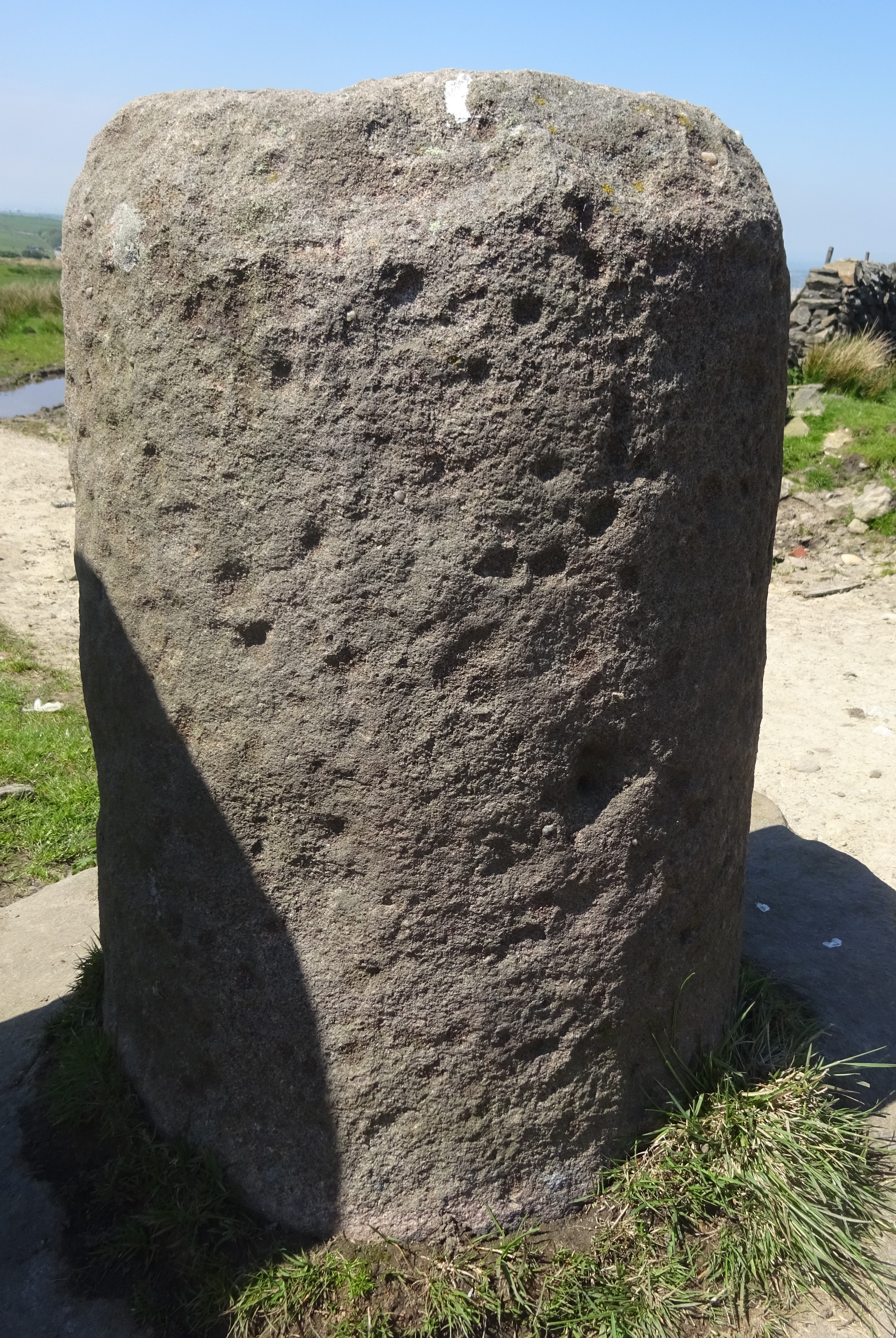
Robin Hood's picking rods are on a remote footpath near Chisworth. They rest on a stone base, and were probably the lower parts of Saxon crosses dating from the tenth century or before. The name may come from the fact that they were thought to have been used for stringing longbows. They mark the boundary between Derbyshire and Cheshire, or Greater Manchester today. The modern name is probably relatively recent.

25 May 2021

Moorhen Chick, Two Weeks Old, Glossop, Derbyshire

 It's managed, along with two others, to survive the attacks by rats.

10 May 2021

The Moment of Birth: A Moorhen Hatches from its Egg: Glossop, Derbyshire


A moorhen sits on a nest in the middle of a brook and waits. Then, the glorious moment of birth when the chick hatches from the egg. Meanwhile the two slightly earlier born progeny learn to swim with the father. Or is it the father? I was amazed to see two other chicks being fed by other moorhens, sticking well close to them. The reason became apparent shortly afterwards, when a mallard tried to grab a chick. Moorhens must be born with a sense of fraternity or they wouldn't exist: they'd created a wide circumference of water within which the mallards couldn't enter. Life in the wild is tough.

22 September 2020

Greater White-Fronted Goose, Manor Park, Glossop, Derbyshire (UK)

 And a greater white-fronted goose, also in Manor Park, Glossop, Derbyshire.

Ancona Duck, Manor Park, Glossop, Derbyshire (UK)

A solitary ancona duck spotted in Manor Park, Glossop, Derbyshire among the many Canada geese, mallards and winter-plumaged black-headed gulls. We'd normally be in France in September, but...

20 June 2020

Life Goes on: a Mallard and Her Brood, Glossop, Derbyshire

It's early Saturday morning and there are very few people about in Wren's Nest Retail Park, Glossop, Derbyshire. A mallard discreetly feeds her brood of ten on the path by the car park: a wonderful sight. Sadly, few from the brood will survive: much as the mother strives to protect her young, predators such as herons are waiting for when they can swoop down and take their prey. Remember, it's better to feed birds with seed rather than bread, and mallards also go for seedless grapes and chopped lettuce.


19 June 2020

Juvenile Pied Wagtail, Glossop, Derbyshire

I knew this was a pied wagtail, but with a yellow face? Yes, it's normal with juveniles. Confinement is a real education.

15 June 2020

Signs of Summer, Glossop, Derbyshire

Signs of summer. Manor Park was heaving yesterday but Glossop Cemetery was almost empty. A peaceful place to be. A small tortoiseshell butterfly feeds on a few flowers there.

20 May 2020

Dr Ernest Henry Marcus Milligan in Glossop, Derbyshire


'IN
LOVING
MEMORY
OF

A DEAR HUSBAND AND FATHER
ERNEST H. M. MILLIGAN
WHO DIED 21ST MARCH 1954, AGED 75 YEARS.
FOR 26 YEARS M.O.H. FOR GLOSSOP
FEAR NOT MORE THE HEAT O' THE SUN
NOR THE FURIOUS WINTER'S RAGES;
THOU THY WORLDLY TASK HAST DONE

AND HIS BELOVED WIFE SARAH
BORN 17TH JAN 1883 DIED 19TH JAN 1961.'

Ernest Henry Marcus Milligan (1879–1954) was an Irish Protestant from Belfast who became the first medical officer of health in Glossop, Derbyshire. He lived at Daisy Bank in nearby Hadfield, and according to his obituary in the Glossop Chronicle of 26 March 1954 he began a 'health revolution in the town, a health revolution that has gone on ever since' when he moved to Glossop in 1920. He had a great interest in the nutrition of school children, and provided considerable details on them. He is perhaps best known for his peanuts and whey toffee.

Milligan wrote a book of poems in 1907: Up Bye Ballads, published under the pseudonym of 'Will Carew'. Many years later he wrote several plays – some in collaboration with his solicitor son-in-law A. V. Williams – which were broadcast on the radio in Manchester, such as: The Ballad Singer (1933), Muggleston on the Map: A Municipal Mockery (1934), The Mayor Chooses a Wife (1935), and 'Twas in Old Ireland – Somewhere (1936).

Milligan came from a highly talented family, and his most famous sibling is Alice Milligan (1865-1953), the Irish Nationalist, poet and novelist. He wanted the Irish Republican W. P. Allen to write her biography, but this was not to be. However, in 1994 Sheila Turner Johnston published a short biography of Alice, which was re-published in 2009. And for a more academic angle, there's now Catherine Morris's Alice Milligan and the Irish Cultural Revolution (2012).

18 May 2020

A Squirrel in May, Glossop, Derbyshire

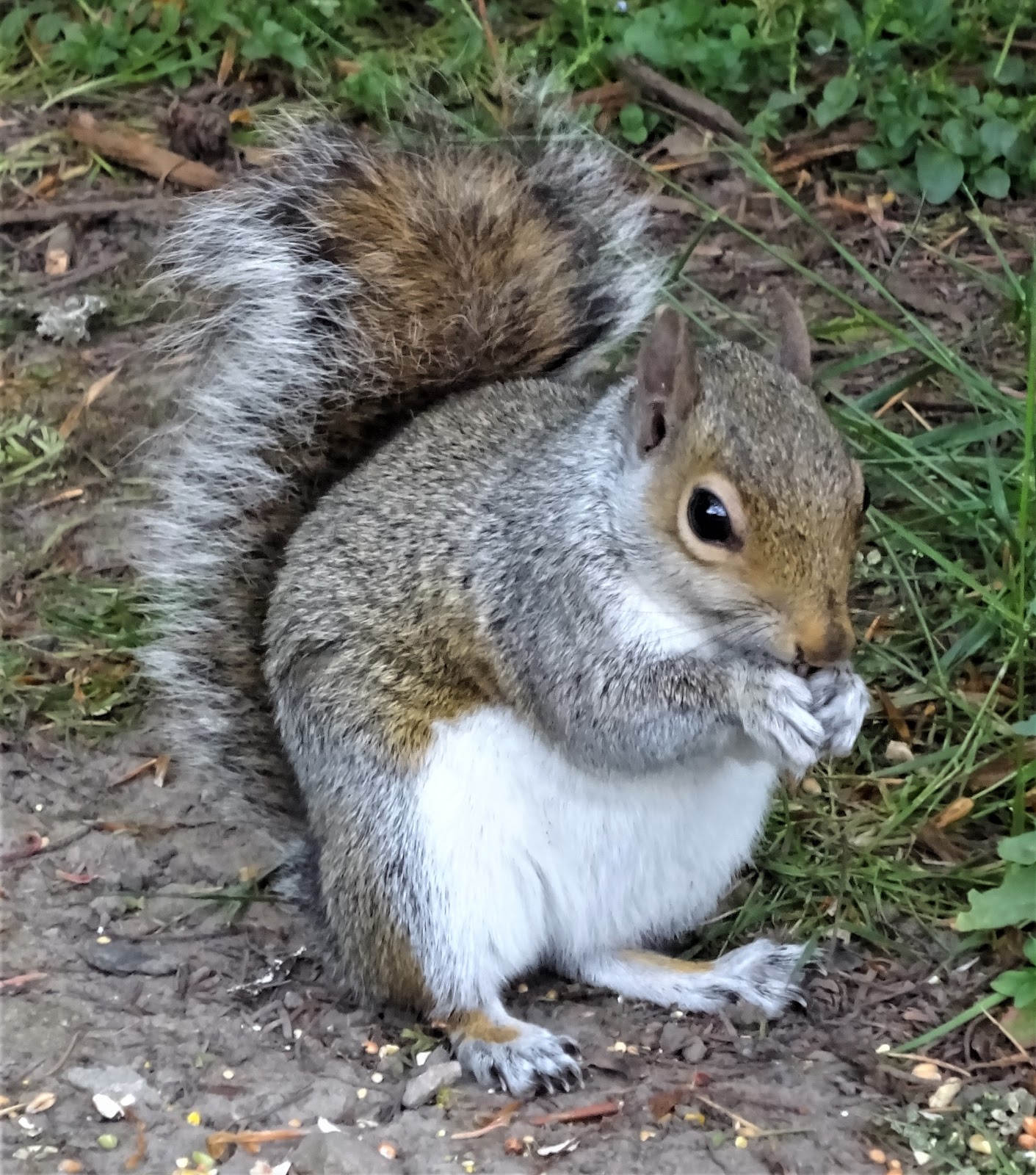
This lovely creature didn't mind me taking photos from a distance, but when I moved in too close he (or she) took to the tree and peered out to see if I was still there. Yes, I was, but the temptation to finish the dinner was too important to worry too much about me.


17 May 2020

Khalil Rasjed Dale | Kenneth Robin Dale in Glossop, Derbyshire

Khalil Dale (1951-2012) was an aid worker who dedicated many years to working for the Red Cross in many very dangerous war zones and famine-stricken areas such as Afghanistan, Ethiopia, Iraq, Kenya, Somalia and the Sudan. He was born Kenneth Robin Dale in York, grew up in Manchester, and became a nurse as was his mother. He converted to Islam in Kenya in 1981. He went on, in his late thirties, to study at the University of London's School of Oriental and African Studies, graduating in 1992. In January 2012 he was kidnapped, perhaps by the Taliban, in Quetta near the border of Afganistan and Pakistan. His beheaded body was found in April 2012: he had been killed because the $30 million ransom hadn't been paid. He is buried in Glossop Cemetery.

15 May 2020

The Whitfield Cross, Whitfield, Glossop, Derbyshire

Dr Tim Campbell-Green, alias Robert Hamnett, has an excellent blog called 'The Glossop Cabinet of Curiosities', which is where I found out about the Whitfield Cross, which used to stand at the junction of Whitfield Cross, Cliffe Road and Hague Street.

In an article called 'Botanical Ramble to Moorfield' (c. 1890), the real Robert Hamnett tells a remarkable story. 'Mischief Night' was originally held on the evening of 1 May, and involved the youth of an area playing pranks. Hamnett says that the decision of a group of lads from Cross Cliffe towards the end of the eighteenth century was to move part of the Whitfield Cross from its position. But the cross was much heavier than they thought and they had to leave it in a field. The other parts of the cross soon disappeared, and the stolen section is now part of a stile on a footpath off Cliffe Road.

11 May 2020

Brown Trout, Glossop

A family of brown trout has appeared in Shelf Brook, Manor Park, Derbyshire. And they are quite an attraction in these confinement days.

6 May 2020

Bird Watching in the Time of Confinement

Confinement changes perception, forces people to look more closely at things within a shorter distance from them as their movements are considerably limited. So a local park – in this instance Manor Park, Glossop – takes on a different light. Not only is watching the water very soothing, but it's interesting watching the wildlife watching the water or drinking from it. Here we have a grey heron looking for fish, and a grey wagtail – often confused with the yellow wagtail – finding food in a clump of vegetation.


28 April 2020

The New Litter, Glossop, Derbyshire

There's nothing new about litter itself, and there's a whole history of different kinds of it throughout the centuries. More recently, bottles were thrown over bridges in rivers and streams, such as the Codd's bottles and gin bottles that have been reclaimed by modern amateur archaeologists. And later came the plastics, the condoms, the apparently worthless exhibits of human waste. Now comes a bang up-to-date item: the mask, a result of the COVID-19 virus, but the individual who dropped it here had the fear of the virus to use it, but not the intelligence or condideration to consider that it might cause harm to other people, and so spreading it. We live in a weird world in which our neighbours count for nothing: a world of self.

5 April 2020

Glossop, Derbyshire, 1 April 2020

High Street West, Glossop, Derbyshire, 1 April 2020. A small, normally bustling town of some tourist interest. Now, the streets are almost deserted, Manor Park virtually free from cars and children, more pigeons, moorhens, jackdaws and ducks in the town than people. I've never been in a war zone, but this must be something like it. Horrifying.

19 December 2018

Grey Heron, Glossop, Derbyshire, UK

I spotted this grey heron while sitting in the car in Manor Park, Glossop, Derbyshire, today. It caught a few little fish and then just flew off. My English gets worse, as I just knew that it was an héron cendré, but wasn't too certain of the name in my native language.