
Showing posts with label Allier (03). Show all posts
Showing posts with label Allier (03). Show all posts
22 August 2019
Jeanne Cressanges, Noyant d'Allier, Allier (03)
Libellés :
Allier (03),
Cressanges (Jeanne),
Noyant d'Allier (03)


Boîte à Lire, Noyant d'Allier, Allier (03)
Libellés :
Allier (03),
Boîte à lire,
Noyant d'Allier (03)

Boîtes à lire:
––––––––––––––––––––––––––––––––––––
Boîte à Lire, Dicy, Nièvre
Boîte à lire, Maisons-Laffitte, Yvelines
Boîte à lire, Sorigny, Indre-et-Loire
Boîte à Lire, Jonzac, Charente-Maritime
Boîte à lire, La Roque-d'Anthéron, Bouches-du-Rhône
Boîte à Lire, Épineuil-le-Fleuriel, Cher
Boîte à lire, Marseille, Bouches-du-Rhône
Boîte à lire, East Markham, UK
Boîte à lire, La Folie Couvrechef, Caen, Calvados
Boîte à lire, Bergues, Nord
Boîte à lire, Le Havre, Seine-Maritime
Boîte à lire, Villerville, Calvados
Boîte à lire, Saint-Servan, Saint-Malo, Ille-et-Vilaine
Boîte à lire in Caen, Calvados
Boîte à Lire, Noyant d'Allier, Allier
Boîte à lire, Dampierre-en-Burly, Loiret
Boîte à lire, Illiers-Combray, Eure-et-Loir
Boîte à lire, Chartres, Eure-et-Loir
Boîte à lire, Saint-Romain-au-Mont-d'Or, Rhône
21 August 2019
The Pagoda, Noyant d'Allier, Allier (03)
Libellés :
Allier (03),
Noyant d'Allier (03)

Noyant d'Allier was an important mining village from the middle of the 19th century until the closure of the mine in 1943. From 1955 France repatriated a number of Francophone refugees from Indochina, one of the major receiving villages being Noyant d'Allier, which housed the immigrants in the former miners' dwellings. Some clips on YouTube reveal that some Vietnamese felt unease, perhaps particularly the now grown children who felt deracinated because their childhood and their culture had been removed from them. However, newcomers in time adapted themselves to their new country. In 1983 the Buddhist community in Noyant built a pagoda.
A Buddha is not a divinity because a person can become enlightened and a become a Buddha too. There are a number of statues in the park, one of which represents a reclining Buddha, head to the east and feet towards the west, symbolising reaching nirvana.
Two lines of statues lead to the columbarium, with at the beginning the lord of hell, while further on is the feminine representation of Buddha, an awakening destroying gender constructs, constructs good and evil... and then there is a monumental statue, in gold, of Buddha Sakyamuni in meditation. Buddha was originally a marine turtle.
Between this statue and the pagoda are four representations of Buddha: in meditation, protected by cobras; alone; with five adepts; young, with a monkey and elephant, recalling the stories received during youth.
Any errors made here are entirely due to me, and I welcome any corrections to a subject of which I know very little!


A Buddha is not a divinity because a person can become enlightened and a become a Buddha too. There are a number of statues in the park, one of which represents a reclining Buddha, head to the east and feet towards the west, symbolising reaching nirvana.
Two lines of statues lead to the columbarium, with at the beginning the lord of hell, while further on is the feminine representation of Buddha, an awakening destroying gender constructs, constructs good and evil... and then there is a monumental statue, in gold, of Buddha Sakyamuni in meditation. Buddha was originally a marine turtle.
Between this statue and the pagoda are four representations of Buddha: in meditation, protected by cobras; alone; with five adepts; young, with a monkey and elephant, recalling the stories received during youth.
Any errors made here are entirely due to me, and I welcome any corrections to a subject of which I know very little!


15 August 2019
René Fallet in Thionne, Allier (03)
Libellés :
Allier (03),
Fallet (René),
Thionne (03)
It was René Fallet's wish to be buried in Thionne (pronounced 'Thioune') to the north of Jaligny-sur-Besbre, with the words 'écrivain bourbonnais' on his grave. A plaque here mentions the spirit of his friend Voltaire Dauchy wandering around here.

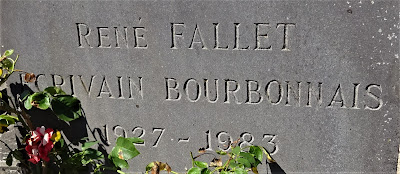


Place René Fallet, Jaligny-sur-Besbre, Allier (03)
Libellés :
Allier (03),
Fallet (René),
Jaligny-sur-Besbre (03)
The other tribute to René Fallet in Jaligny-sur-Besbre, apart from the permanent exhibition, is Place René Fallet, marked by a huge rock.


14 August 2019
Les Pieds dans l'eau, René Fallet in Jaligny-sur-Besbre, Allier (03)
Libellés :
Allier (03),
Fallet (René),
Jaligny-sur-Besbre (03)
René Fallet (1927-83) was a writer and screenwriter born in Villeneuve-Saint-Georges (then Seine-et-Oise) and who died in Paris. However, his parents came from Allier, as did his wife: he married Michelle Dubois (Agathe Fallet) in 1956, and considered himself as an 'écrivain bourbonnais'. In 1964 he won the Prix Interallié for Paris au mois d'août, and from then on he devoted the rest of his life to literature, but also fishing, pétanque, and cycling, in fact pleasure. He died of a heart attack at the age of 55 and is buried in the cemetery at Thionne (pronounced 'thiune'). 'Les Pieds dans l'eau' médiathèque illustrates Fallet's life and work, and is quite fascinating.


 On display, a number of things relating to René Fallet, such as a cassette recorder with cassette tapes mainly of jazz and classical music, packets of Française cigarettes, beer mats, etc.
 Antoine Blondel's Monsieur Jadis, with a dedication to Fallet by the author.
 Fallet's Les Pas perdus, with a note written to Voltaire Dauchy, the coiffeur to the Lido dancers. The novel is dedicated to Georges Brassens.


A note full of praise by Antoine Blondel for Fallet's Au beau rivage.

Les Pas perdus was dedicated to Brassens, although this is written to Voltaire Dauchy.

Along with several novels here, this one is addressed to Fallet's wife Agathe.
29 November 2018
Charles-Louis Philippe: La Mère et l'enfant (1900; repr. in full 1911) | Le Pére Perdrix (1902)

Charles-Louis Philippe's work is noted for its sympathy with the plight of the poor and its hatred of the complacency and callousness of the rich, of which Le Pére Perdrix is a good example. In Bruno Vercier's Preface, he notes that the main character the farrier (with his wife), often called le Vieux and la Vieille, are based on the Cérilly blacksmith Jean-Baptiste Galand and his wife.
In Le Pére Perdrix we see the farrier being advised by his doctor to cease work because of his failing eyesight. He does so and receives money from the bureau de bienfaisance, although this public assistance is cut off due the collusion of the same doctor and the mayor. The story also involves le vieux's nephew Jean, a well-paid chemical engineer, walking out of his job in sympathy with the striking workers. Soon after his return, Jean walks out on his parents who are disgusted with him and ashamed of his 'idleness'. Jean goes to live with the farrier and his wife, who dies, and Jean takes a reluctant Vieux to Paris and to more poverty.
My Charles-Louis Philippe posts:
––––––––––––––––––––––––––––––––––––
Charles-Louis Philippe Birthplace museum and grave
Charles-Louis Philippe: Contes du matin
Charles-Louis Philippe: Dans la petite ville
Charles-Louis Philippe: La Mère et l'enfant | Le Pére Perdrix
Charles-Louis Philippe: Bubu de Montparnasse
4 August 2018
Charles-Louis Philippe: Dans la petite ville (1910); repr. 1997 with Introduction by Francine Masson

This is a collection of Charles-Louis Philippe's short stories which he had intended to publish in one volume, and although his untimely death at the age of thirty-five (probably from meningitis) intervened, André Gide ensured its publication the following year, 1910. This edition of the stories is published by Plein Chat's imprint of working-class authors, Collection voix d'en bas, and a number of them are obviously based on life in Cérilly where Philippe was born and spent his early days, and a number of them no doubt came from the stories that the author's father told him in Cérilly.
Here, the people may be working-class, but they are far from uncomplicated as in stories and novels often written by authors from a middle-class (or even working-class) background. These tales don't distort by nostalgia or glorification: they show a whole series of often contradictory emotions: jealousy, hatred, boredom, despair, love, childish mischief and its often negative effects, etc: Charles-Louis Philippe's stories show life in general.
And they are shown with a sense of humour as well as an eye for tragedy, irony, and misfortune. Charles-Louis Philippe deserves much more than the semi-oblivion he's been subjected to.
My Charles-Louis Philippe posts:
––––––––––––––––––––––––––––––––––––
Charles-Louis Philippe Birthplace museum and grave
Charles-Louis Philippe: Contes du matin
Charles-Louis Philippe: Dans la petite ville
Charles-Louis Philippe: La Mère et l'enfant | Le Pére Perdrix
Charles-Louis Philippe: Bubu de Montparnasse
My Charles-Louis Philippe posts:
––––––––––––––––––––––––––––––––––––
Charles-Louis Philippe Birthplace museum and grave
Charles-Louis Philippe: Contes du matin
Charles-Louis Philippe: Dans la petite ville
Charles-Louis Philippe: La Mère et l'enfant | Le Pére Perdrix
Charles-Louis Philippe: Bubu de Montparnasse
24 July 2018
Street Art City, Lurcy-Lévis, Allier (03)
Libellés :
Allier (03),
Lurcy-Lévis (03),
Street Art City


Art brut (Outsider Art) and associated:
––––––––––––––––––––––––––––––––––––
Rémy Callot, Carvin (Nord)
Carine Fol (ed.): L'Art brut en question | Outsider Art in Question
Kevin Duffy, Ashton-in-Makerfield
The Art Brut of Léopold Truc, Cabrières d'Avignon (34)
Le Musée Extraordinaire de Georges Mazoyer, Ansouis (34)
Le Facteur Cheval's Palais Idéal, Hauterives (26)
The Little Chapel, Guernsey
Museum of Appalachia, Norris, Clinton, Tennessee
Ed Leedskalnin in Homestead, Florida
La Fabuloserie, Dicy, Yonne (89)
Street Art City, Lurcy-Lévis, Allier (03)
The Outsider Art of Jean Linard, Neuvy-deux-Clochers (18)
Jean Bertholle, La Fabuloserie, Yonne (89)
Jean-Pierre Schetz, La Fabuloserie, Yonne (89)
Jules Damloup, La Fabuloserie, Yonne (89)
Camille Vidal, La Fabuloserie, Yonne (89)
Pascal Verbena, La Fabuloserie, Yonne (89)
The Art of Theodore Major
Edward Gorey's Yarmouth Port, Cape Cod, MA
Marcel Vinsard in Pontcharra, Isère (38)
Vincent Capt: Écrivainer : La langue morcelée de Samuel Daiber
The Amazing World of Danielle Jacqui, Roquevaire (13)
Alphonse Gurlie, Maisonneuve (07)
Univers du poète ferrailleur, Lizio, Morbihan
Les Rochers sculptés de L'Abbé Fouré, Rothéneuf, Saint-Malo
Robert Tatin in Cossé-le-Vivien, Mayenne
René Raoul's Jardin de pierre in Pléhédel, Côtes d'Armor
La Demeure du Chaos, Saint-Romain-au-Mont-d'Or, Rhône (69)
Emmanuel Arredondo in Varennes Vauzelles, Nièvre (58)
Musée de la Luna Rossa (revisited), Caen, Calvados (14)
La Fontaine de Château-Chinon, Nièvre (58)
23 July 2018
Émile Guillaumin in Ygrande, Allier (03)


 –
–
In this house just a few hundred metres from Ygrande, the 'peasant writer' (yes, I know: a terrible expression) Émile Guillaumin (1873–1951), heavily influenced by Eugène Le Roy's Jacquot le croquant, wrote his generally considered masterpiece La Vie d'un simple – not an autobiography but a novel – and received numerous eulogies from many prominent figures of literature. He failed to receive the Goncourt, although he was unsurprisingly supported by Octave Mirbeau.

A reconstruction of Émile Guillaumin's bed, plus his original desk in the foreground.

The Guillaumin family, circa 1930s.
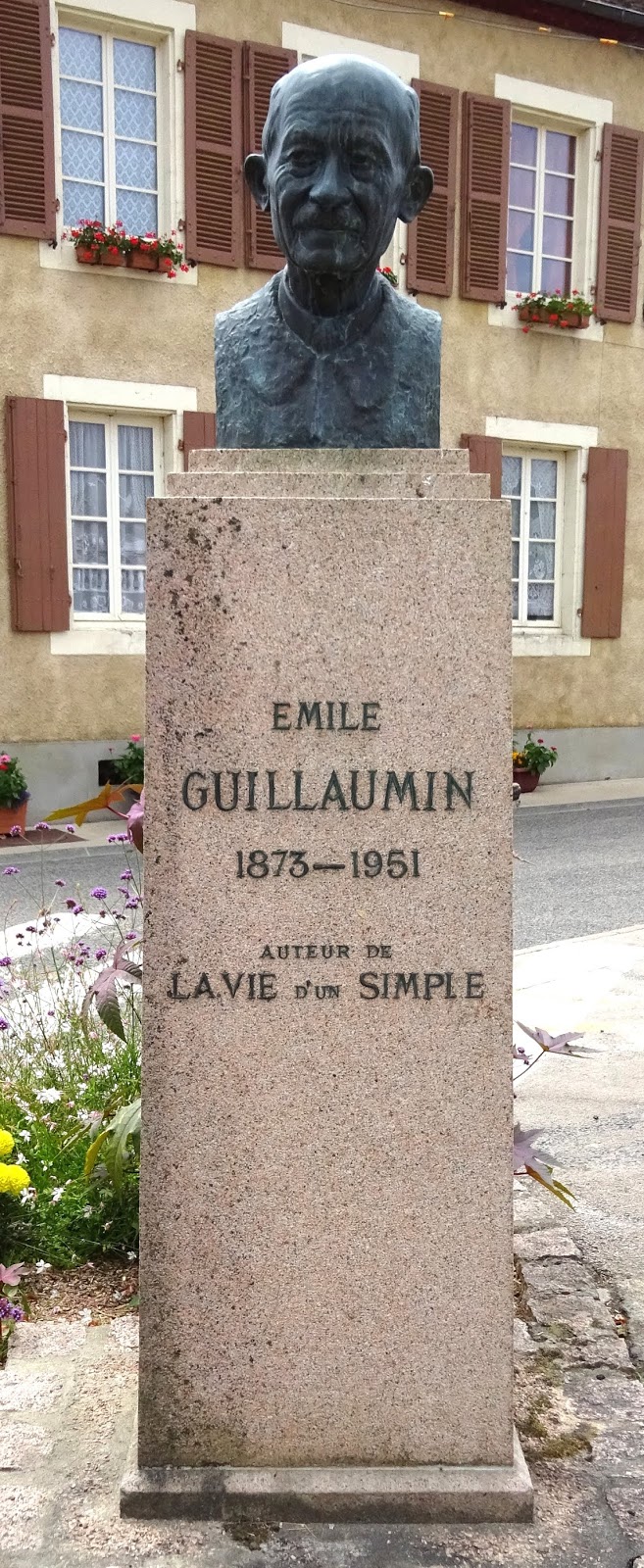

The monument to Émile Guillaumin in the centre of Ygrande.


The grave of Émile Guillaumin and his wife Marie (née Chalmin). I can find no images of Émile Guillaumin's grave online, so fully welcome Bertrand Beyern's book (or Bible, as we refer to it) for indicating its general whereabouts. Beyern's book is absolutely necessary for anyone interested in where interesting people are buried.
22 July 2018
Charles-Louis Philippe in Cérilly, Allier (03)


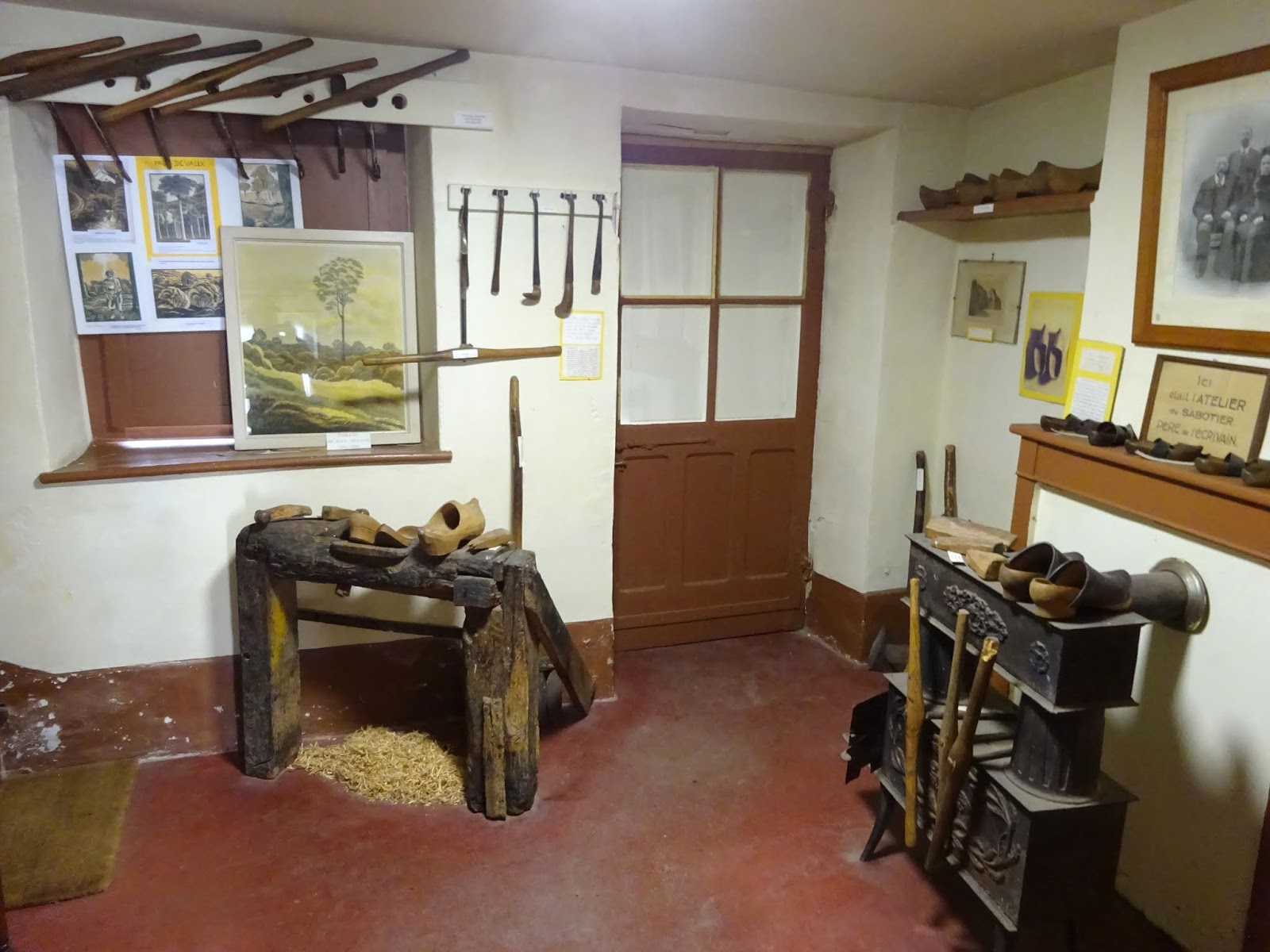

Charles-Louis's room which became his on the death of his half-sister Félicité. The adjoining room, which was his twin sister Louise's, is now full of information on Charles-Louis.


Two paintings made in 1903 by Charles-Louis Philippe's friend Charles Guérin.

Marie Donadieu, with whom Philippe had a relationship of only several months due to her 'betrayal', and about whom he wrote a book.


Images of Charles-Louis Philippe's grave in Cérilly.
My Charles-Louis Philippe posts:
––––––––––––––––––––––––––––––––––––
Charles-Louis Philippe Birthplace museum and grave
Charles-Louis Philippe: Contes du matin
Charles-Louis Philippe: Dans la petite ville
Charles-Louis Philippe: La Mère et l'enfant | Le Pére Perdrix
Charles-Louis Philippe: Bubu de Montparnasse
My Charles-Louis Philippe posts:
––––––––––––––––––––––––––––––––––––
Charles-Louis Philippe Birthplace museum and grave
Charles-Louis Philippe: Contes du matin
Charles-Louis Philippe: Dans la petite ville
Charles-Louis Philippe: La Mère et l'enfant | Le Pére Perdrix
Charles-Louis Philippe: Bubu de Montparnasse
Subscribe to:
Posts (Atom)


 Posts
All Comments
Posts
All Comments