Showing posts with label Mistral (Frédéric). Show all posts

24 June 2019

Frédéric Mistral in Grambois, Vaucluse (84)

At the side of the church in Grambois is a quotation from Frédéric Mistral's Lis Óulivado (1912) – meaning 'Les Olivades', or olive gatherings – into French as "Le paysan, en tout pays, est le support de la nation ; on aura beau faire des inventions, il faut que se remue la terre": Mistral is of course emphasising the vital importance of the peasant, the person who works the soil, in all countries.

My Frédéric Mistral posts:
––––––––––––––––––––––––––––––––––––
Frédéric Mistral at Le Mas du Juge
Frédéric Mistral: Mireille
Frédéric Mistral in Maillane
Le Pavillon de la Reine Jeanne, Les Baux-de-Provence
Frédéric Mistral in Saintes-Maries-de-la-Mer
Frédéric Mistral in Saint-Giniez, Marseille
Frédéric Mistral, Marseille
Frédéric Mistral in Avignon
Frédéric Mistral in Saint-Rémy-de-Provence
Frédéric Mistral in Grambois
Frédéric Mistral in Saint-Michel-l'Obsevatoire
Frédéric Mistral in Pertuis

9 June 2019

Charles Gounod in Saint Rémy-de-Provence (13)


Charles Gounod (1818-93) was a composer who is perhaps most well known for his operatic interpretation of Frédéric Mistral's Mireille.

6 June 2019

Frédéric Mistral in Pertuis (84)

La Santo-Estello is the Félibrige festival-cum-congress which takes place in a town in one of the thirty-two départements in the south of France: this year is the turn of Pertuis in Vaucluse. The festival promotes regional culture, and it is of course fitting that Frédéric Mistral should boldly feature on the poster advertising the event which is between 7 to the 11 June 2019.

My Frédéric Mistral posts:
––––––––––––––––––––––––––––––––––––
Frédéric Mistral at Le Mas du Juge
Frédéric Mistral: Mireille
Frédéric Mistral in Maillane
Le Pavillon de la Reine Jeanne, Les Baux-de-Provence
Frédéric Mistral in Saintes-Maries-de-la-Mer
Frédéric Mistral in Saint-Giniez, Marseille
Frédéric Mistral, Marseille
Frédéric Mistral in Avignon
Frédéric Mistral in Saint-Rémy-de-Provence
Frédéric Mistral in Grambois
Frédéric Mistral in Saint-Michel-l'Obsevatoire
Frédéric Mistral in Pertuis

5 May 2019

Frédéric Mistral: Mireille (1859)

Frédéric Mistral's epic narrative rural poem Mireille was and still is considered a major work of literature by many writers and critics, among them Barbey d'Aurévilly, Lamartine, André Chamson, and (perhaps most importantly for its initial reception) the academic Saint-René Taillandier.

Inevitably, Mireille's story of star-crossed lovers has been compared to Shakespeare's Romeo and Juliet (star-crossed by class rather than family), but also to Goethe's Hermann und Dorothea, Bernardin de Saint-Pierre's Paul et Virginie, and Longfellow's Evangeline. Perhaps equally inevitably, this is also considered by many to be essentially a love story, although Mistral intended it (as it is written in both French and Provençal (as Mirèio) as more a renewal of a dying language and as a hymn to the glory of old Provence: the male protagonist Vincent, the son of Ambrose, is from a family of basket-makers and menders in Vallabrègues, a small town in Gard, in fact the only commune on the left bank of the Rhône which is in Gard.

Comparisons have been made between Mistral's work in general and a number of international poets – Virgil, Byron, Burns, Wordsworth and Hardy, for example – although in the case of Mireille Homer is more appropriate: this is an odyssey, but of a very different nature.

Vincent is almost sixteen and evidently comes from a very modest family, but his lover the fifteen-year-old Mireille (a variant (via the Provençal Mirèio: thanks Vagabonde (aka Mireille!)) of Mary, a symbol of purity) is from a far wealthier one: a marriage such as this would therefore be a mésalliance, and very strongly opposed to the wishes of her father Ramon, who lives with his family in the Mas de Micocoule.*

Like Homer's Penelope, Mireille has her suitors, all three of them in possession of considerable property: the shepherd Alari, Veran (a keeper of mares), and the repulsive cowherd Ourrias. She rejects them all in favour of the lowly Vincent, and when her parents object she runs from home in flight across the Crau to Saintes-Maries-de-le-Mer, where she hopes that they will give their approval of the match. Unfortunately she catches sunstroke towards the end of her journey and dies soon after reaching Saintes-Maries-de-la-Mer.

There is a statue of her, taken by me in Saintes-Maries-de-la-Mer, elsewhere on this blog. (Unfortunately for haters of tourism, although of course the opposite for the economy of the area, this is one of the smaller towns that have suffered from the effects of Peter Mayle's eulogies about Provence.)

*A micocoule is a hackberry, an edible (but little eaten) fruit of the micocoulier tree.

My Frédéric Mistral posts:
––––––––––––––––––––––––––––––––––––
Frédéric Mistral at Le Mas du Juge
Frédéric Mistral: Mireille
Frédéric Mistral in Maillane
Le Pavillon de la Reine Jeanne, Les Baux-de-Provence
Frédéric Mistral in Saintes-Maries-de-la-Mer
Frédéric Mistral in Saint-Giniez, Marseille
Frédéric Mistral, Marseille
Frédéric Mistral in Avignon
Frédéric Mistral in Saint-Rémy-de-Provence
Frédéric Mistral in Grambois
Frédéric Mistral in Saint-Michel-l'Obsevatoire
Frédéric Mistral in Pertuis

21 June 2018

Frédéric Mistral in Saintes-Maries-de-la-Mer, Bouches-du-Rhône (13)


Mirèio, or Mireille in French, is the name of Frédéric Mistral's epic novel in verse (1859) of the star-crossed lovers  Mirèio and Vincèn (Vincent). There is a mésalliance of class, an impossible love which Mireille's 'superior' parents refuse to entertain. So in the burning sun of Provence Mireille walks across the Camargue to plead for the saints in Saintes-Maries-de-la-Mer to change her parents' decision. Alas, she dies of sunstroke, but this book must have played a part in awarding Mistral the Nobel Prize for Literature (1904). In 1943 Louis-Adrien Durand, scrapmerchant, saved the 'Mireille' statue from being melted down by the Nazis for arms by hiding it. This is a stunning portrait of the turmoil of the fictional figure close to the centre of Saintes-Maries-de-la-Mer.

Avenue Frédéric Mistral has a Bar des Poètes, above the lintel of which is a representation of the great man.


My Frédéric Mistral posts:
––––––––––––––––––––––––––––––––––––
Frédéric Mistral at Le Mas du Juge
Frédéric Mistral: Mireille
Frédéric Mistral in Maillane
Le Pavillon de la Reine Jeanne, Les Baux-de-Provence
Frédéric Mistral in Saintes-Maries-de-la-Mer
Frédéric Mistral in Saint-Giniez, Marseille
Frédéric Mistral, Marseille
Frédéric Mistral in Avignon
Frédéric Mistral in Saint-Rémy-de-Provence
Frédéric Mistral in Grambois
Frédéric Mistral in Saint-Michel-l'Obsevatoire
Frédéric Mistral in Pertuis

20 July 2017

Frédéric Mistral, Marseille, Bouches-du-Rhône (13)

On the steps leading up to the Basilique de Notre-Dame de la Garde – a building which dominates the marseillais skyline) is a plaque dedicated to Frédéric Mistral (1830–1914), who was a member of the Académie de Marseille and of course won the Nobel Prize in Literature in 1904. The five-line verse in Provençal (Mistral being one of the founder members of Le Félibrige) is a hymn to Marseille. The verse is taken from the book Li isclo d'or (1875), which was translated into French as Les Îles d'or ('The Golden Islands').

My Frédéric Mistral posts:
––––––––––––––––––––––––––––––––––––
Frédéric Mistral at Le Mas du Juge
Frédéric Mistral: Mireille
Frédéric Mistral in Maillane
Le Pavillon de la Reine Jeanne, Les Baux-de-Provence
Frédéric Mistral in Saintes-Maries-de-la-Mer
Frédéric Mistral in Saint-Giniez, Marseille
Frédéric Mistral, Marseille
Frédéric Mistral in Avignon
Frédéric Mistral in Saint-Rémy-de-Provence
Frédéric Mistral in Grambois
Frédéric Mistral in Saint-Michel-l'Obsevatoire
Frédéric Mistral in Pertuis

16 June 2017

Paul Arène in Sisteron, Alpes-de-Haute-Provence (04)

An interpretation plaque in Sisteron, where Paul Arène was born, states among other things that he left Sisteron to study Philosophy in Marseilles. He wrote short stories and Pierrot héritier, a play successfully performed in 1865 in Paris. The plaque also mentions his role in writing Alphonse Daudet's Lettres de mon moulin, and his enthusiasm with Frédéric Mistral for the Félibige. He shared his time between Paris and Sisteron. He wrote numerous works that have a strong flavour of Provence, and his most famous novels are Domnine and Jean des Figues. His health failing, he spent his winters in Antibes with his sister Isabelle, where he died exhausted on 17 December 1896. His body was returned to Sisteron.


'Tombe de
Paul ARÈNE
Romancier, Conteur et Poète'

'ICI REPOSE
AUPRÈS DE SON PÈRE
ADOLPHE ET DE SA MÈRE
MARIE LOUISE REINE
NÉE LAGRANGE
LE POÈTE ET ÉCRIVAIN
PAUL ARÈNE
NÉ A SISTERON 1843

DÉCÉDÉ À ANTIBES 1896'


Friends and admirers of Paul Arène erected this bust in the town the year after his death.

And it's good to see that his name is not forgotten: this memorial was erected opposite the bust in 1993. But how many people visiting the Citadelle go and see his tomb across the road?

11 June 2017

Charles Galtier in Mollégès, Bouches-du-Rhône (13)


The draught horse statue in Mollégès has four lines of poetry (dated 1989) at its base. The author of it, Charles Galtier (1913–2004), was born in Eygalières and died in Saint-Rémy-de-Provence. He was a Félibrige majoral, a curator at the Frédéric Mistral museum in Maillane, and his doctoral thesis (1968) from the Université de Montpellier is entitled Vallabrègues : un village de vanniers: Mistral's main male character Vincent in Mirèio is a basket maker, and Mistral's inspiration came from the basket makers of Vallabrègues, incidentally the only commune in Gard on the left bank of the Rhône. Galtier was the first laureate of the Prix Frédéric Mistral in 1946, and wrote many plays and short stories in Provençal, along with publications on his research into Provençal culture.

19 August 2016

Frédéric Mistral in Maillane (13)


The Centre Frédéri [sic] Mistral in Maillane, with an impressive bust of the poet at the side. Maillane is a small village, and is Frédéric Mistral: even the local Maison de Presse sells statuettes of Mireille (or should I say Mirèio – Provençal is quite rightly taken very seriously here). If this makes it sound like a tourist village, it certainly isn't as the streets were deserted, there wasn't a parking meter in sight, and the only car park I found was the one outside the cemetery. There is a bureau de tourisme (incidentally originally Mistral's second home after Le Mas du Juge), although it was closed at the time of our visit.

There are several plaques dedicated to Mistral (mostly in his third and last house) although as they're all in Provençal I won't attempt to make a hash of a translation.


And so to Mistral's final home, which became a museum in 1944 following the death of his wife the previous year. Due to serious work needed on the first floor it will probably be a few years before it's fully open again. I found the guided tour useful because knowledgeable, although at the same time it was horribly humourless and perfunctory. Another thing too: there is a number of (often recent) online images of the museum put up by visitors, but we weren't allowed to take any photos at all.


The magnificent memorial to Mistral in the garden of his home, dating from 1929, sculpted by J. Itier, and at the bottom at the back is a list of Mistral's works.


And finally, his elaborate grave in the cemetery in Maillane, a replica of the Pavillon de la Reine Jeanne in Les Baux, and which doesn't bear his name:


My Frédéric Mistral posts:
––––––––––––––––––––––––––––––––––––
Frédéric Mistral at Le Mas du Juge
Frédéric Mistral: Mireille
Frédéric Mistral in Maillane
Le Pavillon de la Reine Jeanne, Les Baux-de-Provence
Frédéric Mistral in Saintes-Maries-de-la-Mer
Frédéric Mistral in Saint-Giniez, Marseille
Frédéric Mistral, Marseille
Frédéric Mistral in Avignon
Frédéric Mistral in Saint-Rémy-de-Provence
Frédéric Mistral in Grambois
Frédéric Mistral in Saint-Michel-l'Obsevatoire
Frédéric Mistral in Pertuis

6 August 2016

Frédéric Mistral at Le Mas du Juge, Maillane (13)

Le Mas du Juge is just a little outside Maillane on the road to St-Rémy-de-Provence. Mas is a Provençal word for a farm-cum-house, and this name comes from the fact that a judge originally lived here, then a barrister, and the name just stuck because of the legal connection.


The plaque at the side of the house is written in Provençal and tells the reader that Frédéric Mistral (1830–1914) was born here, wrote his first published work Mirèio (Mireille) (the famous narrative poem) here, and left in September 1855 after the death of his father François, who Frédéric said had made him a poet.

The mas had been in the Mistral family since 1803, and then passed to François on the death of his father Antoine in 1827. François's first wife Louise has died by this time, although the child from this relationship was Louis, Frédéric's half-brother. François then married Frédéric's future mother Adélaïde, who was the daughter of the mayor of Maillane. On his father's death, ownership of Le Mas du Juge passed to Louis.

What was the original kitchen, now a kind of museum dedicated to the life of Mistral here. There are many things of note, such as the fireplace, the photos of Mistral (including the famous outside shot of him sitting with Alphonse Daudet), and the three-person chair to the wall is a radassié, a typical Provençal piece of furniture of former times.

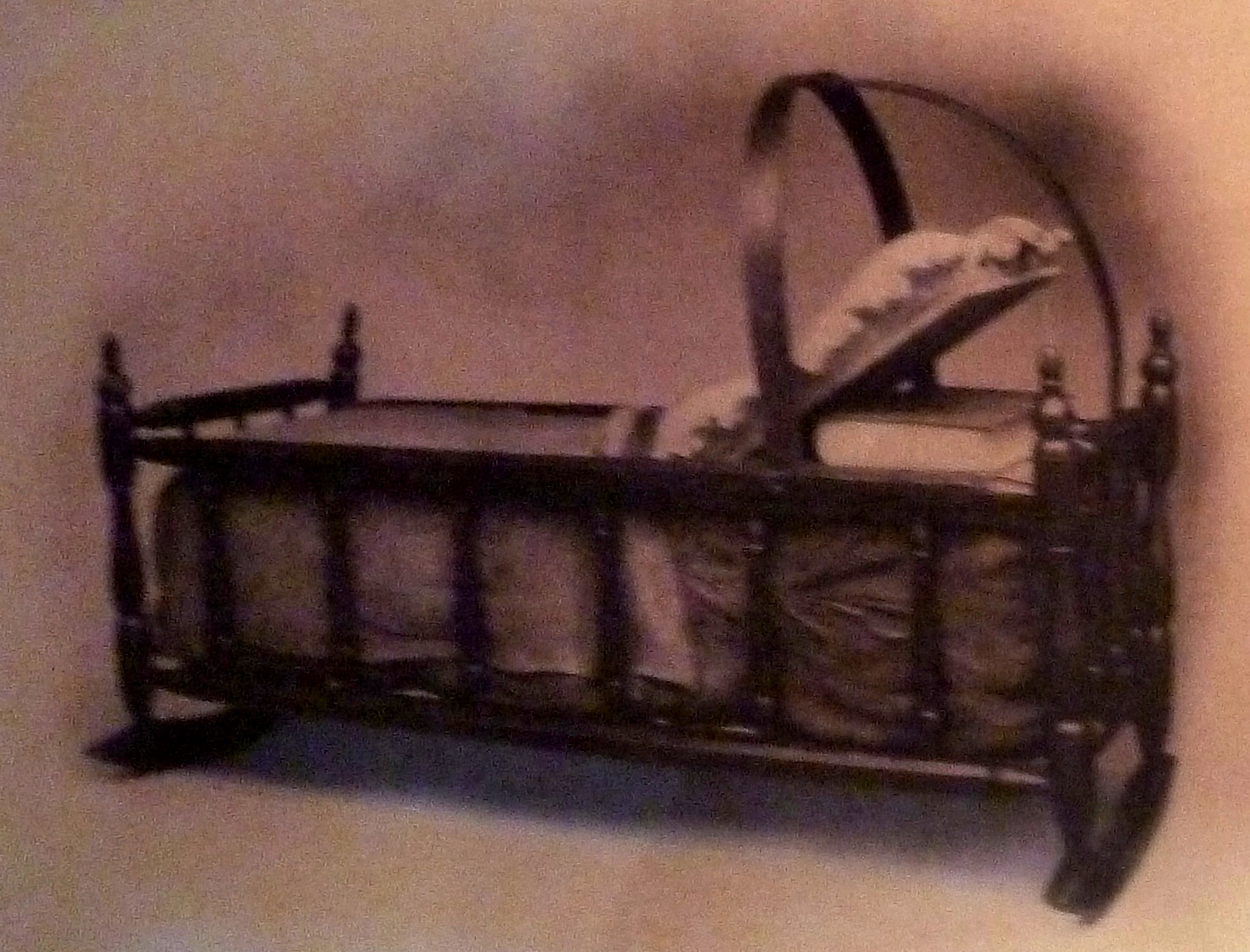
Several photos I took inside the kitchen turned out to be a little blurred so therefore not really publishable, although Mistral's cot is reasonably presentable.

Hen houses, and maybe a pig-pen?


Next to the kitchen were stables on the ground floor with hay fed through to the animals on the upper floor. The large lower rooms now serve as wedding receptions, etc. Walls and fixtures remain in keeping with the original layout.

And what a terrific view of the Alpilles in the background. Sophie Vulpian, the owner and distant relative of the Mistral family, gave us an obviously well-informed and very enthusiastic account of the farm where Mistral spent his early life, which evidently shaped his ideas for the rest of his literary life.


'VOUS QUI PRENEZ CE CHEMIN,
QUE CETTE CROIX VOUS APPORTE
PAIX ET SÉRÉNITÉ'

Finally, just at the entrance to the mas is a calvary, but not the original one which was lost but the one Sophie Vulvian and her parents built in 2008. The base has four sides: the north depicts a verse by Mistral hoping that the cross will bring peace and calm to those who pass; the east side welcomes visitors; the south side is a representation of the Virgin Mary as Our Lady of Grace; and the side turned towards Maillane represents Maillane's coat of arms with the fleurs de glais of which Mistral was fond as a child. Again, many thanks to Sophie for the information.

My Frédéric Mistral posts:
––––––––––––––––––––––––––––––––––––
Frédéric Mistral at Le Mas du Juge
Frédéric Mistral: Mireille
Frédéric Mistral in Maillane
Le Pavillon de la Reine Jeanne, Les Baux-de-Provence
Frédéric Mistral in Saintes-Maries-de-la-Mer
Frédéric Mistral in Saint-Giniez, Marseille
Frédéric Mistral, Marseille
Frédéric Mistral in Avignon
Frédéric Mistral in Saint-Rémy-de-Provence
Frédéric Mistral in Grambois
Frédéric Mistral in Saint-Michel-l'Obsevatoire
Frédéric Mistral in Pertuis

18 July 2016

Le Pavillon de la Reine Jeanne, Les Baux-de-Provence (13)

The beautiful old village Les Baux-de-Provence is, invitably, a tourist trap. But that of course doesn't make it any the less beautiful. Quite a way from the main drag, let's say about half a mile from where the tourists flock, is a delightful oasis of calm, an architectural feature that the great poet Frédéric Mistral (whose main homes are still be be featured on this blog) had a copy of this sixteenth-century temple built as his tomb.


'PAVILLON DE LA REINE JEANNE

C'EST DANS CE JARDIN QUE FUT BÂTI AU XVIÈME SIÈCLE
LE PETIT TEMPLE CONNU SOUS LE NOM DE
"PAVILLON DE LA REINE JEANNE", QUE LES FÉLIBRES, EN SOUVENIR DES LÉGENDAIRES COURS D'AMOUR

ONT BAPTISÉ "TEMPLE DE L'AMOUR".
FRÉDÉRIC MISTRAL EN FIT FAIRE UNE COPIE, POUR SON TOMBEAU, 
AU CIMETIÈRE DE MAILLANE.

CONTRUIT SUR UN PLAN HEXAGONAL,
RECOUVERT D'UNE VOÛTE À IMBRICATIONS, IL S'OUVRE, EN UN COIN
DE JARDIN, PAR TROIS BAIES DONT L'ARCHIVOLTE
PORTE EN CLEF DES MASQUES DE GROTESQUE.
IL EST DÉCORÉ D'ÉLÉGANTES COLONNES CANNELÉES
 DE STYLE IONIQUE. C'EST UNE FORT BELLE OEUVRE DE LA RENAISSANCE.'

Fernand Benoit (1892–1969) was a historian and archeologist born in Avignon. His written works are many, he became curator of the (still closed!) Museon Artalen, and is recognised as the master of Provençal archaeology.

'GRAND RUE
FRÉDÉRIC MISTRAL
FONDATEUR DU FÉLIBRIGE
POÈTE PROVENÇAL
1830 – 1914'

And in Les Baux itself, it's good to know that Frédéric Mistral's name is still remembered.

My Frédéric Mistral posts:
––––––––––––––––––––––––––––––––––––
Frédéric Mistral at Le Mas du Juge, Maillane
Frédéric Mistral: Mireille
Frédéric Mistral in Maillane
Le Pavillon de la Reine Jeanne, Les Baux-de-Provence
Frédéric Mistral in Saintes-Maries-de-la-Mer, Bouches-du-Rhône
Frédéric Mistral in Saint-Giniez, Marseille
Frédéric Mistral, Marseille
Frédéric Mistral in Avignon
Frédéric Mistral in Saint-Rémy-de-Provence

Frédéric Mistral in Grambois