Showing posts with label Philippe (Charles-Louis). Show all posts

29 November 2018

Charles-Louis Philippe: La Mère et l'enfant (1900; repr. in full 1911) | Le Pére Perdrix (1902)

This is a collection of two books in one, the first – La Mère et l'enfant – being a partly autobiographical account of a working-class child at different stages, essentially aged two, five, twelve, fifteen and twenty. There are great hopes for him and – a very promising scholar – he earns a bursary to a lycée, gets his bac and then goes to Paris with even greater hopes. However, he disappoints his parents by ending up with a menial office job, earning a paltry 3 francs 75 per day, with (horrors!) dreams of becoming a writer.

Charles-Louis Philippe's work is noted for its sympathy with the plight of the poor and its hatred of the complacency and callousness of the rich, of which Le Pére Perdrix is a good example. In Bruno Vercier's Preface, he notes that the main character the farrier (with his wife), often called le Vieux and  la Vieille, are based on the Cérilly blacksmith Jean-Baptiste Galand and his wife.

In Le Pére Perdrix we see the farrier being advised by his doctor to cease work because of his failing eyesight. He does so and receives money from the bureau de bienfaisance, although this public assistance is cut off due the collusion of the same doctor and the mayor. The story also involves le vieux's nephew Jean, a well-paid chemical engineer, walking out of his job in sympathy with the striking workers. Soon after his return, Jean walks out on his parents who are disgusted with him and ashamed of his 'idleness'. Jean goes to live with the farrier and his wife, who dies, and Jean takes a reluctant Vieux to Paris and to more poverty.

My Charles-Louis Philippe posts:
––––––––––––––––––––––––––––––––––––
Charles-Louis Philippe Birthplace museum and grave
Charles-Louis Philippe: Contes du matin
Charles-Louis Philippe: Dans la petite ville
Charles-Louis Philippe: La Mère et l'enfant | Le Pére Perdrix
Charles-Louis Philippe: Bubu de Montparnasse

15 August 2018

Charles-Louis Philippe: Contes du matin (1916; rev. and repr. with Preface by David Roe (2009))

In an earlier post I commented on Charles-Louis Philippe's collection of short stories  Dans la petite ville (1910). The later Contes du matin  collection adds some stories which weren't included in the original edition. David Roe has added some stories which Philippe didn't write for the important daily Le Matin, and in so doing this edition (along with Dans la petite ville) represents all of the short stories Philippe ever published.

Whereas Philippe's stories in Dans la petite ville were just that – tales based on those he'd heard or those he imagined happening in the small town of Cérilly where he was born – there are also stories based in la grande ville – Paris, and arguably some of those are a little darker. Of interest (and perhaps a little surprise) is 'Deux apaches' ('Two Thugs'), young yobs who think the world revolves around them, have not the slightest consideration for anyone else, and think nothing of stabbing a drunk in the back and running off leaving him dead. It is the 'apaches' who occupy Lucien's thoughts and fears as he walks back after a drinking session to the (at the time) rather remote Montrouge at one in the morning, although these change to fears of being attacked by a lion escaped from a festival: however, with a rather Maupassian ironic twist (not very usual in Philippe's writing) it transpires that it is not the lion but a dog that he should have been frightened of.

As there are thirty-six stories here, it would be stupid for me to comment on all of them, but I was pulled up sharply when I began 'La Visite'. Philippe had been friends with another working-class writer – Marguerite Audoux – and it was with some surprise that I discovered he'd included a version of her in this story: the character too is called Marguerite (but Dubost), her father walked out on her when she was very young, she was brought up by nuns and then forced to shepherd sheep, later moving to Paris and working as a seemstress, etc. And again, there is a drunken father in 'L'Ivrogne', with two daughters called Marguerite and Madeleine, the name of Marguerite's sister.

Included in the non-Matin stories in one Philippe wrote for the communist paper L'Humanité: true to his usual form, 'Pour les jours des rois' is a working-class story, but one everyone learns differently: Philippe's take on the Nativity is that the three wise men visiting Jesus is a lie invented by the rich, because it was in effect a humble clogmaker and his wife (much like, say, Philippe's parents) who took in Joseph and his heavily pregnant wife.

It won't be long before I read more of Charles-Louis Philippe.

My Charles-Louis Philippe posts:
––––––––––––––––––––––––––––––––––––
Charles-Louis Philippe Birthplace museum and grave
Charles-Louis Philippe: Contes du matin
Charles-Louis Philippe: Dans la petite ville
Charles-Louis Philippe: La Mère et l'enfant | Le Pére Perdrix
Charles-Louis Philippe: Bubu de Montparnasse

4 August 2018

Charles-Louis Philippe: Dans la petite ville (1910); repr. 1997 with Introduction by Francine Masson

This is a collection of Charles-Louis Philippe's short stories which he had intended to publish in one volume, and although his untimely death at the age of thirty-five (probably from meningitis) intervened, André Gide ensured its publication the following year, 1910. This edition of the stories is published by Plein Chat's imprint of working-class authors, Collection voix d'en bas, and a number of them are obviously based on life in Cérilly where Philippe was born and spent his early days, and a number of them no doubt came from the stories that the author's father told him in Cérilly.

Here, the people may be working-class, but they are far from uncomplicated as in stories and novels often written by authors from a middle-class (or even working-class) background. These tales don't distort by nostalgia or glorification: they show a whole series of often contradictory emotions: jealousy, hatred, boredom, despair, love, childish mischief and its often negative effects, etc: Charles-Louis Philippe's stories show life in general.

And they are shown with a sense of humour as well as an eye for tragedy, irony, and misfortune. Charles-Louis Philippe deserves much more than the semi-oblivion he's been subjected to.

My Charles-Louis Philippe posts:
––––––––––––––––––––––––––––––––––––
Charles-Louis Philippe Birthplace museum and grave
Charles-Louis Philippe: Contes du matin
Charles-Louis Philippe: Dans la petite ville
Charles-Louis Philippe: La Mère et l'enfant | Le Pére Perdrix
Charles-Louis Philippe: Bubu de Montparnasse

22 July 2018

Charles-Louis Philippe in Cérilly, Allier (03)


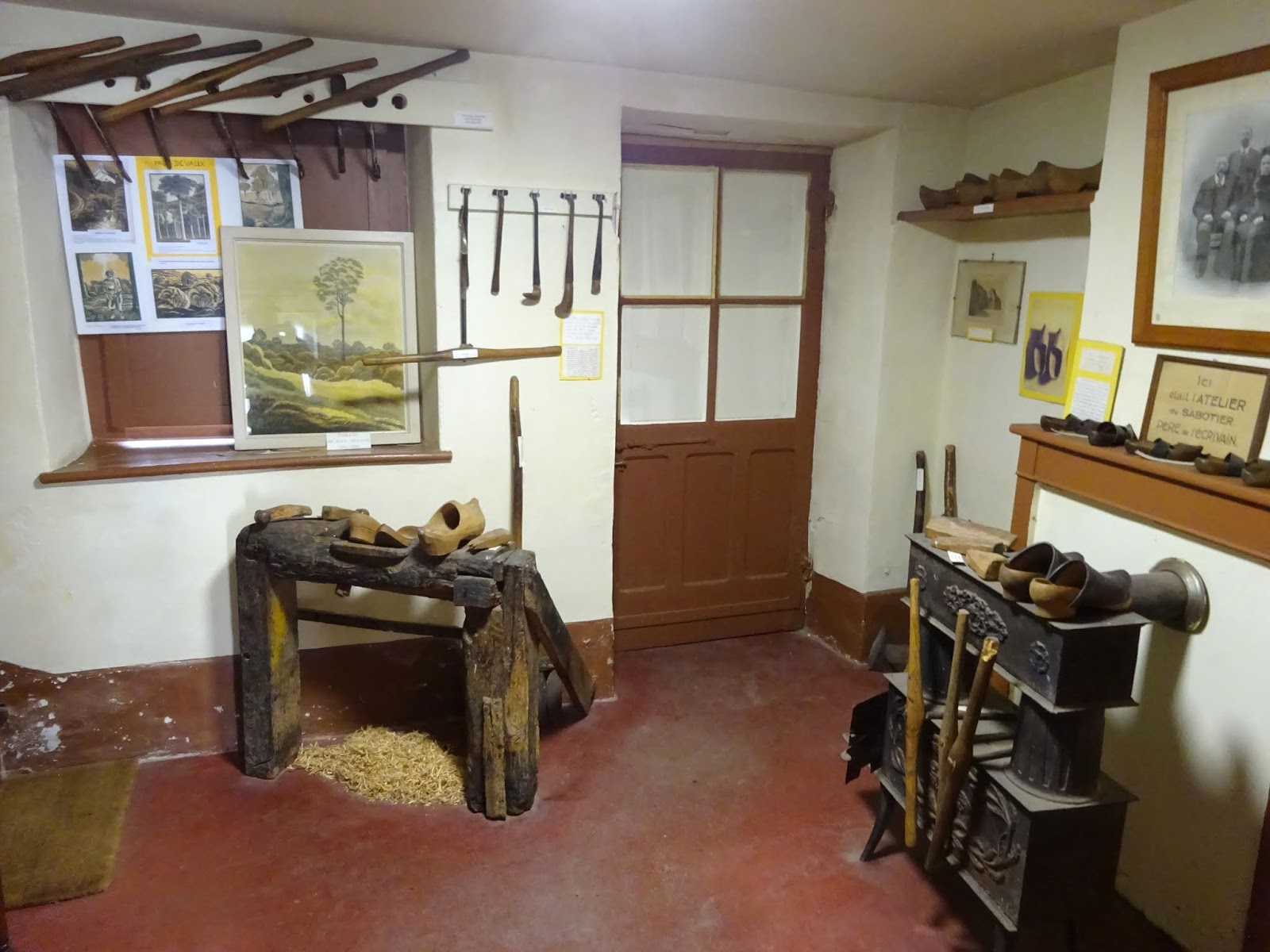
So, this is the birthplace of the novelist Charles-Louis Philippe (1874–1909), who lived here for twenty-two years and came back every summer: the place inspired his writing. The room we enter is where Philippe was born, and the following room shows his clog-making father's craft.


Charles-Louis's room which became his on the death of his half-sister Félicité. The adjoining room, which was his twin sister Louise's, is now full of information on Charles-Louis.


Two paintings made in 1903 by Charles-Louis Philippe's friend Charles Guérin.

Marie Donadieu, with whom Philippe had a relationship of only several months due to her 'betrayal', and about whom he wrote a book.


Images of Charles-Louis Philippe's grave in Cérilly.

My Charles-Louis Philippe posts:
––––––––––––––––––––––––––––––––––––
Charles-Louis Philippe Birthplace museum and grave
Charles-Louis Philippe: Contes du matin
Charles-Louis Philippe: Dans la petite ville
Charles-Louis Philippe: La Mère et l'enfant | Le Pére Perdrix
Charles-Louis Philippe: Bubu de Montparnasse

9 November 2017

Charles-Louis Philippe: Bubu de Montparnasse (1901)

Charles-Louis Philippe was born on 4 August 1874 in Cérilly (Allier) and died in Paris in 1909 at the age of thirty-five. He was born into a very poor family, but became one of the co-founders La Nouvelle Revue française. His novel Bubu de Montparnasse is set in the twilight zones of Paris, its main characters being the pimp Maurice (or Bubu de Montparnasse of the title), his prostitute Berthe, and her respectable client Pierre Hardy.

Berthe is essentially worthy and only dragged into prostitution by her lover Maurice, the pimp who lives off her, degrades her, and in the end more or less kidnaps her back into a life of sexual slavery.

In between, we have Pierre scraping a legal living and meeting Berthe, with whom he has formed an emotional attachment while she is living with her pimp. There is much material filth amongst the moral degradation, living hand to mouth, and syphilis is a major result, even a symbol perhaps, of that mental degradation: Berthe, Pierre and Maurice all contract it. But religion is never really seen as a way out of the impasse, only mentioned as a way out that some people use.

There seem to be few ways of escape from poverty, if indeed any, although apart from the brief respite of a little cheaply and sordidly made money, and of course theft, resulting perhaps in a custodial sentence before a return to the pimp-prostitute-john cycle.

My Charles-Louis Philippe posts:
––––––––––––––––––––––––––––––––––––
Charles-Louis Philippe Birthplace museum and grave
Charles-Louis Philippe: Contes du matin
Charles-Louis Philippe: Dans la petite ville
Charles-Louis Philippe: La Mère et l'enfant | Le Pére Perdrix
Charles-Louis Philippe: Bubu de Montparnasse