Showing posts with label Millay (Edna St Vincent). Show all posts
16 August 2015
18 June 2014
Edna St Vincent Millay, Austerlitz, NY
Libellés :
Austerlitz (NY),
Boissevain (Eugen),
Millay (Edna St Vincent)
'EDNA ST. VINCENT MILLAY
NOTED AMERICAN POET, RESIDED
IN THIS HAMLET OF AUSTERLITZ
AT HER HOME "STEEPLETOP"
FROM 1920 UNTIL 1950'
Well, this is mostly true, although there's a slight exaggeration: Steepletop (named after a flower growing there) wasn't bought until 1925.
The sign outside the office, in which there's a collection of Millay's first editions, several paintings by Millay's brother-in-law Charles Ellis (her sister Norma's husband), and where you can watch a thirty-minute DVD about Edna St Vincent Millay (1872 to 1950).
Two shots of the west elevation of Steepletop, the home in which 'Vincent' spent most of the time with her husband Eugen Boissevain from shortly after their marriage in 1923 until their respective deaths in 1949 and 1950.
The original house dates from the year of Millay's birth, and this south elevation underwent considerable alteration after the couple bought it. Our guide (or docent) to this property was the exuberant Carol Derfner, although (as is so depressingly common in authors' houses) no photography is allowed within the building itself.
Martha Raftery, Manager of Visitors' Services, took over on the second (garden) leg of the tour (the visitors of which wonderfully consisted of only me and my partner Penny), and this time I was allowed to take any photos I wished. Above is the site of the bar where Vincent and Eugen and any invited guests took advantage of the rather lax prohibition laws.
The pool, where now the only naked and noisy creatures are the frogs.
An Indian Cupid drawing an arrow from his sheath.
The potting shed with original material inside.
Tins of coffee at the bottom – Eugen was an importer of it – and wine bottles above. They made their own wine, although I don't know where as there's apparently no press on the property.
Millay's little writing cabin.
And the desk on which she did her writing.
The heating system.
The society has remained faithful to the original plants on the property, such as these lupins.
And this rhubarb.
The original ice house.
A few hundred yards from the office is the Millay Poetry Trail, which visitors can follow for about a mile. Protection from mosquitoes is recommended, as my head still bears the scars.
'Millay
Poetry Trail
Given by the Friends
of the Millay Society
in honor of
Millay's Literary Executor
Elizabeth Barnett
who saved
Steepletop'.
A series of quotations from Millay's poetry punctuate the trail, which is perhaps a mile long. This is the final one, and is appropriately called 'Steepletop' (c. 1953).
At the end two plaques mark the graves which lie there.
'EUGEN JAN BOISSEVAIN
1880–1949'
'EDNA ST. VINCENT MILLAY
1892–1950'
This is a fascinating tour which I thoroughly recommend: well worth going some distance out of the way for.
My other Edna St Vincent Millay posts:
––––––––––––––––––––––––––––––––––––
Nancy Milford: Savage Beauty: The Life of Edna St. Vincent Millay
Edna St Vincent Millay in Ring's Island, Salisbury
25 May 2014
Nancy Milford: Savage Beauty: The Life of Edna St. Vincent Millay (2001)
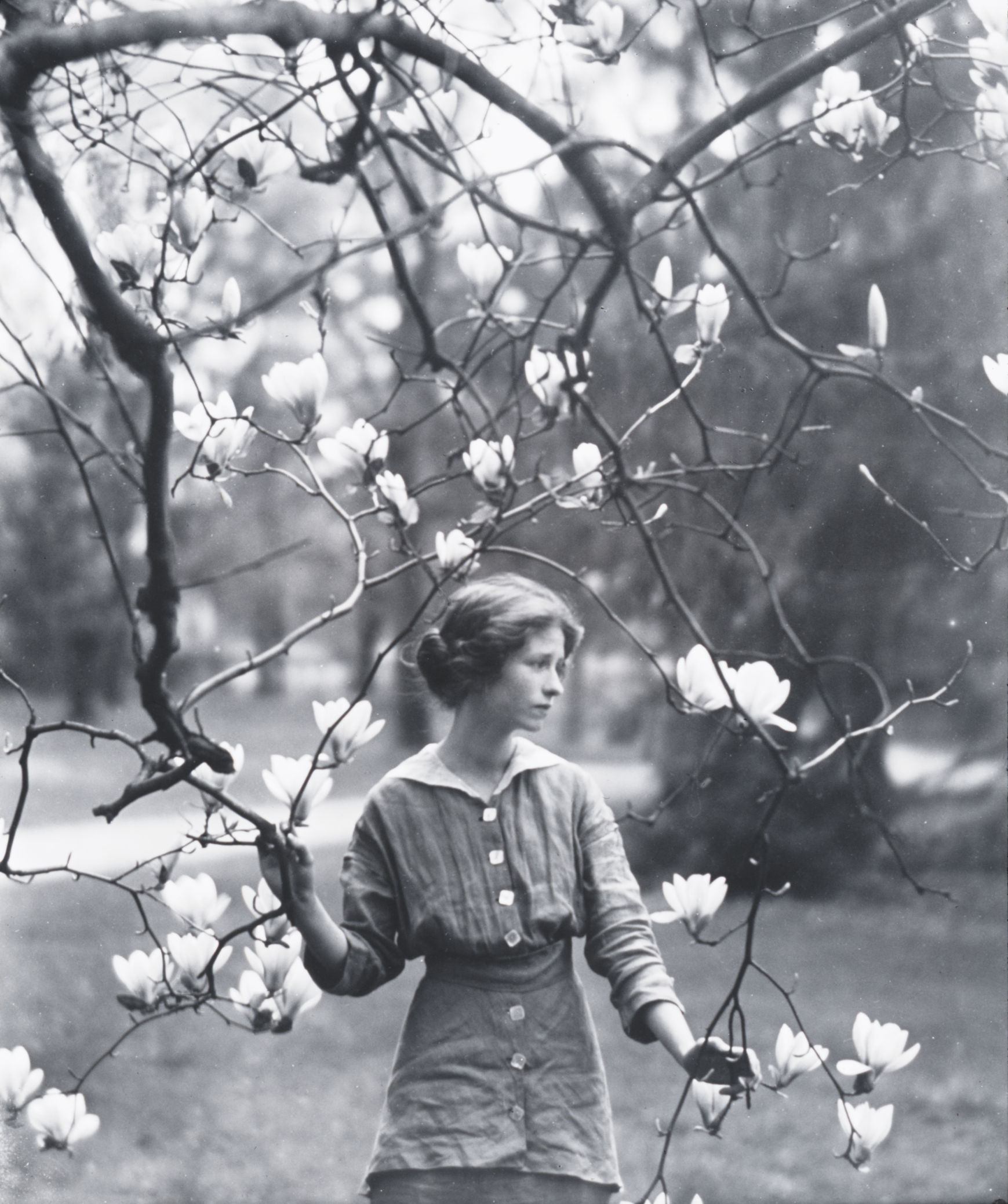
The famous 1913 photo taken in Mamaroneck by Arnold Genthe
'My candle burns at both ends;
It will not last the night;
But ah, my foes, and oh, my friends –
It gives a lovely light!'It will not last the night;
But ah, my foes, and oh, my friends –
We had gone back and forth all night on the ferry'.
My other Edna St Vincent Millay posts:
––––––––––––––––––––––––––––––––––––
Edna St Vincent Millay, Austerlitz, NY
Edna St Vincent Millay in Ring's Island, Salisbury
13 December 2011
Edna St Vincent Millay in Ring's Island, Salisbury, Massachusetts: Literary New England #18
A brief childhood home of Edna St Vincent Millay (1892—1950) at the Jonathan Dole House (built 1680), 5 Third Street, Ring's Island, Salisbury, which is on the northern shore of the Merrimack River facing Newburyport, Massachusetts.
Millay (Edna St Vincent), Salisbury (MA), Amesbury, Ring's Island, Massachusetts, Newburyport.
My other Edna St Vincent Millay posts:
––––––––––––––––––––––––––––––––––––
Edna St Vincent Millay, Austerlitz, NY
Nancy Milford: Savage Beauty: The Life of Edna St. Vincent Millay
10 July 2008
Literary New York City (Mainly)
I may have taken all of these images of New York City, although I'd have been unaware of the existence of most of them without Kevin Walsh's Forgotten New York, a real mine of information on many of the more obscure aspects of New York City's history. One of the most interesting things about this book is that it doesn't just cover what many people – North Americans included – often refer to as New York City: Manhattan tout court: Manhattan, of course, is only one New York's five boroughs: all too often, we forget that Staten Island, Brooklyn, Queens and the Bronx are also a part of New York City.
Many thanks, too, to my partner Penny Atkinson, who assisted me in finding many of these places.
'We were very tired, we were very merry—
In the early part of the previous century, the land on which these structures now stand in Flushing Meadows–Corona Park, near the town of Flushing in Queens, was an ash disposal heap. In The Great Gatsby, F. Scott Fitzgerald describes it as 'a fantastic form where ashes grow like wheat into ridges and hills and grotesque gardens'. That quotation is my excuse for showing these three weird images. New York's two World Fair's were in 1939 and 1964, and the remains of these occasions still, gloriously, litter the park.
The above structure was part of New York State Pavilion. This was the Tent of Tomorrow, showing the sixteen 100-foot columns which supported the roof. Sky Streak capsule lifts took people to the top.

Many thanks, too, to my partner Penny Atkinson, who assisted me in finding many of these places.
'We were very tired, we were very merry—
We had gone back and forth all night on the ferry'
Edna St Vincent Millay's famous words, from her poem 'Recuerdo', evoke the hedonism of the 1920s. She is speaking, of course, of the Staten Island ferry, still one of the greatest free rides in the world.</> This is a view of Manhattan financial district from the ferry.
It is worth exploring Staten Island itself, and a frequent train service will take you to the bottom of the island in about forty-five minutes.
In the early part of the previous century, the land on which these structures now stand in Flushing Meadows–Corona Park, near the town of Flushing in Queens, was an ash disposal heap. In The Great Gatsby, F. Scott Fitzgerald describes it as 'a fantastic form where ashes grow like wheat into ridges and hills and grotesque gardens'. That quotation is my excuse for showing these three weird images. New York's two World Fair's were in 1939 and 1964, and the remains of these occasions still, gloriously, litter the park.The above structure was part of New York State Pavilion. This was the Tent of Tomorrow, showing the sixteen 100-foot columns which supported the roof. Sky Streak capsule lifts took people to the top.

Above is Theodore Roszak's Forms in Transit, one of the most difficult exhibits to find.
The bust above is of Harriet Beecher Stowe, and is one of a number of writers, politicians, etc, in the Hall of Fame at the Bronx Community College.
This statue is in a prominent position, in the Literary Walk in Central Park, Manhattan. Here, Shakespeare, Robert Burns and Walter Scott stand: all very famous men. Above, though, is a forgotten man of American poetry: Fitz–Greene Halleck (1790–1867). Rather than paraphrase someone else's description of Halleck's work and life, the reader is best directed to The Fitz–Greene Halleck Society web pages.
A rather odd thing for a person from Nottingham, England, to find a plaque dedicated to fellow Nottinghamian William Booth, the founder of the Salvation Army, in Battery Park, Lower Manhattan.
This blog supports Barack Obama in his battle to become President of the United States: at least he didn't vote for the war on Iraq, and he represents hope to so many in a deeply divided country. But he has a fine juggling act to perform, and he also supports the neo-liberal ethos which causes poverty: even if he wins two terms, how much will he have achieved in that time?
The photo above and the one below were taken in Alphabet City, Manhattan.

Poe Cottage in the Bronx is the farmhouse where Edgar Allan Poe lived between 1846 and 1849. Now a museum, the building was closed for general renovations when visited in June 2008.
Almost impossible to read because situated so high up the wall, this plaque in the Upper West Side at Broadway and 84th Street marks the site where Poe spent the summer of 1844 on a farm. The building is a café.
Patchin Place, Greenwich Village, Manhattan, once home to several literary figures, among them E. E. Cummings and Djuna Barnes.
Coney Island, Brooklyn, is now a shadow of its former self (and still under threat), but many New Yorkers continue to flock to the beaches. The occasion here was the Mermaid Parade, 21 June 2008. Literary references? How about Styron's Sophie's Choice?
Inevitably, Brooklyn Bridge evokes thoughts of Whitman's ferry crossing and Hart Crane's poem, but also, of course, the wonderful Marianne Moore.
The entrance to New York Public Library, home of, among many others, manuscripts by such diverse writers as Shelley and Kerouac.
Subscribe to:
Posts (Atom)
.jpg)