18 September 2016

Cimetière de Montmartre (continued): #2: Juliette Récamier


Juliette Récamier (1777–1849) (née Bernard) was born and grew up in Lyon and married the banker Jacques-Rose Récamier in Paris in 1793. The marriage was platonic, and indeed Jacques-Rose may well have been her real father. She became a friend of Madame de Staël, was against Napoléon, and Juliette's salon had an important role in the political and intellectual life of the time. Following an exile of about three years (1811–14) she returned and continued her salon in political neutrality. Often accompanied by Chateaubriand, over the years she received such young writers as Lamartine, Sainte-Beuve and Balzac.

Many paintings were made of her, including the one above, which shows a detail from a work by François Gérard.

17 September 2016

Cimetière de Montmartre (continued): #1: Claude Simon

'CLAUDE SIMON
1913–2005'

Grave finding in many of the larger cemeteries in the Paris area seems endless. How did I miss Claude Simon, winner of the Nobel Prize for Literature in 1985? Possibly because he's one of the important French authors whose work I've yet to read. But I aim to rectify that soon.

Nelly Arcan: Putain | Whore (2001)

There's something seriously wrong with the cover of this book: this is very deceptive marketing. The male hand down the young girl's underpants suggests titillation, a sexy read, although this is anything but that. It's disturbing, written as if in a frenzy, as if the narrator is at the end of her rope. Which is, I admit, an unfortunate way to phrase it because eight years after the publication of this novel Nelly Arcan, at the age of 36, hanged herself in her apartment in Montréal.

This is autofiction: much of the way of life described here was actually lived, and many of the feelings described were actually felt. Arcan went to the Université de Québec à Montréal (UQAM) to study Literature, and she had access to a reasonably comfortable lifestyle because of the prostitution which financed it.

This is not a novel with a plot as such, it's more of a howl of rage against the nature of the world, her parents, and men in general. It's not a comfortable read both because of its subject matter and the style in which it's written: there are no speech marks, the paragraphs are long, and the sentences are very, very long, rambling on and on at the speed of thought, repeating, digressing, hating.

The narrator had a hypocritical religious upbringing, her mother lying in a larval state most of the time, her very pious father having little communication with his wife. And the narrator doesn't mince her words: free from her parents, she sucks thousands of dicks, is fucked up the ass according to the whim of the client, has her face covered in sperm, and the unseen bag under the sink is emptied when it's full of wet tissues and spent condoms. Although some of the regular customers are remembered for their idiosyncrasies, most of them are viewed as if items on a conveyor belt, hungry for gratification, deceiving themselves that the prostitute is enjoying it, that she has an orgasm, that they make her wet. Many of the activities are as play-acting, with the narrator as the key actor, faking sighs, faking orgasm.

And she generalises, sees all women as types of prostitute, sees most human interactions on an economic basis, goes to a psychotherapist who doesn't seem interested in her, envisages the day when she'll meet her father as a client at the door. Her 'friends' are not the students she studies with, but the prostitutes she shares more life history with, with whom she can have a drink and maybe laugh about dick sizes. It seems unsurprising that she frequently mentions suicide in her ramblings.

I was a little surprised to find that not a single book of Nelly Arcan's appears in the Library of Congress catalog, and that the translation of this work – Whore – doesn't seem to be in the British Library catalogue: Putain may make for a rocky ride, but it is undoubtedly a major work of French Canadian literature.

Marie NDiaye: Papa doit manger (2003)

Papa doit manger is a play by Marie NDiaye and, like much of her work, its chief concerns are the family and desertion. Here, a family consisting of Papa of African origin and Maman from France (like NDiaye's parents) live in Courbevoie and have two daughters – Mina and Ami. Papa, though, has abandoned his family and returns after ten years, hoping to be reinstated in the family. He's well-dressed and claims to be a businessman, to have become rich.

But the household has changed and Zelner, a schoolteacher, has moved in. Maman scraped by after Papa left, forcing her to give up her apprenticeship in hairdressing and merely continue working in the hairdressing business for someone else rather than for herself. She doesn't believe a word of Papa's story.

The fact is that Papa has been living in Courbevoie for the last ten years with Anna, is wearing clothes her brother has lent him, has a handicapped baby whom he hates, and is merely trading on his wife's favours, her supposedly eternal love for him, to lend him a lot of money. But although Maman gives him money things don't turn out exactly as he expects.

Although Maman does indeed still love Papa and spends a night in a hotel with him, she later intends to kill him but just disfigures his face with a knife and subsequently marries Zelner.

This is without mentioning the negative opinions of Maman's parents, or the slightly mixed opinions of the two maiden aunts, but through the years to come the jobless Papa sponges off Mina and her husband, regularly visits Maman and her husband Zelner, and even comes knocking on Maman's door pleading to return: on the day of Zelner's funeral.

Links to my other Marie NDiaye posts:
–––––––––––––––––––––––––––––––––––
Marie NDiaye: La Sorcière
Marie NDiaye: Rosie Carpe
Marie NDiaye: Autoportrait en vert
Marie NDiaye: Ladivine
Marie NDiaye: Trois femmes puissantes
Marie NDiaye: La Femme changée en bûche
Marie NDiaye: Mon cœur à l'étroit
Marie NDiaye: En famille
Marie NDiaye: Un temps de saison
Marie NDiaye: Les Serpents
Marie NDiaye: Les Grandes Personnes
Marie NDiaye: Quant au riche avenir
Marie NDiaye: Tous mes amis
Marie NDiaye: Quant au riche avenir
Marie NDiaye: Tous mes amis
Marie NDiaye: Hilda

15 September 2016

Cimetière Saint-Vincent, Montmartre (continued): #8 Pierre Sales

Pierre Sales (1856–1914) was a prolific writer of some sixty popular novels, some of which were serialised in periodicals of the time, and some of which were adapted into plays. His name is virtually forgotten.

Cimetière Saint-Vincent, Montmartre (continued): #7 Stello

The huge growth of vegetation around this grave makes it somewhat anonymous, although it conceals an interesting character. Stello was the pseudonym of Paul Fichter (1882–1945), a chansonnier asociated with the famous literary café Le Lapin Agile in Montmartre. He had one leg as a result of an injury in World War I.

Cimetière Saint-Vincent, Montmartre (continued): #6 David Gruby


David Gruby (1810–98) was a Hungarian doctor noted for his work on microbiology and mycology. He lived in Paris from 1840 and among his patients and friends were Balzac, Chopin, Alexandre Dumas père and fils, van Gogh, Heinrich Heine, and George Sand. He published a paper in Latin on microscopy (1840), and another on man and the machine (1866).

14 September 2016

Cimetière Saint-Vincent, Montmartre (continued): #5 Jules Adler

Jules Adler (1865–52) was a naturalist painter who was born in Luxeuil-les-Bains and died in Nogent-sur-Marne. His home in Paris was a center for the Dreyfusards. He became noted for his paintings of the working classes, and set up a canteen in Pigalle to help artists during World War I. He died in relative poverty.

Cimetière Saint-Vincent, Montmartre (continued): #4 Maurice Utrillo

Portrait de Maurice Utrillo par sa mère Suzanne Valadon.jpg

Maurice Utrillo (Maurice Valadon)  (1883–1955) was a painter who was born in rue du Poteau in Montmartre and who died in Dax. His mother was Suzanne Valadon (1865–1938)  real name Marie Clémentine Valadon – who was a model for several artists, among them Toulouse Lautrec and Vincent van Gogh.

Maruice Utrillo became a noted painter and received the Légion d'honneur in 1929.

Cimetière Saint-Vincent, Montmartre (continued): #3 Marcel Carné

Marcel Carné (1906–96), the world famous film director noted perhaps mostly for Quai des brumes (1938), Hôtel du Nord (1938) and Le Jour se lève (1939). He was homosexual and is buried with his partner, the actor Roland Desaffre (1927–2009).

13 September 2016

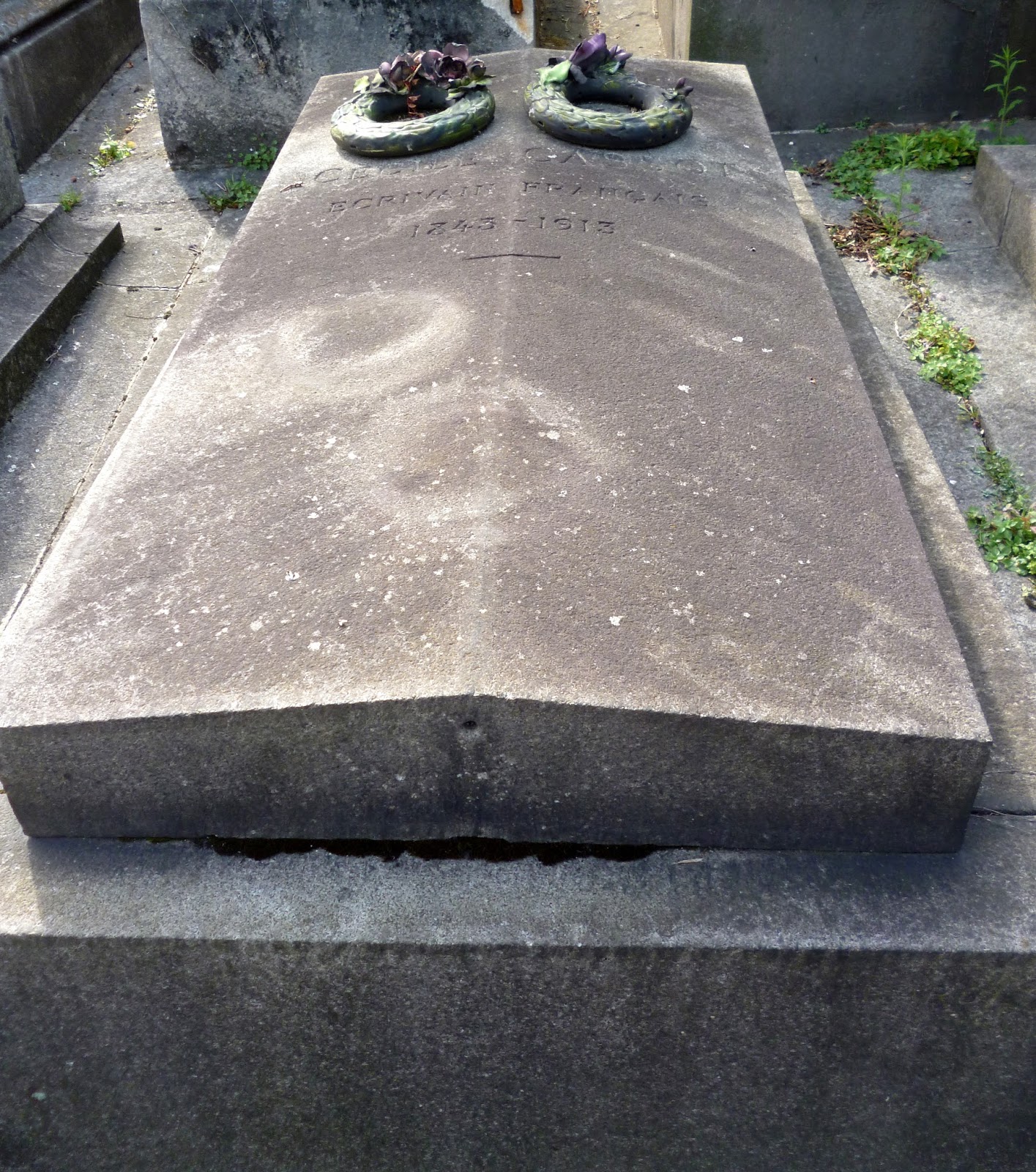
Cimetière Saint-Vincent, Montmartre (continued): #2 Cécile Cassot


Cécile Cassot (1843-1913) was a novelist whose works include Un Amour de prêtre (1883), Honorée (1886), Le chant de l'alouette (1887, with a Foreword by Henri Fouquier), Trop aimée (1888), Pourquoi ne le dit-elle pas ? (1890), Le Secret d'Ursule (1890), La Vierge d'Irlande (1890), Autour d'un tableau (1891), La Fleur de résurrection (1894), Les Femmes de demain (1907), Les Éperviers de la Régence (1908), Outragée ! (1909), and Dompteuse (1912).

In Le Massacre des amazones : étude critiques sur deux cents bas-bleus (lit. 'The massacre of the Amazones: Studies of Two Hundred Blue Stockings') (1899), Han Ryner finds (among a number of other negatives) that Cassot has 'as much as any other political orator, the genius of imprecision'. He also sees her as 'the genius of pleonasm': 'The Cassot can hardly say 'That wasn't possible' without adding 'That couldn't be.' The language he uses to attack her is so fierce that I can't help but wonder if his brief analysis of Cassot's work tells us more about Cassot or Ryner himself.

Cimetière Saint-Vincent, Montmartre (continued): #1 Sédir

Paul Sédir, or Yvon Le Loup (1871–1926), was the author of a number of publcations on esotericism and Christian mysticism. After a few years teaching himself the occult he met the prominent occultist Papus (Dr Gérard Encausse) in 1889 at the bookshop 'Librarie du merveilleux', and they became friends. The bookshop was establishedd by Lucien Chamuel, who published a number of Sédir's works.

The Mojave Phone Booth and the Pont du Garigliano


Bear with me regarding the two above images. My attention was drawn this weekend to an article in the newspaper Libération on the writer Jean-Paul Dubois, whose novel La Sucession was incidentally included in the first selection (along with fifteen other novels) for the Prix Goncourt. The article mentions the 'Hitchcockian character' Selma Chantz, who appeared in Dubois's novel Accommodements raisonnables (2008), which is also the name used by the person who picked up the phone in the Mojave phone booth when Dubois called its number. He'd heard about the phone booth from the Los Angeles Times and was so intrigued that he not only called the number but travelled over 6000 miles to visit the phone booth and answer the phone himself. He made a highly memorable story out of it for the magazine the Nouvel Observateur.

Google 'Mojave phone booth' and you get different stories about the date of its installation in the middle of the desert, miles from any proper road, and even the reason for its being installed there in the first place. It seems, though, that it was there because there was a volcanic cinder mine there. Over the years a myth grew up around it, and the phone booth became almost a place of pilgrimage for any tourists of the weird to answer it's widely distributed number. It was dismantled in May 2000, the same year that Dubois visited it, because of ecological concern. (I refuse to believe any sites saying that it was re-instated in 2013.)

On then, to the two images above. The artist Sophie Calle was inspired by the story of the Mojave phone booth in 2006, and Frank Gehry was responsible for the construction of the huge kind of flower-like object called Le Téléphone, in the middle of the Pont du Garigliano in Paris, with a one-way telephone that Sophie Calle herself used to call and talk to anyone passing on the bridge who happened to pick up the phone. I was aware that graffiti had plagued the installation, that the telephone had been stolen, but not that the whole installation had been removed in 2012. The two protruding objects are in the middle of the bridge must be all that remains of Le Téléphone. Sad.

11 September 2016

Christian Oster: Rouler (2011)

Although published nearly ten years after the last book of his I read (Dans le train (2002)) many of the hallmarks of the previous book(s) of Christian Oster are here: the obsessing about minute detail, the unexpected, the strange, the old school friend, the agonising over buying minor items, the edgy atmosphere, the twists in the narrative, etc.

Jean (whose name we don't discover until much later in the story) just takes off on a road trip towards the south of France, although he has no specific place or plans in view, and we don't know why he's doing it. It wouldn't exactly be true to say that actions speak louder than words in the Oster world, as often very little is said, although the first person narrator is well aware of the ambiguities and the misinterpretations of speech, that talk often only serves as furnishing, filling in the spaces, and so on.

Jean vaguely has Marseille in mind, although he only finishes there by accident, and by avoiding Lyon and taking the wrong roads he accidentally finds his way to the Ardèche. The plot meanders like his car, and almost half of the book is over before he finds the relative stability of his school acquaintance Fred Malebranche's 'castle' near Arles, which isn't a castle at all but a rather odd hotel with rather odd guests.

Before that, though, Jean is delayed by two hitch-hikers who make him wait while they have a naked swim; gets involved with a couple in a hotel, the husband of which appears to be having serious breathing problems; and is helped by Paul and Claire when he gets lost, although when Claire drives him to his car he finds that she's running away from Paul, and she takes some time to shrug off.

And so back to Fred Malebranche and his (strange, of course) wife Hélène: Fred, although he hardly knows Jean, nevertheless treats Jean as a guest and almost as a long-lost friend. But Jean gets on far more with the older 'castle' regular Ségustat, whom he tells he's just wandering around the country because he's recovering from his girlfriend leaving him, and her recent death. This is while they're drinking coffee and then having a meal in nearby Mouriès. Jean begins teaching Ségustat to swim, even buys him a pair of goggles, but he will never use them.

It's only after Jean follows the ambulance carrying the very sick Ségustat to hospital and a phone call informs him that someone's in his property in Paris that the full meaning of the title 'Rouler' becomes evident: 'driving' is one obvious translation, but it also means 'con' or 'nick', and Claire has stolen his credit card and apartment keys.

My other posts on Christian Oster:

––––––––––––––––––––––––––––––––––––
Christian Oster: Dans le train
Christian Oster: Une femme de Ménage | Cleaning Woman

Christian Oster: Le Cœur du problème
Christian Oster: Mon grand appartement
Christian Oster: En ville

10 September 2016

Marie Darrieussecq: Tom est mort | Tom Is Dead (2007)

Marie Darrieussecq's Tom est mort is another mourning book, although it was beset by controversy: Camille Laurens claimed in La Revue littéraire that Tom est mort is a 'psychic plagiarism' of her auto-fictional Philippe, on which I commented here, Marie NDiaye strongly agreed with Laurens,* although Paul Otchakovsky-Laurens removed Laurens from the P.O.L. stable as a result of the article, and Laurens later published (via her new publisher Gallimard) Romance nerveuse (2010), a kind of auto-fictional stab back.

Tom est mort was written ten years after Tom's death. And 'Tom est mort' is a much-repeated expression throughout the novel, which has no clear continuous narrative, but is rather a long lament from an apparently half-demented (or at least severely disturbed) mother ten years after the death of her son Tom. She re-visits his life through photographs and recordings, but above all through memories, to preserve his existence.

Tom was the product of a marriage of a French mother and an English-speaking father and the family travel the globe according to the father Stuart's professional obligations. Tom came before Vince (now seventeen), and after Stella, who was eighteen months at the time of his death. And still, ten years after his death, the obsessive voice of the mother can't accept the fact, talks of still mourning, never ends lamenting. This novel is a taxonomy of mourning, and it's very clever, very well done, although perhaps a bit too repetitive, a bit too seamless.

*Marie NDiaye had previously criticised Marie Darrieussecq of 'singerie' maining relating to her novel La Sorcière (1996) in Darrieussecq's Naissance des fantômes (1998).

My other Marie Darrieussecq posts:
–––––––––––––––––––––––––––––––––––
Marie Darrieussecq: Naissance des fantômes | My Phantom Husband
Marie Darrieussecq: Truismes | Pig Tales

Pascale Roze: Le Chasseur Zéro (1996)

Pascale Roze, born in Vietnam, was inspired to write on reading Marquerite Duras, who was of course also born in Vietnam, then known as Indochina. Coincidentally, Roze won the Prix Goncourt with this novel, and the woman before her who won the Goncourt was in fact Duras, with L'Amant in 1984. That's twelve years between, which in the 113-year history of the Goncourt makes it about average for a woman. The gap between men and women writers is perhaps beginning to close slightly, but nevertheless in those 113 (soon to be 114) years only eleven women have been successful. There must surely be something wrong here because I can't believe that men are naturally better writers than women – the mere suggestion is absurd.

But to return to Pascale Roze's Le Chasseur Zéro, which was incidentally her first novel. The first person narration is by Laura Carlson (born of a French mother and an American father), a woman who has never known her father and grows up with her psychiatrically disturbed mother and her very odd grandparents.

With the encouragement of her school friend Nathalie she begins to research into her father's past, much to the anger of her grandparents and her mother. Andrew Carlson died in the aircraft carrier Maryland in Okinawa in 1945, killed by a kamikaze pilot in a plane with the same name as the book: 'Le Chasseur Zéro'.  Laura investigates more, reads the journal of the kamikaze pilot Tsurukawa, and becomes obsessed.

Obsession is a dangerous thing as it can lead to psychiatric disorder. Laura becomes preoccupied by Tsurukawa, hears the sound of war to such an extent that she has to take sleeping pills and wear earplugs in an attempt to muffle the noise in her head. Even her long relationship with the musician Bruno is destroyed by it.

8 September 2016

Christian Oster: Dans le train (2002)

Dans le train, published a year after Une femme de ménage, also has an odd young woman as the central point of focus, and the unmistakable imprint of the previous book is on this: the obsessing about tiny psychological factors, should he say, or do, this or that, or why has she said or done this or that? The minutiae of apparently unimportant actions take on a huge importance for Frank, the first person narrator.

It all starts while waiting for a train: Frank has decided to go on a day trip to Rouen, although he has no plans as to what he's going to do there. He sees that a young girl is holding a bag which looks heavy: maybe she doesn't want to put it down for fear of soiling the bottom. Frank therefore decides to play the gallant card and offers to relieve her of her weight. Just like that: he doesn't say he fancies the girl of anything else, he just does it.

And he puts the bag on the luggage rack for her and asks if he can sit next to her, which he can, although Anne says she's not much of a talker, although it turns out she is, and they have a conversation for an hour until the train stops at (the fictional) town of Gournon, where they have to change for Rouen, where Anne is also going. But Anne doesn't want Frank to carry her bag anymore as she says she's meeting her sister at the station and doesn't want to be seen with a man.

Frank, however, hides in the shadows and watches Anne wait for twenty minutes until she leaves the station and goes to a hotel. He decides he'll go there too: after all, they're both supposed to be going to Rouen but neither of them is doing so that day. And Frank's suspense regarding the young girl is such that he knocks on the hotel room doors until he finds Anne, who is surprised and not too happy to find Frank in the doorway, although she doesn't seem too bothered about what amounts to a virtually unknown man tracking her down. She doesn't let him in though.

Then Frank, who hasn't been carrying a bag or anything, realises that he must seem a little dirty to Anne: she may have guessed (incorrectly, of course) that he has a fold-up toothbrush in one pocket, but his other one surely isn't bulky enough to hold a pair of underpants. (There's no mention of a clean shirt or pair of socks.) So he goes out to just buy new underpants (although there's no further mention of a toothbrush, fold-up or otherwise).

On his return Frank finds Anne in the hotel lounge, and she invites him to come to a session in a bookstore, where (the fictional) Marc Soupault is giving a talk. I'll pass up on the details of the talk (which isn't much of one anyway) and move on to later that evening, when a rather distressed Anne appears on Frank's doorstep in a bathrobe which she hasn't bothered to fasten properly. She says Marc has just 'taken' her, but that's not it – the correct word is 'fucked', and Frank can 'take' her if she wishes. Frank is slightly gladdened that Anne has used the word 'taken' for him, but like Anne he admits that he doesn't want to indulge in sex either.

That's the story so far, and if the reader is expecting all ends neatly tied up at the finish of the book, to discover what Anne's relationship with Marc really was, then he or she hasn't encountered Christian Oster before. I'll just say they go to see Anne's sister in Rouen (she actually exists) and that there's a very satisfying orgasm on the train going, but that's just the beginning. Yes, Oster's books are a must.

My other posts on Christian Oster:

––––––––––––––––––––––––––––––––––––
Christian Oster: Une femme de ménage

Christian Oster: Rouler
Christian Oster: Le Cœur du problème
Christian Oster: Mon grand appartement
Christian Oster: En ville

7 September 2016

Christian Oster: Une femme de ménage | Cleaning Woman (2001)

My first Christian Oster, and certainly not my last. I think it's true to say that I've never disliked any author published by Minuit: often disturbing, edgy, inventive, gripping in a superior way, challenging, unusual, etc. Most of those adjectives fit Une femme de ménage.

The narrative is in the first person and we have access to the finest (equals minutest) thoughts Jacques has, and he has a great number of thoughts, many of them obsessive but not in a deranged fashion. But the whole thing remains very odd, and the fact that we know the ending is more or less inevitable doesn't in any way detract from the interest.

Jacques is in his fifties and his wife Constance has left him for six months, in which time Jacques has let the housework slide so feels it necessary to employ a cleaning woman. But he soon employs Laura to work for four hours on Mondays while he's at work. Laura is a beautiful girl of about twenty-five who doesn't really seems to have much experience of her work, but Jacques doesn't say anything to her even though she seems to have some kind of allergy to vacuum cleaners, or possibly doesn't know how to use one. But Jacques says nothing of his complaints, although he does mention that Laura could actually lift the objects she's just cleaning around the mantel-piece.

Not that this inferferes with the general plot, though, which shows Jacques also employing Laura on Friday (his day off), and Laura is soon desperate to find somewhere to live as her boyfriend's throwing her out. It's only a small apartment, but the gallant Jacques insists Laura sleep in his room while he takes the sofa bed.

This arrangement continues until the night Laura appears at the lounge door in her pyjamas asking if Jacques would like to 'make love' to her. Well, he's a free man, heterosexual and normal(ish), so of course he has no objections. And after a slight hiccup the sex continues. But then Constance (whom Jacques really dislikes) turns up on the doorstep and tells him she loves him and wants to come back.

That does it: Jacques has to flee, so he asks his (not too close, but...) friend Ralph to put him up for a week. (Ralph's real name is Raphaël, only Jacques doesn't know that, least of all that Constance gave him this name and was sexually involved with him – but that's a different story.) Ralph in fact puts them up for at least twelve days, by which time Laura has found a new lover and whose mother (surely just one of Laura's lies) seems to think that Laura is Jacques's father.

My other posts on Christian Oster:

––––––––––––––––––––––––––––––––––––
Christian Oster: Dans le train

Christian Oster: Rouler
Christian Oster: Le Cœur du problème
Christian Oster: Mon grand appartement
Christian Oster: En ville

6 September 2016

The non-existence of Romany's vardo, Wilmslow, Cheshire

I normally by-pass Wilmslow, although we had occasion to re-visit it and see the full extent of the council-approved vandalism: Romany's vardo, or caravan, is no longer in Wilmslow, but has been removed to Bradford Industrial Museum, where it is of course, ahem, safer. This is a complete idiocy because Romany's vardo was a major highlight in Wilmslow, and is now just a circus exhibit in Bradford: which makes me think that George Osborne would be far better placed in an industrial museum.

Other relevant posts:

––––––––––––––––––––––––––––––––––
Romany's Vardo at Wilmslow
Romany's Caravan Goes to Bradford

31 August 2016

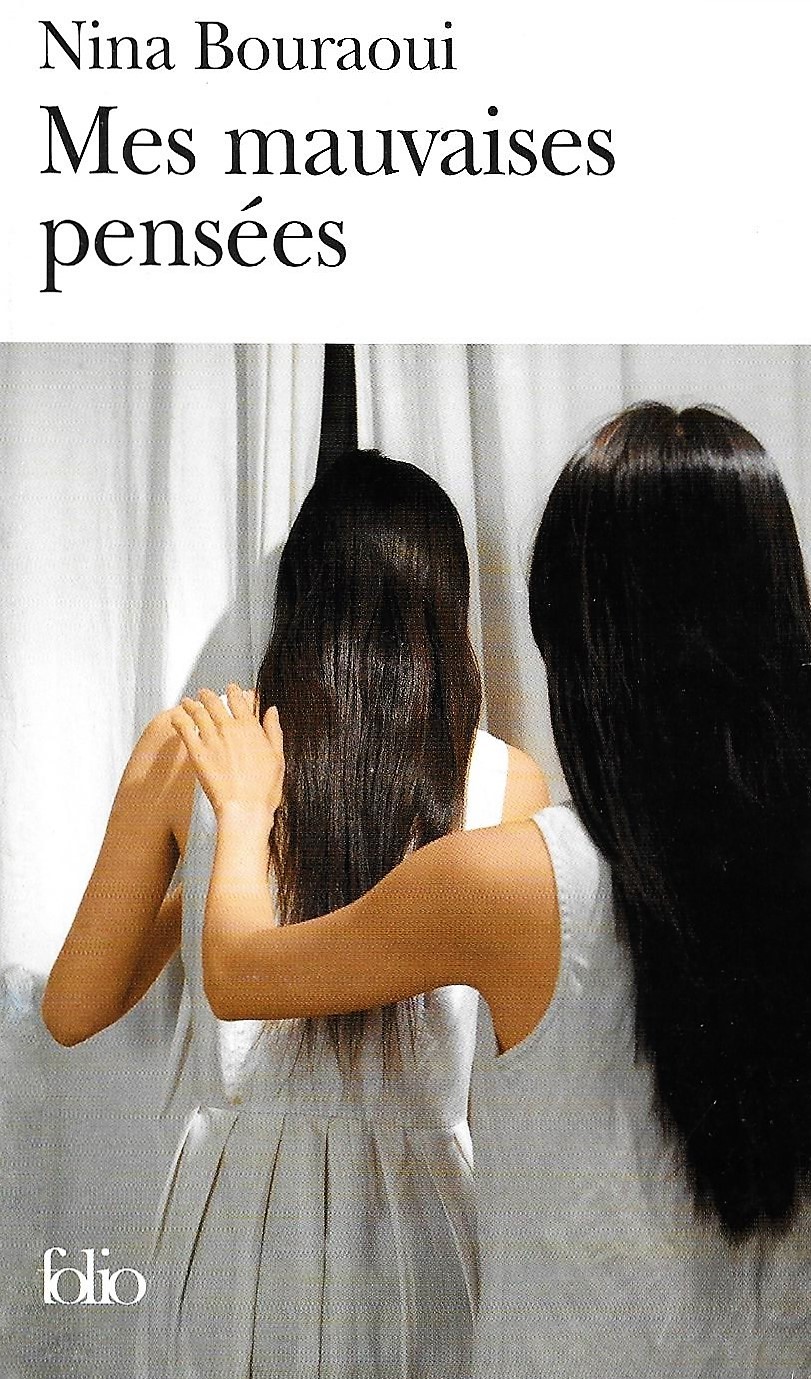
Nina Bouraoui: Mes mauvaises pensées (2005)

In a 2006 MA thesis by Karla Martinez on identity in Nina Bouraoui's Garçon Manqué and Mes mauvaises pensées, she mentions a number of other writers in relation to self-representation: Nelly Arcan, Christine Angot, Annie Ernaux, Hervé Guibert (mentioned – significantly – a number of times in the novel), Camille Laurens and Marie-Sissi Labrèche. But rather differently from the other writers, Bouraoui's Mes mauvaises pensées looks – superficially at least – like an experimental novel: it's one long (269-page) internal monologue with not a single paragraph break.

And it superficially (although only superficially) appears to be spoken to a psychiatrist, as if it were a series of sessions held together in a breathless narrative. In fact the novel probably deserves, to get the full benefit of it, to be read twice: once slowly to take in all that's being said, and then at breakneck speed to match the breathless nature of the narrative. I tried a mixture of both, although I imperfectly mentally captured the nature of this confession, this self-therapy through running over, inexhaustibly, events in the past, the double nature as both French and Algerian, growing up gay, being quite profoundly disturbed, the 'l'Amie' of Nina is clearly, as the cover photo indicates, a product of herself, a positive aspect viewed as healthy, therapeutic, as opposed to her negative thoughts of self-harm, of drowning. Nina is of course haunted, as the reader should inevitably be haunted by the book.

My other Nina Bouraoui posts:

–––––––––––––––––––––––––––––––––––
Nina Bouraoui: Garçon manqué | Tomboy
Nina Bouraoui: Avant les hommes

26 August 2016

Attila the Stockbroker: Arguments Yard: My Autobiography (2015)

Some time ago I started to think that the Morning Star is England's (Britain's?) finest daily newspaper, especially now that the Guardian is New Labour (continued) and the Independent is, er, well I'm not too sure what it is. But after learning, in the Morning Star, of the existence of Marcus O'Dair's Different Every Time: The Authorised Biography of Robert Wyatt, I now discover that Attila The Stockbroker has written his autobiography: Arguments Yard: My Autobiography: 35 Years of Ranting Verse and Thrash Mandola. And in so many ways it's brilliant. In fact so brilliant that I'll break with convention first and say what I don't like about it, or make tiny grouses about the few typos I noticed. I didn't know that Attila the Stockbroker coined his name because he used to be a clerk for about eighteen months for a firm of stockbrokers, and of course it was stultifyingly boring for him, but then what do you expect? His real name is John Baine, and I shall defy my conventional approach of referring to him by his first name rather than his surname not because he seems to be a lovely (if obviously full of faults) guy, certainly not because he has very similar political views to mine, not because I learned more about his knob than I really wanted to, but, well, just because he's that kind of guy. Anyway, the grouses:

– Right near the beginning of the book John mentions 'Playing golf or being otherwise dull' from the first line of his 'The Zen Stalinist Manifesto', but if I substituted 'golf' for 'football' I can see no difference at all: they both rot the brain (sorry, John, no personal familial allusion intended), and I'm a life-long enemy of any competition that can be avoided, and sport in virtually all forms is best avoided like capitalism, the stock market, imperialism, racism, homophobia, any form of hatred. In fact, sport breeds hatred: a few kids playing on a park, kicking a ball around and using their rucksacks as goalposts, fine, but much bigger that... No. (I admit Roy Harper's 'When an old cricketer leaves the crease' is one of my favourite songs, but then it's more about the real ale John loves, maybe the hallucinations caused by it...). 'New Labour just fuck off and die' is a beautiful line, but I feel the same about football if you substitute the word for 'New Labour'.

– Speaking of the word 'fuck', there are a number of inconsistencies in the book which I know can't be due to Cherry Red Books as they've published Zodiac Mindwarp's Fucked by Rock. 'Fucked' fully spelled, not the censored word 'f**k' that appears in this book perhaps the same number of times as the fully-spelled 'fuck'. Why self-censor, when everyone knows that 'f**k' means 'fuck' anyway? Who is John trying to protect, in an internet age, when 'fuck' is all over the place, just like in Crass lyrics? There's even one 'c**t' in Arguments Yard, although I don't think there's a single 'cunt' anywhere else in the book. And yes, sensibilities have changed enormously due to political correctness, etc, but anyone who knows about Attila the Stockbroker knows about his wonderful work with Rock Against Racism, and here we learn that he objected to (bizarrely anti-racist) 'White Power' tee-shirts in NZ, so why change the word 'nigger' printed in the first poetry book poem 'They must be...Russians' to 'ni**er'? Would John Baine have all the references to 'nigger' in Huck Finn changed to 'ni**er'? This is as insane as the hypocritical asterisks used in The Sun, a newspaper he so rightly condemns. 'They must be...Russians' uses the word 'nigger' as a third person insult, and obviously not an insult by John Blane to blacks. Leave history alone, it'll sort itself out.

– Ted Heath (one of my all-time favourite PMs) is described as a 'pompous git'. But Heath was cowed by the miners, was even a kind of Conservative communist, was much more left-wing than any Labour or Conservative leader (apart from Michael Foot) who has followed him into the woeful present; and certainly the most cultured. What has John against culture, and what, for instance, has he against the TLS (Times Literary Supplement), which still struggles on valiantly. Or, dare I say it, pompously?

– My German is more or less non-existent, but aren't there some diacritics missing? On the French side, certainly I doubt that Francois (as Attila writes) lacked a cedilla, although certainly Les Halles des Blés (mentioned twice) should have the acute accent I've given it, and the (double) absence suggests laziness, although John is without doubt far from lazy. But 'tour-come-holiday' instead of 'tour-cum-holiday' is unforgivable and clearly notes the lack of a decent proofreader (sorry Robina, much as you sound really, er, nice).

– 'Relatively sterile surroundings of a bookshop'. What? As a working-class kid (father a tobacco worker, mother a slave machinist in a textile factory run in Sherwood by Tory Martin Brandon-Bravo) with no books worth reading at home, my intellectual education came from the public library and independent bookshops. I can't say the grammar school education I received from High Pavement in Nottingham was at all inspiring, though. Does it make me pompous for being proud of earning a PhD in Literature?

– John Baine eats meat. Meat is murder. Come the socialist revolution, no one will eat meat.

There are, of course, far too many negatives above, but maybe paradoxically they indicate the huge scope of this book, which is a kind of history of the left-wing from eighties Britain to the present day: the Anti-Fascist League, the miners' strike, Red Wedge, the Poll Tax revolts, the Gulf War protests, even Corbyn's triumph gets a (late added, I'm sure) mention, etc. Through all of these, Attila the Stockbroker held a prominent position.

But prominent as that position may have been, Attila the Stockbroker still maintains an anti-celebrity stance. What does he care, as he's maintained a decent standard of living by playing throughout the world. Australia and New Zealand, the States (a bit), but most of all (and the most interesting part of the book) the transition from West and East Germany to one nation. His feelings are mixed on this: before unification, East Germany was unwholesomely polluted, but prices of basics were very cheap, there was no poverty and everyone had a job. After the fall of the Wall it was biscuit city for the capitalists and poverty and unemployment were rife. Go figure.

But Attila the Stockbroker is about words, and there are some choice ones here. He doesn't mention his triumphal song 'Maggots 1 Maggie 0',* although he does say 'You brought discord, error, doubt and despair, Thatcher, and those were the good bits. Rot in hell.' I agree: but what of Blair and Brown (the latter hypocritical bastard a real enemy of mine)? Of Blair, Attila says he'd like to see him cleaning the toilets at Glastonbury for ever: with his tongue.

This book is not one of hate, it's one of a love of music and the people who perform it, but also it's personal and contains much about John Baines's father and his step-father, but more about his mother (including a very long and very moving piece about her dying of Alzheimer's). Let's hope the bladder cancer thing was just a blip, and that Attila the Stockbroker goes on to live as long as wishes: this is a wonderful book, John Baine/Attila the Stockbroker is a national treasure, a modest and a generous man, although (with no criticism whatsoever intended) I have an idea that he knows it.

*This is a little odd though: in one of his Morning Star columns Attila the Stockbroker says it's not a good idea to suggest familiarity with Boris Johnson by calling him by his first name but he should be called 'Johnson' as it's American for 'knob'. 'Maggie', to me, has always suggested an uncomfortable cosiness, whereas 'Thatcher' rhymingly recalls 'milk snatcher', 'union basher', etc: much more fitting for a 'woman' (I have my doubts) who destroyed the country enough to allow her spiritual sons (Blair, Brown, etc) to virtually destroy all the work that the Attlee government had done to make Britain, er, great.

My other post on ranters:

–––––––––––––––––––––––––––––––––––
John Cooper Clarke and John Prescott

23 August 2016

Roger Vailland: 325.000 francs (1955)

325.000 francs is Roger Vailland's sixth novel, and in a sense is a very working-class one, although Vailland himself wasn't a member of the working class. In very few books is the nature of working-class labour described, although here it is repeated like a litany. What strikes me – hard – about this book is that it is written by someone who is very concerned about the conditions of work in Oyonnax (in the novel called Bionnas), with its important plastics industry and the many injuries to workers.

For the communist Roger Vailland, then, is this a novel of political commitment? Hardly. The capitalist Jules Morel, owner of the firm Plastoform and Cité Morel, isn't the evil capitalist of left-wing sterotypes. But then nor is Bernard Busard (ah, more bird imagery as in Les mauvais Coups) anything like a working-class hero: under the thumb of his artificially-looking 'girlfriend' Marie-Jeanne – with whom he hasn't yet even had sex after eighteen months, and for whom the sexy and far more natural Juliette Doucet would be a far better match – Bernard slaves away to shape a capitalistically-envisaged future for the two of them.

Bernard sees this future as working in a snack-bar off the N7, and fantasises about running a whole series of snack-bars from Paris to Nice, each given a number relating to the number of miles covered from Paris. But to acquire the first one he needs 700,000 francs, of which he had to provide 325,000 of them. This he has to do by working extra hours (in tandem with Le Bressan, who is working for his own interests: or so it initially appears).

Vailland was inspired by seeing someone with an artificial hand in Oyonnax, the hand which holds the cards of the Tarot card game which he plays all day. Bernard becomes that person, who because handicapped is unsuited to running the N7 snack-bar and so runs a café in the town with his wife Marie-Jeanne. Until he returns to the plastics factory, that is.

Many of the themes in Les mauvais Coups are here, notably jealousy, although in this book it is Bernard's almost insane jealousy of Marie-Jeanne that impotently conquers. An important work, I think, but one which must certainly be viewed in the context of Vailland's total of nine novels, of which I've so far only read three.

My other Roger Vailland posts:

–––––––––––––––––––––––––––––––––––
Roger Vailland: La Loi
Roger Vailland: Les mauvais Coups

21 August 2016

Roger Vailland: Les mauvais Coups (1948)

There are a number of autobiographical elements in Les mauvais Coups, Roger Vailland's second novel. Certainly there is something of himself in the protagonist Milan, of his first wife Andrée Blavette (or Boule) in Roberte, of his dear friend the poet Roger Gilbert-Lecomte in Octave (who doesn't appear here but is mentioned), and of course there's much drinking and a whole chapter is devoted to reckless gambling.

Milan (French for the kite bird of prey) is actually married to Roberte (whom he dreams of as a violent bird), although he doesn't believe in marriage, believes in freedom, believes in having lovers as he pleases, they have no real significance (although one (Juliette) obviously was, which is why Roberte slapped her face). And what can be more, er, significant than suicide, as performed by Octave who had been having an affair with Roberte and kills himself over her, or Roberte's final drunken (or maybe not so drunken) act of driving into a swamp after (presumably) reading Milan's letter to the lovely and much younger Hélène? After fifteen years (Milan with Roberte) what is left of love, if that means a great deal after the dying of the burning passion? Is all that remains just, as the cover illustration indicates, Milan the hunter symbolically crushing the skull of a crow, as if it were Roberte's? No, he clearly shows that he knows there are various kinds of love.

Is love that first dying burn, like the burn of winning at the roulette or the chemin de fer table, the burn of shooting defenceless animals, or does it take a long time to grow, like Vailland's emotional maturity?

My other Roger Vailland posts:

–––––––––––––––––––––––––––––––––––
Roger Vailland: La Loi
Roger Vailland: 325.000 francs

Laurence Cossé: La grande arche : roman (2016)

La Grande Arche is Laurence Cossé's novelised story of the building in La Défense, which was a commemoration of the bi-centenary of the French Revolution of 1789, and President François Mitterand's pride and joy. But the events surrounding the construction of it begin in 1983, six years before it was officially 'unveiled.

A rather obscure architect, Johan Otto von Speckelsen, was the winner of Tête-Défense prize, chosen to receive this great honour. Before la Grande Arche, 'Spreck' as most people seemed to call him, and indeed the name the author herself often chooses to call him, had only built his own family house and four modest churches in Denmark.

As the events of the book unfold, it becomes evident that the book is partly a biography of Spreck, partly a description of the nature of Denmark, and partly a description of what happens when two very different cultures collide.

And collide they do, as Spreck, ensconced with his wife in an apartment in Puteaux near La Défense, learns to his horror. Things just don't work out the way he planned, he moves back to Denmark, resigns from his own project (an unimaginable thing) a few years later, and dies two years before the full installation. It's amazing how Cossé manages to make such a riveting tale from this.

19 August 2016

Frédéric Mistral in Maillane (13)


The Centre Frédéri [sic] Mistral in Maillane, with an impressive bust of the poet at the side. Maillane is a small village, and is Frédéric Mistral: even the local Maison de Presse sells statuettes of Mireille (or should I say Mirèio – Provençal is quite rightly taken very seriously here). If this makes it sound like a tourist village, it certainly isn't as the streets were deserted, there wasn't a parking meter in sight, and the only car park I found was the one outside the cemetery. There is a bureau de tourisme (incidentally originally Mistral's second home after Le Mas du Juge), although it was closed at the time of our visit.

There are several plaques dedicated to Mistral (mostly in his third and last house) although as they're all in Provençal I won't attempt to make a hash of a translation.


And so to Mistral's final home, which became a museum in 1944 following the death of his wife the previous year. Due to serious work needed on the first floor it will probably be a few years before it's fully open again. I found the guided tour useful because knowledgeable, although at the same time it was horribly humourless and perfunctory. Another thing too: there is a number of (often recent) online images of the museum put up by visitors, but we weren't allowed to take any photos at all.


The magnificent memorial to Mistral in the garden of his home, dating from 1929, sculpted by J. Itier, and at the bottom at the back is a list of Mistral's works.


And finally, his elaborate grave in the cemetery in Maillane, a replica of the Pavillon de la Reine Jeanne in Les Baux, and which doesn't bear his name:


My Frédéric Mistral posts:
––––––––––––––––––––––––––––––––––––
Frédéric Mistral at Le Mas du Juge
Frédéric Mistral: Mireille
Frédéric Mistral in Maillane
Le Pavillon de la Reine Jeanne, Les Baux-de-Provence
Frédéric Mistral in Saintes-Maries-de-la-Mer
Frédéric Mistral in Saint-Giniez, Marseille
Frédéric Mistral, Marseille
Frédéric Mistral in Avignon
Frédéric Mistral in Saint-Rémy-de-Provence
Frédéric Mistral in Grambois
Frédéric Mistral in Saint-Michel-l'Obsevatoire
Frédéric Mistral in Pertuis

Conrad Aiken in Rye, East Sussex


Sadly, the plaque here is illegible. But Conrad Aiken bought Jeake's house (now a hotel) in 1924, and among the writer quests who visited him are T. S. Eliot, Malcolm Lowry, E. F. Benson and Radclyffe Hall.

The link to my very wet drive and walk to Aiken grave in Savannah, GA, is below:

––––––––––––––––––––––––––––––––––––
Conrad Aiken's grave

John Fletcher in Rye, East Sussex


'FLETCHERS HOUSE
In this ancient vicarage
John Fletcher
was born in 1579
Jacobean dramatist and
collaborator with
Beaumont, Shakespeare & Massinger'

E. F. Benson in Rye, East Sussex


'THIS LOOKOUT WAS GIVEN
IN 1935 BY E. F. BENSON
WHEN MAYOR OF RYE. HE
IMMORTALISED THIS TOWN
AS "TILLING" IN HIS
MAPP AND LUCIA NOVELS'

18 August 2016

Rudyard Kipling and Bateman's, Burwash, East Sussex


Already famous and much translated, Kipling bought Bateman's in Burwash, East Sussex, in 1902. The datestone above the main entrance states '1634'. As his fame (and fortune) increased, Kipling bought up surrounding property to evade curious sightseers.

A view of the hall, dark and impressive.

The sofa in the parlour is apparently inspired by the seventeenth century one at Knole.

At the bottom of the stairs is Patrick-Synge-Hutchinson's posthumous bust of Kipling.

The study, where Kipling would read and write.

And the day bed in the study, where he would think about his writing.

The dining room, with its leather wall hangings.

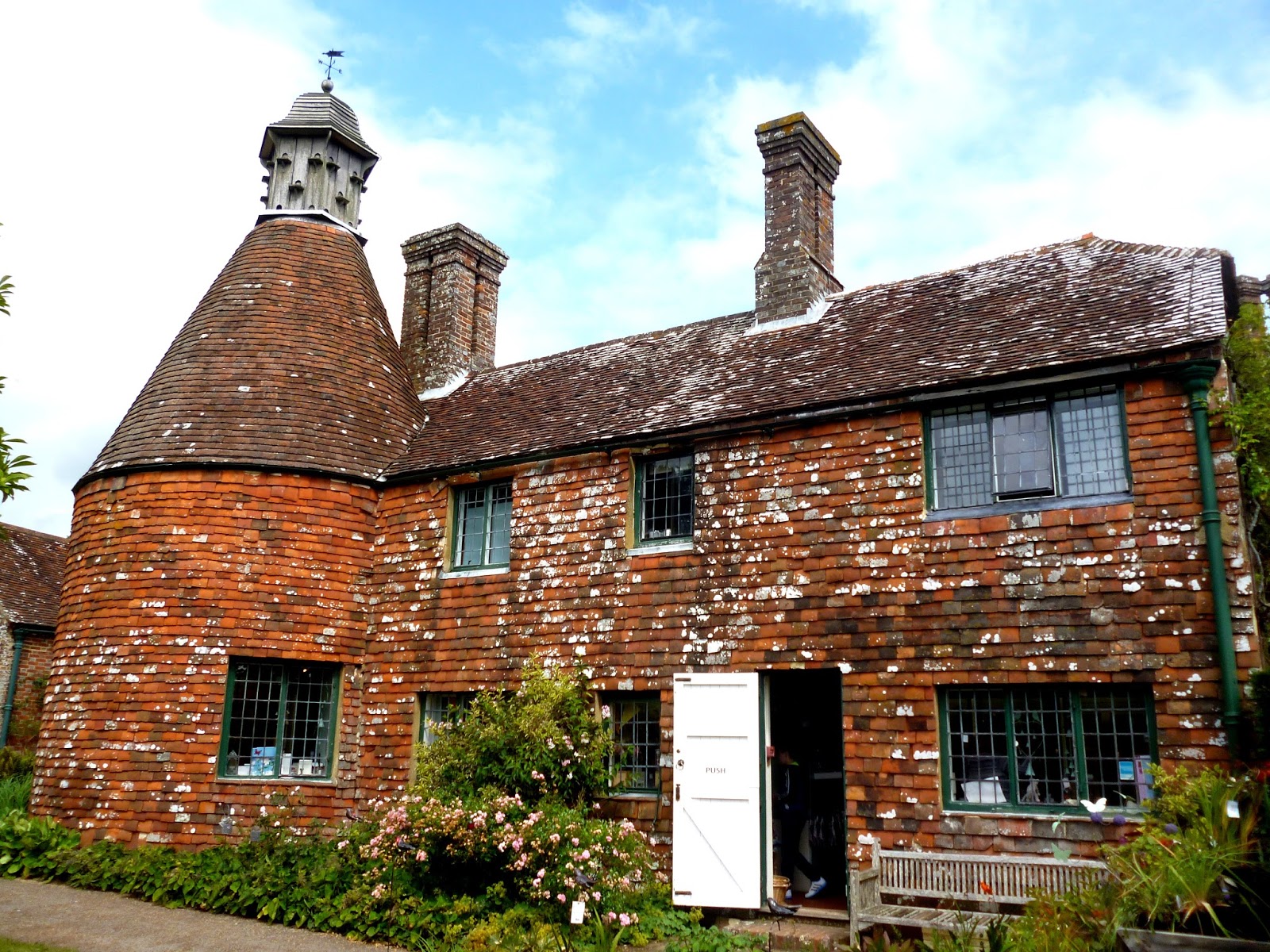
The former oast house was the servants quarters, now the NT shop.

One prominent feature outside the house is Kipling's 1928 Rolls-Royce Phantom.

In the garden:

'THIS STONE ORIGINALLY
MARKED RUDYARD KIPLING'S
GRAVE IN WESTMINSTER ABBEY.
IT WAS LATER REPLACED
BY A LARGER TOMBSTONE
IN POETS CORNER'


Kipling's use of the old water mill (built in 1750 and extended in the 1830s) was to generate electricity by turbine.