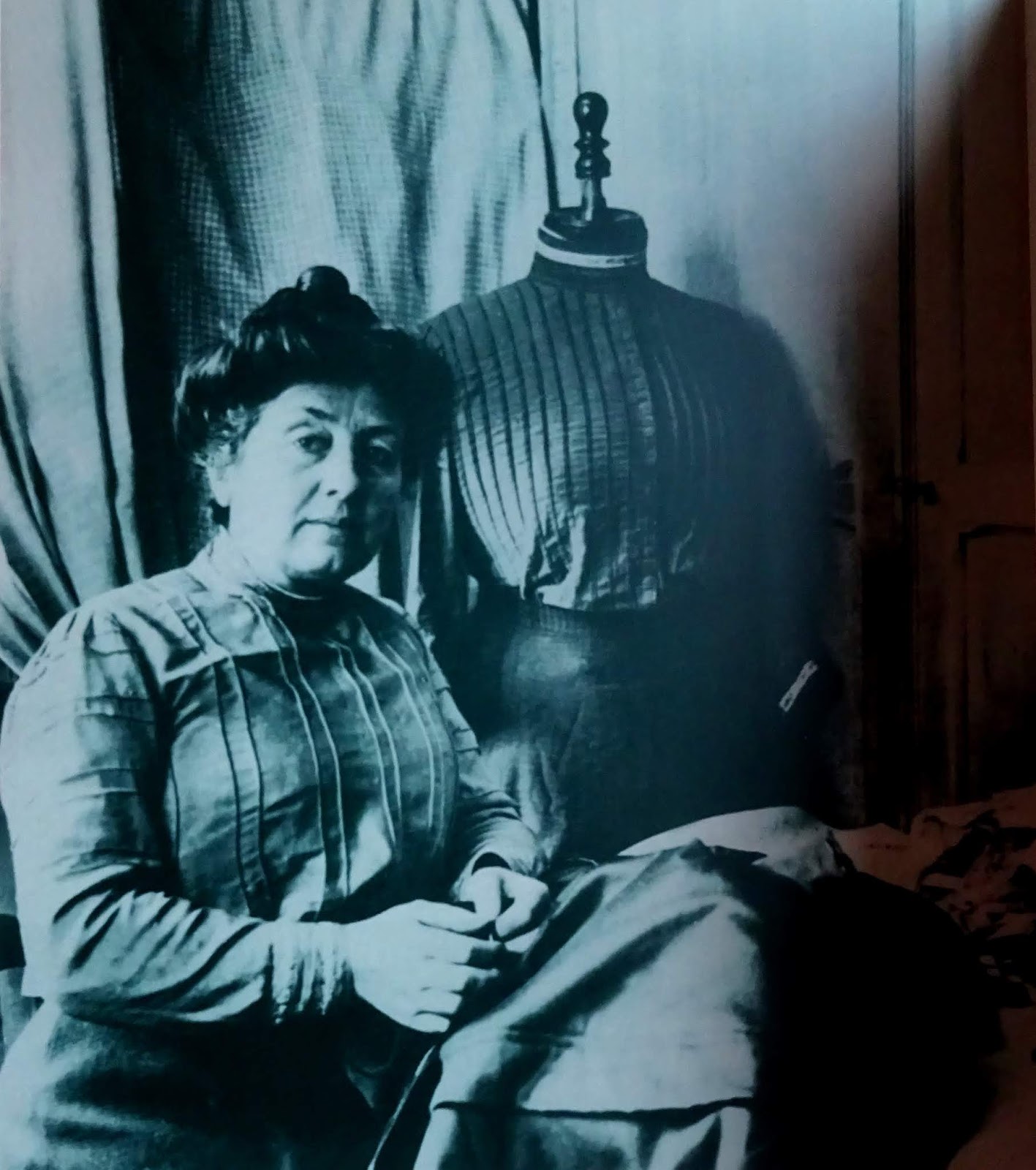
Antoinette Suzanne Quarré (1813-47) was a working-class poet who was born in Recey-sur-Ource (Côte-d'Or) and died in Dijon. She was a linen maid in Dijon of poor health, and a story handed down tells that she learned to read from Voltaire's Zaïre. Receiving lessons from M. de Belloguet, she leaned towards poetry and published several works in verse and in prose (particularly in Le Journal des Demoiselles). An elegy on Marie d'Orléans gave her a mention in the Société des lettres et des arts de Seine-et-Oise in 1839. She sent her verses to Lamartine, who in 1838 responded by a poem, 'À une jeune fille poète', which he included in Recueillements poétiques. Encouraged by friends she published a collection of poetry in 1843, although she died of heart failure in 1847.
Showing posts with label French working-class literature. Show all posts
13 August 2020
29 November 2018
Charles-Louis Philippe: La Mère et l'enfant (1900; repr. in full 1911) | Le Pére Perdrix (1902)
This is a collection of two books in one, the first – La Mère et l'enfant – being a partly autobiographical account of a working-class child at different stages, essentially aged two, five, twelve, fifteen and twenty. There are great hopes for him and – a very promising scholar – he earns a bursary to a lycée, gets his bac and then goes to Paris with even greater hopes. However, he disappoints his parents by ending up with a menial office job, earning a paltry 3 francs 75 per day, with (horrors!) dreams of becoming a writer.
Charles-Louis Philippe's work is noted for its sympathy with the plight of the poor and its hatred of the complacency and callousness of the rich, of which Le Pére Perdrix is a good example. In Bruno Vercier's Preface, he notes that the main character the farrier (with his wife), often called le Vieux and la Vieille, are based on the Cérilly blacksmith Jean-Baptiste Galand and his wife.
In Le Pére Perdrix we see the farrier being advised by his doctor to cease work because of his failing eyesight. He does so and receives money from the bureau de bienfaisance, although this public assistance is cut off due the collusion of the same doctor and the mayor. The story also involves le vieux's nephew Jean, a well-paid chemical engineer, walking out of his job in sympathy with the striking workers. Soon after his return, Jean walks out on his parents who are disgusted with him and ashamed of his 'idleness'. Jean goes to live with the farrier and his wife, who dies, and Jean takes a reluctant Vieux to Paris and to more poverty.
My Charles-Louis Philippe posts:
––––––––––––––––––––––––––––––––––––
Charles-Louis Philippe Birthplace museum and grave
Charles-Louis Philippe: Contes du matin
Charles-Louis Philippe: Dans la petite ville
Charles-Louis Philippe: La Mère et l'enfant | Le Pére Perdrix
Charles-Louis Philippe: Bubu de Montparnasse
Charles-Louis Philippe's work is noted for its sympathy with the plight of the poor and its hatred of the complacency and callousness of the rich, of which Le Pére Perdrix is a good example. In Bruno Vercier's Preface, he notes that the main character the farrier (with his wife), often called le Vieux and la Vieille, are based on the Cérilly blacksmith Jean-Baptiste Galand and his wife.
In Le Pére Perdrix we see the farrier being advised by his doctor to cease work because of his failing eyesight. He does so and receives money from the bureau de bienfaisance, although this public assistance is cut off due the collusion of the same doctor and the mayor. The story also involves le vieux's nephew Jean, a well-paid chemical engineer, walking out of his job in sympathy with the striking workers. Soon after his return, Jean walks out on his parents who are disgusted with him and ashamed of his 'idleness'. Jean goes to live with the farrier and his wife, who dies, and Jean takes a reluctant Vieux to Paris and to more poverty.
My Charles-Louis Philippe posts:
––––––––––––––––––––––––––––––––––––
Charles-Louis Philippe Birthplace museum and grave
Charles-Louis Philippe: Contes du matin
Charles-Louis Philippe: Dans la petite ville
Charles-Louis Philippe: La Mère et l'enfant | Le Pére Perdrix
Charles-Louis Philippe: Bubu de Montparnasse
23 August 2018
Albertine Sarrazin: L'Astragale | Astragal (1965)
Libellés :
French working-class literature,
Sarrazin (Albertine)
As I wrote in an earlier post, Albertine Sarrazin (1937–67) was essentially rejected by her (semi- adopted) family and escaped from her school-prison to Paris, went on the game, was imprisoned again, escaped again but broke her ankle bone (astragal in English), and was luckily picked up by Julien, also an ex-prisoner, who became her lover and her husband.
This is the autobiographical story of a young prisoner rescued by a man fifteen years older than her, who first takes her to his mother, and then to various boltholes where she can hide until the search for her is over, and where her ankle is operated on at Julien's expense.
They escape to Paris, although the absence of Julien means she has to once more live on her wits, or rather her ass, and her life is time and time again repeated in the language of the prisons, the language of prostitution, the language of the milieu. A number of reviews talk of the obsolescence of the language, the difficulty with the prison slang, although this is part of the book's charm, of its strange mixture of arcane language and poetic descriptions. This is a very powerful, and very rare, treasure.
My Albertine Sarrazin posts:
––––––––––––––––––––––––––––––––––––
Albertine Sarrazin: La Cavale | Runaway
Jacques Layani: Albertine Sarrazin : une vie
Albertine Sarrazin: L'Astragale | Astragal
Albertine Sarrazin in Doullens, Somme
This is the autobiographical story of a young prisoner rescued by a man fifteen years older than her, who first takes her to his mother, and then to various boltholes where she can hide until the search for her is over, and where her ankle is operated on at Julien's expense.
They escape to Paris, although the absence of Julien means she has to once more live on her wits, or rather her ass, and her life is time and time again repeated in the language of the prisons, the language of prostitution, the language of the milieu. A number of reviews talk of the obsolescence of the language, the difficulty with the prison slang, although this is part of the book's charm, of its strange mixture of arcane language and poetic descriptions. This is a very powerful, and very rare, treasure.
My Albertine Sarrazin posts:
––––––––––––––––––––––––––––––––––––
Albertine Sarrazin: La Cavale | Runaway
Jacques Layani: Albertine Sarrazin : une vie
Albertine Sarrazin: L'Astragale | Astragal
Albertine Sarrazin in Doullens, Somme
15 August 2018
Charles-Louis Philippe: Contes du matin (1916; rev. and repr. with Preface by David Roe (2009))
In an earlier post I commented on Charles-Louis Philippe's collection of short stories Dans la petite ville (1910). The later Contes du matin collection adds some stories which weren't included in the original edition. David Roe has added some stories which Philippe didn't write for the important daily Le Matin, and in so doing this edition (along with Dans la petite ville) represents all of the short stories Philippe ever published.
Whereas Philippe's stories in Dans la petite ville were just that – tales based on those he'd heard or those he imagined happening in the small town of Cérilly where he was born – there are also stories based in la grande ville – Paris, and arguably some of those are a little darker. Of interest (and perhaps a little surprise) is 'Deux apaches' ('Two Thugs'), young yobs who think the world revolves around them, have not the slightest consideration for anyone else, and think nothing of stabbing a drunk in the back and running off leaving him dead. It is the 'apaches' who occupy Lucien's thoughts and fears as he walks back after a drinking session to the (at the time) rather remote Montrouge at one in the morning, although these change to fears of being attacked by a lion escaped from a festival: however, with a rather Maupassian ironic twist (not very usual in Philippe's writing) it transpires that it is not the lion but a dog that he should have been frightened of.
As there are thirty-six stories here, it would be stupid for me to comment on all of them, but I was pulled up sharply when I began 'La Visite'. Philippe had been friends with another working-class writer – Marguerite Audoux – and it was with some surprise that I discovered he'd included a version of her in this story: the character too is called Marguerite (but Dubost), her father walked out on her when she was very young, she was brought up by nuns and then forced to shepherd sheep, later moving to Paris and working as a seemstress, etc. And again, there is a drunken father in 'L'Ivrogne', with two daughters called Marguerite and Madeleine, the name of Marguerite's sister.
Included in the non-Matin stories in one Philippe wrote for the communist paper L'Humanité: true to his usual form, 'Pour les jours des rois' is a working-class story, but one everyone learns differently: Philippe's take on the Nativity is that the three wise men visiting Jesus is a lie invented by the rich, because it was in effect a humble clogmaker and his wife (much like, say, Philippe's parents) who took in Joseph and his heavily pregnant wife.
It won't be long before I read more of Charles-Louis Philippe.
My Charles-Louis Philippe posts:
––––––––––––––––––––––––––––––––––––
Charles-Louis Philippe Birthplace museum and grave
Charles-Louis Philippe: Contes du matin
Charles-Louis Philippe: Dans la petite ville
Charles-Louis Philippe: La Mère et l'enfant | Le Pére Perdrix
Charles-Louis Philippe: Bubu de Montparnasse
Whereas Philippe's stories in Dans la petite ville were just that – tales based on those he'd heard or those he imagined happening in the small town of Cérilly where he was born – there are also stories based in la grande ville – Paris, and arguably some of those are a little darker. Of interest (and perhaps a little surprise) is 'Deux apaches' ('Two Thugs'), young yobs who think the world revolves around them, have not the slightest consideration for anyone else, and think nothing of stabbing a drunk in the back and running off leaving him dead. It is the 'apaches' who occupy Lucien's thoughts and fears as he walks back after a drinking session to the (at the time) rather remote Montrouge at one in the morning, although these change to fears of being attacked by a lion escaped from a festival: however, with a rather Maupassian ironic twist (not very usual in Philippe's writing) it transpires that it is not the lion but a dog that he should have been frightened of.
As there are thirty-six stories here, it would be stupid for me to comment on all of them, but I was pulled up sharply when I began 'La Visite'. Philippe had been friends with another working-class writer – Marguerite Audoux – and it was with some surprise that I discovered he'd included a version of her in this story: the character too is called Marguerite (but Dubost), her father walked out on her when she was very young, she was brought up by nuns and then forced to shepherd sheep, later moving to Paris and working as a seemstress, etc. And again, there is a drunken father in 'L'Ivrogne', with two daughters called Marguerite and Madeleine, the name of Marguerite's sister.
Included in the non-Matin stories in one Philippe wrote for the communist paper L'Humanité: true to his usual form, 'Pour les jours des rois' is a working-class story, but one everyone learns differently: Philippe's take on the Nativity is that the three wise men visiting Jesus is a lie invented by the rich, because it was in effect a humble clogmaker and his wife (much like, say, Philippe's parents) who took in Joseph and his heavily pregnant wife.
It won't be long before I read more of Charles-Louis Philippe.
My Charles-Louis Philippe posts:
––––––––––––––––––––––––––––––––––––
Charles-Louis Philippe Birthplace museum and grave
Charles-Louis Philippe: Contes du matin
Charles-Louis Philippe: Dans la petite ville
Charles-Louis Philippe: La Mère et l'enfant | Le Pére Perdrix
Charles-Louis Philippe: Bubu de Montparnasse
4 August 2018
Charles-Louis Philippe: Dans la petite ville (1910); repr. 1997 with Introduction by Francine Masson
This is a collection of Charles-Louis Philippe's short stories which he had intended to publish in one volume, and although his untimely death at the age of thirty-five (probably from meningitis) intervened, André Gide ensured its publication the following year, 1910. This edition of the stories is published by Plein Chat's imprint of working-class authors, Collection voix d'en bas, and a number of them are obviously based on life in Cérilly where Philippe was born and spent his early days, and a number of them no doubt came from the stories that the author's father told him in Cérilly.
Here, the people may be working-class, but they are far from uncomplicated as in stories and novels often written by authors from a middle-class (or even working-class) background. These tales don't distort by nostalgia or glorification: they show a whole series of often contradictory emotions: jealousy, hatred, boredom, despair, love, childish mischief and its often negative effects, etc: Charles-Louis Philippe's stories show life in general.
And they are shown with a sense of humour as well as an eye for tragedy, irony, and misfortune. Charles-Louis Philippe deserves much more than the semi-oblivion he's been subjected to.
My Charles-Louis Philippe posts:
––––––––––––––––––––––––––––––––––––
Charles-Louis Philippe Birthplace museum and grave
Charles-Louis Philippe: Contes du matin
Charles-Louis Philippe: Dans la petite ville
Charles-Louis Philippe: La Mère et l'enfant | Le Pére Perdrix
Charles-Louis Philippe: Bubu de Montparnasse
My Charles-Louis Philippe posts:
––––––––––––––––––––––––––––––––––––
Charles-Louis Philippe Birthplace museum and grave
Charles-Louis Philippe: Contes du matin
Charles-Louis Philippe: Dans la petite ville
Charles-Louis Philippe: La Mère et l'enfant | Le Pére Perdrix
Charles-Louis Philippe: Bubu de Montparnasse
26 July 2018
Marguerite Audoux, Sainte-Montaine, Cher (18)
Marguerite Audoux (née Donquichote) was a working-class novelist who was born in 1863 in Sancoins (Cher) and died in Saint-Raphaël (Var) in 1937. She and her sister Madeleine were in effect orphaned when Marquerite was three, and they were both sent to the Hôpital général de Bourges orphanage, where they spent several years. She was later sent to a farm where she worked as a shepherd in Sainte-Montaine, near Aubigny-sur-Nère. She later moved to Paris, where she became a seamstress. She went on to become the friend of various novelists, and her own autobiogaphical novel Marie-Claire (1910) was a huge success, winning the Prix Femina. A number of the furnishings, including her bed, in the Musée Marguerite Audoux (at the back of the Mairie, the former school) in Sainte-Montaine were her own.
23 July 2018
Émile Guillaumin in Ygrande, Allier (03)
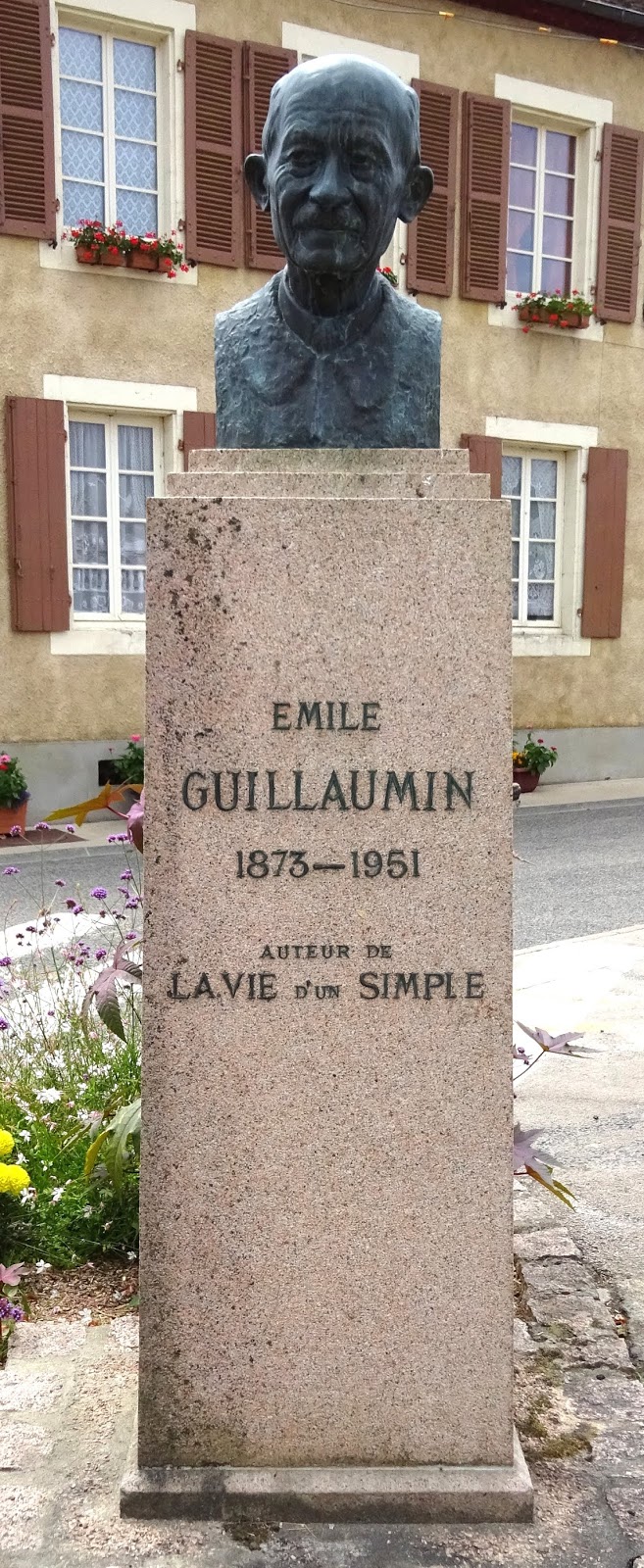
In this house just a few hundred metres from Ygrande, the 'peasant writer' (yes, I know: a terrible expression) Émile Guillaumin (1873–1951), heavily influenced by Eugène Le Roy's Jacquot le croquant, wrote his generally considered masterpiece La Vie d'un simple – not an autobiography but a novel – and received numerous eulogies from many prominent figures of literature. He failed to receive the Goncourt, although he was unsurprisingly supported by Octave Mirbeau.
A reconstruction of Émile Guillaumin's bed, plus his original desk in the foreground.
The Guillaumin family, circa 1930s.
The monument to Émile Guillaumin in the centre of Ygrande.
The grave of Émile Guillaumin and his wife Marie (née Chalmin). I can find no images of Émile Guillaumin's grave online, so fully welcome Bertrand Beyern's book (or Bible, as we refer to it) for indicating its general whereabouts. Beyern's book is absolutely necessary for anyone interested in where interesting people are buried.
22 July 2018
Charles-Louis Philippe in Cérilly, Allier (03)
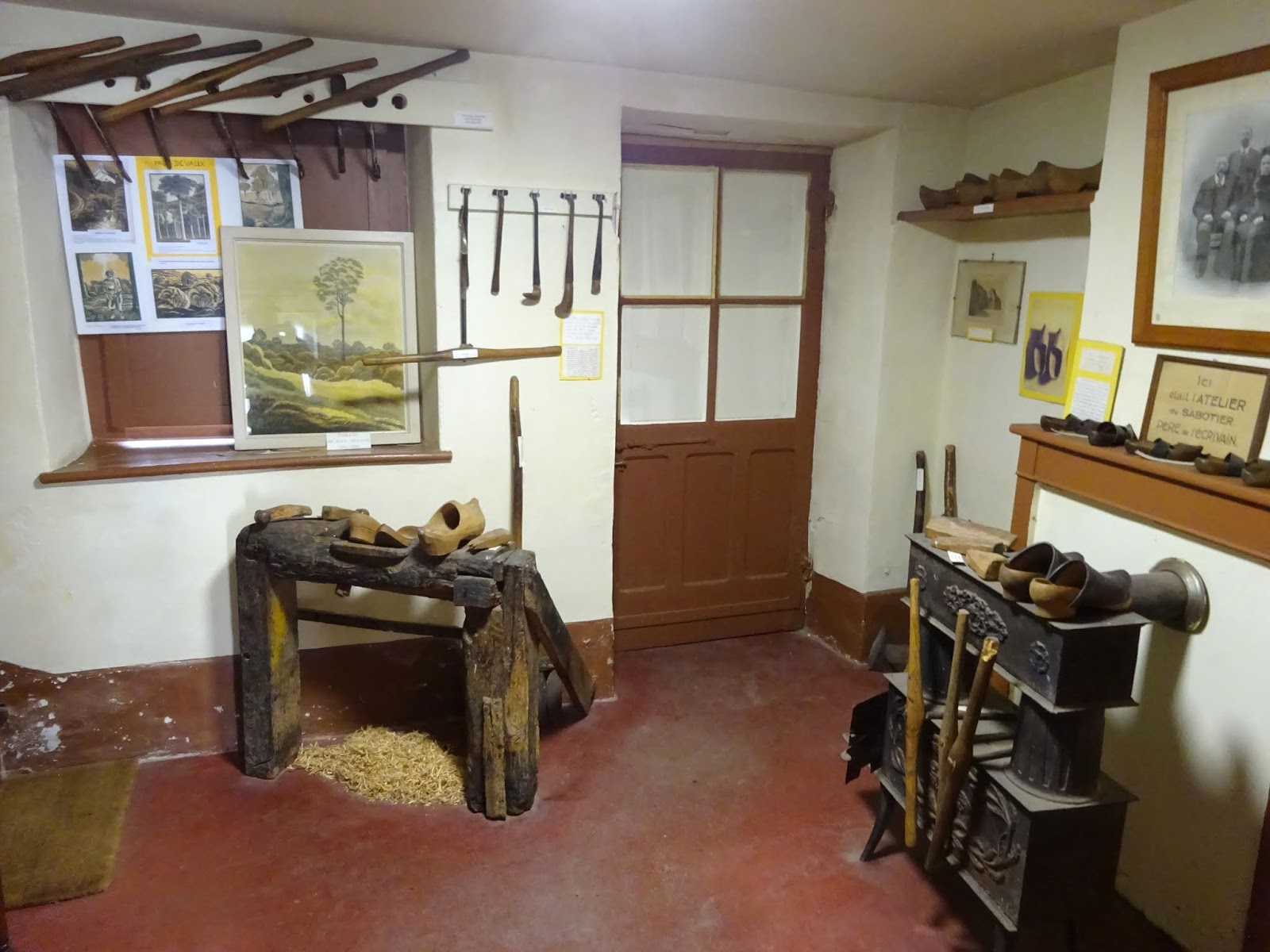
So, this is the birthplace of the novelist Charles-Louis Philippe (1874–1909), who lived here for twenty-two years and came back every summer: the place inspired his writing. The room we enter is where Philippe was born, and the following room shows his clog-making father's craft.
Charles-Louis's room which became his on the death of his half-sister Félicité. The adjoining room, which was his twin sister Louise's, is now full of information on Charles-Louis.
Two paintings made in 1903 by Charles-Louis Philippe's friend Charles Guérin.
Marie Donadieu, with whom Philippe had a relationship of only several months due to her 'betrayal', and about whom he wrote a book.
Images of Charles-Louis Philippe's grave in Cérilly.
My Charles-Louis Philippe posts:
––––––––––––––––––––––––––––––––––––
Charles-Louis Philippe Birthplace museum and grave
Charles-Louis Philippe: Contes du matin
Charles-Louis Philippe: Dans la petite ville
Charles-Louis Philippe: La Mère et l'enfant | Le Pére Perdrix
Charles-Louis Philippe: Bubu de Montparnasse
My Charles-Louis Philippe posts:
––––––––––––––––––––––––––––––––––––
Charles-Louis Philippe Birthplace museum and grave
Charles-Louis Philippe: Contes du matin
Charles-Louis Philippe: Dans la petite ville
Charles-Louis Philippe: La Mère et l'enfant | Le Pére Perdrix
Charles-Louis Philippe: Bubu de Montparnasse
15 April 2018
Marguerite Audoux: Marie-Claire | Marie Claire (1910)
Libellés :
Audoux (Marguerite),
French working-class literature,
Sologne
This edition of Marguerite Audoux's Marie-Claire (translation title Anglicised to Marie Claire) contains a five-page Preface by Octave Mirbeau, who is full of enthusiasm for the book, the manuscript of which he read after her friend Francis Jourdain recommended him to do so.
The book is a fictionalised autobiographical account of Audoux's early life up until she leaves Sologne for Paris to begin an unknown new life, at the age of eighteen, with hardly any money.
The novel is in three parts, the first of which concerns the author's life up to the age of thirteen. Her mother died when she was a young child, and her father abandoned her and her sister. She was sent to a nearby religious boarding school-cum-orphanage attached to the (unmentioned by name) Hôpital général in Bourges. There, the narrator is fortunate enough to meet Sister Marie-Aimée, who, however, is obviously distressed to learn that the Mother Superior has assigned the narrator to a family on a farm, expecting this sensitive, bookish adolescent to learn farming skills.
Needless to say this is a disaster, although not a total one. The narrator hates the work at first and just wants to escape back to Sister Marie-Aimée, although as time progresses the farming tenants Sylvain and Pauline become more humanised. The narrator is a shepherd and has to learn the art very painfully, although she is not psychologically equipped to withstand the slaughter of animals that is going on around her, and lusts after any reading material she can find. Fortunately, the farmer's brother Eugène is of a different mould altogether, has sensitivity towards animals and reads a great deal: the narrator has found a kindred spirit, another sensitive being, someone with intellectual aspirations, and there are perhaps romantic prospects? Alas, Sylvain, Pauline and Eugène are forced to give up the tenancy.
And so to the third and final part, in which the new owners, the Alphonses, are far worse than the previous farmers, and the man never speaks directly to the narrator, and the woman – gloriously called 'la bourgeoise du château' by the labourers – is only interested in textiles, embroidery, that kind of thing. Again, it's fortunate that Henri Delois, the brother of La bourgeoise – is around: this time, it really does look like love. But then, the narrator is forced to insult the new farmer, Henri is forced to say they are no longer friends, and the (now) eighteen-year-old flees back to the orphanage. Where Sister Marie-Aimée is no longer a nun, where she learns of Henri's marriage, and although the narrator is for a brief spell engaged as a worker in the kitchen, she soon has to leave.
Marguerite Audoux didn't write a great number of books, but this is certainly not the last one of hers that I shall read.
The book is a fictionalised autobiographical account of Audoux's early life up until she leaves Sologne for Paris to begin an unknown new life, at the age of eighteen, with hardly any money.
The novel is in three parts, the first of which concerns the author's life up to the age of thirteen. Her mother died when she was a young child, and her father abandoned her and her sister. She was sent to a nearby religious boarding school-cum-orphanage attached to the (unmentioned by name) Hôpital général in Bourges. There, the narrator is fortunate enough to meet Sister Marie-Aimée, who, however, is obviously distressed to learn that the Mother Superior has assigned the narrator to a family on a farm, expecting this sensitive, bookish adolescent to learn farming skills.
Needless to say this is a disaster, although not a total one. The narrator hates the work at first and just wants to escape back to Sister Marie-Aimée, although as time progresses the farming tenants Sylvain and Pauline become more humanised. The narrator is a shepherd and has to learn the art very painfully, although she is not psychologically equipped to withstand the slaughter of animals that is going on around her, and lusts after any reading material she can find. Fortunately, the farmer's brother Eugène is of a different mould altogether, has sensitivity towards animals and reads a great deal: the narrator has found a kindred spirit, another sensitive being, someone with intellectual aspirations, and there are perhaps romantic prospects? Alas, Sylvain, Pauline and Eugène are forced to give up the tenancy.
And so to the third and final part, in which the new owners, the Alphonses, are far worse than the previous farmers, and the man never speaks directly to the narrator, and the woman – gloriously called 'la bourgeoise du château' by the labourers – is only interested in textiles, embroidery, that kind of thing. Again, it's fortunate that Henri Delois, the brother of La bourgeoise – is around: this time, it really does look like love. But then, the narrator is forced to insult the new farmer, Henri is forced to say they are no longer friends, and the (now) eighteen-year-old flees back to the orphanage. Where Sister Marie-Aimée is no longer a nun, where she learns of Henri's marriage, and although the narrator is for a brief spell engaged as a worker in the kitchen, she soon has to leave.
Marguerite Audoux didn't write a great number of books, but this is certainly not the last one of hers that I shall read.
8 April 2018
Bernard Clavel: Les Fruits de l'hiver [Vol. IV, La Grande Patience] (1968)
Libellés :
Clavel (Bernard),
French working-class literature
Set in the closing stages of World War II, Les Fruits de l'hiver is the final part of Bernard Clavel's tetralogy La Grande Patience, and at 445 pages is another of the many tomes to win the Goncourt, this time in 1968. Its two protagonists are the elderly husband and wife of the Dubois family, who are almost throughout referred to simply as 'the mother' and 'the father'. The father is seventy, and although his wife is hardly elderly at a considerably younger fifty-six, she has aged a great deal, looking and felling much older than her years.
The father (though whom the third-person narrator sees things) has one son, Paul, by an earlier marriage, and a slightly younger son Julien by his second wife. The two sons could hardly be more different from each other: Paul is a money-making grab-all who lives with his wife Micheline in Lons-le-Saunier (Jura), the same town as the mother and the father, and Paul more or less openly trades with the German occupiers; Julian, however, cares more for art than money and has deserted from the Vichy-controlled French army and is therefore a wanted man.
The central story involves the ex-baker father first in his relationship with the mother, secretly collecting his nub ends to re-roll as shortages are the order of the day; seeking out wood to heat their house; and tending his beloved garden. Life, especially in a war economy, is already difficult without the added burden of age to contend with. So of course worries predominate, including worries about where Julien is.
And then, in a slightly surreal secret homecoming, Julien re-appears at the parents' house with a skeleton he uses as an artist's model. He sees nothing unusual in this, especially as carrying the skeleton on a train is so obviously drawing attention to himself that no one can possibly think he's a member of the Resistance, can they? Perhaps not, but then the Nazis thought nothing of killing the mentallly disturbed, but fortunately this issue doesn't come into it. The main question, though, is what to do with Julien as he can't stay in a small town, especially without identity papers or food tickets. Their neighbour M. Robin has previously advised that they have a word with Vaintrenier, who tells Julien that he has the choice between joining the Resistance or opting for anonymity in a large town: he chooses to go to Lyon where he has friends, and Vaintrenier provides him with a false name, false card, and food coupons.
And so the story continues, with Julien marrying the delightful communist's daughter Françoise, the mother dying, the father enjoying a brief new lease of life, the repulsive Paul and Micheline treating the father appallingly, taking all his possessions from him, and, well, we knew more or less how it would end. This is my first Bernard Clavel book, and it certainly won't be the last. It may read in many parts like a nineteenth century novel, but this is a twentieth century update, and its principal interest is with its sympathy for the working class, for the downtrodden.
The father (though whom the third-person narrator sees things) has one son, Paul, by an earlier marriage, and a slightly younger son Julien by his second wife. The two sons could hardly be more different from each other: Paul is a money-making grab-all who lives with his wife Micheline in Lons-le-Saunier (Jura), the same town as the mother and the father, and Paul more or less openly trades with the German occupiers; Julian, however, cares more for art than money and has deserted from the Vichy-controlled French army and is therefore a wanted man.
The central story involves the ex-baker father first in his relationship with the mother, secretly collecting his nub ends to re-roll as shortages are the order of the day; seeking out wood to heat their house; and tending his beloved garden. Life, especially in a war economy, is already difficult without the added burden of age to contend with. So of course worries predominate, including worries about where Julien is.
And then, in a slightly surreal secret homecoming, Julien re-appears at the parents' house with a skeleton he uses as an artist's model. He sees nothing unusual in this, especially as carrying the skeleton on a train is so obviously drawing attention to himself that no one can possibly think he's a member of the Resistance, can they? Perhaps not, but then the Nazis thought nothing of killing the mentallly disturbed, but fortunately this issue doesn't come into it. The main question, though, is what to do with Julien as he can't stay in a small town, especially without identity papers or food tickets. Their neighbour M. Robin has previously advised that they have a word with Vaintrenier, who tells Julien that he has the choice between joining the Resistance or opting for anonymity in a large town: he chooses to go to Lyon where he has friends, and Vaintrenier provides him with a false name, false card, and food coupons.
And so the story continues, with Julien marrying the delightful communist's daughter Françoise, the mother dying, the father enjoying a brief new lease of life, the repulsive Paul and Micheline treating the father appallingly, taking all his possessions from him, and, well, we knew more or less how it would end. This is my first Bernard Clavel book, and it certainly won't be the last. It may read in many parts like a nineteenth century novel, but this is a twentieth century update, and its principal interest is with its sympathy for the working class, for the downtrodden.
9 November 2017
Charles-Louis Philippe: Bubu de Montparnasse (1901)
Charles-Louis Philippe was born on 4 August 1874 in Cérilly (Allier) and died in Paris in 1909 at the age of thirty-five. He was born into a very poor family, but became one of the co-founders La Nouvelle Revue française. His novel Bubu de Montparnasse is set in the twilight zones of Paris, its main characters being the pimp Maurice (or Bubu de Montparnasse of the title), his prostitute Berthe, and her respectable client Pierre Hardy.
Berthe is essentially worthy and only dragged into prostitution by her lover Maurice, the pimp who lives off her, degrades her, and in the end more or less kidnaps her back into a life of sexual slavery.
In between, we have Pierre scraping a legal living and meeting Berthe, with whom he has formed an emotional attachment while she is living with her pimp. There is much material filth amongst the moral degradation, living hand to mouth, and syphilis is a major result, even a symbol perhaps, of that mental degradation: Berthe, Pierre and Maurice all contract it. But religion is never really seen as a way out of the impasse, only mentioned as a way out that some people use.
My Charles-Louis Philippe posts:
––––––––––––––––––––––––––––––––––––
Charles-Louis Philippe Birthplace museum and grave
Charles-Louis Philippe: Contes du matin
Charles-Louis Philippe: Dans la petite ville
Charles-Louis Philippe: La Mère et l'enfant | Le Pére Perdrix
Charles-Louis Philippe: Bubu de Montparnasse
21 May 2017
Louis Guilloux: Angélina (1934)
Working-class Breton writer Louis Guilloux (1899–1980), born in Saint-Brieuc the son of a shoemaker, used his native Brittany as a framework for all his works. Angélina concerns the struggles of a poor artisanal family.
Angélina is a socialist exposé, but not a rant: it criticises the faults in the political, the economic, the educational and the social system in general, but does it quite subtly. Poverty is the order of the day, the situation into which the working class are born but which is so difficult to escape from. Esprit, who slaves at his spinning wheel, married later in life and for him technological progress is anathema. He lives with his wife Anne-Marie (who brings in a little 'pin' money' by sewing), and their children.
Henri is the elder brother who is incidentally receiving radical socialist training at work from a much older work comrade, Charles is some years younger, and Angélina is on the way. Life isn't easy.
Working-class tragedy, crime, ill health (mental as well as physical) are pandemic, and Guilloux makes the most of it in expressing his hatred of the situations in which the impotent find themselves. The cycle of absolute or relative impoverishment continues, but where is the way out? Does Guilloux even suggest one, or is everyone trapped in a Zolaesque, naturalistic bind?
Angélina is a socialist exposé, but not a rant: it criticises the faults in the political, the economic, the educational and the social system in general, but does it quite subtly. Poverty is the order of the day, the situation into which the working class are born but which is so difficult to escape from. Esprit, who slaves at his spinning wheel, married later in life and for him technological progress is anathema. He lives with his wife Anne-Marie (who brings in a little 'pin' money' by sewing), and their children.
Henri is the elder brother who is incidentally receiving radical socialist training at work from a much older work comrade, Charles is some years younger, and Angélina is on the way. Life isn't easy.
Working-class tragedy, crime, ill health (mental as well as physical) are pandemic, and Guilloux makes the most of it in expressing his hatred of the situations in which the impotent find themselves. The cycle of absolute or relative impoverishment continues, but where is the way out? Does Guilloux even suggest one, or is everyone trapped in a Zolaesque, naturalistic bind?
24 November 2016
Cimetière du Montparnasse (continued) #12: Alphonse Boudard
Three novels by Alphonse Boudard (1925–2000) – La Cerise (1963), Les Matadors (1966) and L'Hôpital (1972) – are mentioned in passing (as indeed so too is Boudard himself mentioned in passing) in Michel Ragon's fascinating Histoire de la littérature prolétarienne de langue française (1974; 1986 (repr.)). Boudard certainly has 'proletarian' credentials in that his father was unknown, his mother an absentee prostitute, and he was brought up by peasants in the middle of the forest of Orléans until he was seven, and then reclaimed by his mother who left him in the care of his grandmother in Paris (13e). His books are set in an underworld of gangsters, pimps, crooks, bent priests, and the use of slang is the order of the day.
13 November 2016
Claire Etcherelli: Élise ou la vie vie | Elise; or, The real life (1967)
Simone de Beauvoir was very impressed with Claire Etcherelli's Élise ou la vie vie (her first novel, which scooped the Prix Femina in the year of publication), particularly because it has long sections describing the exact nature of a working-class woman's experience of the work process itself. Consequently, Beauvoir asked for an interview, which Etcherelli gave Beauvoir for the magazine Le Nouvel observateur: it was called 'Écoutez cette femme...', published on 15 November 1967 (pp.26–28), and is available for anyone to read online here: to turn the pages, simply change the figure at the end of the URL from '6' to '7', then '8'.
Élise ou la vie vie, it probably goes without saying, is in part autobiographical. Élise follows her left-wing but irresponsible brother to Paris, where they both work in a car factory: Etcherelli used to work for Citroën. There, Élise works for long hours for little pay on assembly line production, checking the parts workers have installed in car bodies and recording anything missing or badly fitted.
The novel is set over nine months in 1957 and 1958, when France was at war with Algeria, although (like the failed 1968 revolution) the conflict was just referred to as 'événements'. The factory employs a large number of immigrants, who are quite routinely treated in a racist fashion by the French, who use such abusive expressions as 'bicots', 'ratons' and 'crouillats'.
And of course Algerians work in the factory too, to whom one – Arezki – Élise finds herself attracted and they begin a necessarily coy relationship: they only have very brief exchanges of words at work when no one else is watching, they leave work separately and sit on the bus separately before they get off at places where they won't be known, just to have a cup of tea in a café or to go for a walk. At the beginning Élise is unaware of the depth of the problem, doesn't understand why they have to meet somewhere different all the time, doesn't understand why some areas are out of bounds, doesn't understand that some informers might notify the police.
But the first time they go to Arezki's lodgings, she understands how profound the problem is for Arezki and the police make one of their regular raids, forcing him to strip naked, treating her as a prostitute.
Élise ou la vie vie is of course written in a very realist fashion, with great attention paid to tiny details. But the reader can feel the wellspring of anger which engendered this novel, even though it is only tacitly expressed.
18 July 2015
Eugène Dabit: L'Hôtel du Nord (1929)
Marcel Carné's film Hôtel du Nord (1938) is a story of a bungled suicide pact by two lovers in financial difficulty set against the backcloth of the characters living in or using the rather seedy hotel. It is bungled because the man – Pierre – shoots his lover Renée but fails to go through with killing himself. But Renée recovers and is offered a job as a maid at the hotel, which she accepts and enjoys, although Pierre – now in prison for wounding her – is ashamed of his cowardly actions and refuses to acknowledge Renée, who still loves him.
In her emotional confusion, Renée wants to leave the country for a new life with Monsieur Edmond, who has been living at the hotel with Mme Raymonde, a prostitute he abandons after falling for Renée's charms. Finally, Renée changes her mind and goes back to the now released Pierre, and the defeated Monsieur Edmond accepts death at the hands of one of two men seeking revenge for an action performed by Edmond some time before the start of the film.
Eugène Dabit's parents owned the hotel represented in his book Hôtel du Nord (1929) when he was a child, although the film and the book are very different. Dabit's novel is more of a series of episodes that occur at the hotel, the suicidal pair are absent, and 'Monsieur Edmond' here is called Pierre Trimault and his lover Renée: she becomes a prostitute after Pierre leaves her on learning that she is pregnant by him.
People come and go at the hotel, and proprietor Louise Lecouvreur in particular has a much stronger role in the book, looking after the women from predatory men, and ever wary that the hotel doesn't get a reputation for being a brothel. One of the few characters who is occasionally present throughout most of the book is Mimar, who doesn't exist in the film but whose main interests are playing the card game manille and bedding women, both activities at which he is highly skilled. Until he realises that it is time to settle down and marry, which he does, only his wife Lucie dies not long after the marriage.
Of particular interest is an early representation of homosexuality: Adrien is a very fastidious guest and Louise is pleased that he cares so much about the cleanliness of his room, and shows no concern when he has men friends up with him, even when they stay the night. But then she has no idea what is going on, and is merely bemused when Adrien dresses up in drag in preparation for the bal de Magic-City.
In the book then there is nothing of the high drama of the film, which begins with the suicidal lovers crossing the Saint-Martin canal towards the hotel, and ends with them crossing the canal in the opposite direction towards a new future. But the book ends with the demolition of the hotel.
My other posts on Eugène Dabit:
––––––––––––––––––––––––––––––––––––
Eugène Dabit, Cimetière du Père-Lachaise
Eugène Dabit: L'Hôtel du Nord
In her emotional confusion, Renée wants to leave the country for a new life with Monsieur Edmond, who has been living at the hotel with Mme Raymonde, a prostitute he abandons after falling for Renée's charms. Finally, Renée changes her mind and goes back to the now released Pierre, and the defeated Monsieur Edmond accepts death at the hands of one of two men seeking revenge for an action performed by Edmond some time before the start of the film.
Eugène Dabit's parents owned the hotel represented in his book Hôtel du Nord (1929) when he was a child, although the film and the book are very different. Dabit's novel is more of a series of episodes that occur at the hotel, the suicidal pair are absent, and 'Monsieur Edmond' here is called Pierre Trimault and his lover Renée: she becomes a prostitute after Pierre leaves her on learning that she is pregnant by him.
People come and go at the hotel, and proprietor Louise Lecouvreur in particular has a much stronger role in the book, looking after the women from predatory men, and ever wary that the hotel doesn't get a reputation for being a brothel. One of the few characters who is occasionally present throughout most of the book is Mimar, who doesn't exist in the film but whose main interests are playing the card game manille and bedding women, both activities at which he is highly skilled. Until he realises that it is time to settle down and marry, which he does, only his wife Lucie dies not long after the marriage.
Of particular interest is an early representation of homosexuality: Adrien is a very fastidious guest and Louise is pleased that he cares so much about the cleanliness of his room, and shows no concern when he has men friends up with him, even when they stay the night. But then she has no idea what is going on, and is merely bemused when Adrien dresses up in drag in preparation for the bal de Magic-City.
In the book then there is nothing of the high drama of the film, which begins with the suicidal lovers crossing the Saint-Martin canal towards the hotel, and ends with them crossing the canal in the opposite direction towards a new future. But the book ends with the demolition of the hotel.
My other posts on Eugène Dabit:
––––––––––––––––––––––––––––––––––––
Eugène Dabit, Cimetière du Père-Lachaise
10 February 2014
Édouard Louis: En finir avec Eddy Bellegueule | The End of Eddy (2014)
En finir avec Eddy Bellegueule (translated as 'The End of Eddy') is Édouard Louis's first novel, published when he was twenty-one, and is highly autobiographical. Louis is also strongly influenced by the work of Pierre Bourdieu. 'Eddy' is obviously not a 'natural' French name and was chosen by his father to make it sound American, a bit 'tough guy', and indeed much of the book is about Eddy failing to be a tough guy, or 'un dur', not being a 'man' but more like a 'woman'.
In spite of the self-tormenting comical bits, this is a very bleak vision of the underclass in Picardy. There was a danger, I felt, of creating a classist binary – a fact reinforced by the colloquial speech in italics which comes from the locals – although I think Édouard Louis just about escapes from it by depicting some of his characters in a sympathetic light, if not all the time then at least some of it.
Below is a link to an interview with Édouard Louis discussing his book.
ADDENDUM 1: There is also a link to an article showing the reactions of the Bellegueule family in Hallencourt (Somme) to En finir avec Eddy Bellegueule. Interestingly, the article also contains a few paragraphs on the book's dedicatee: Didier Eribon, a sociologist and philosopher at the Université de Picardie Jules Verne, Amiens, is also gay and from a working-class background, and wrote of his return to Muizon, Reims, in Retour à Reims (2009).
ADDENDUM 2: I've just noticed that Édouard Louis's book is to be translated into English by Sam Taylor as The End of Eddy and will be published March 2017(?).
ADDENDUM 3: The second novel by Édouard Louis is Histoire de la violence and will be published on 7 January 2016. A résumé is here.
–––––––––––––––––––––––––––––––––––
Édouard Louis: En finir avec Eddy Bellegueule (2014)
Courrier picard: 'Les deux visages d'Eddy Bellegueule'
Édouard Louis: Histoire de la violence
Subscribe to:
Posts (Atom)