Showing posts with label Rye. Show all posts

17 August 2016

Henry James and Lamb House, Rye, East Sussex

Henry James (1843–1916) owned the eighteenth century Lamb House in West Street, Rye, East Sussex, named after James Lamb (1693
–1756). There are three plaques outside:

'In Lamb House lived
E. F. BENSON
from 1919 to 1940
and
A. C. BENSON
from 1922 to 1925
Brothers and writers'

'HENRY JAMES
AUTHOR
LIVED HERE
1898–1916'

'IN A GARDEN
HOUSE ON THIS
SITE – DESTROYED
IN AN AIR RAID ON
18TH AUGUST 1940 

HENRY JAMES
WROTE MANY OF
HIS NOVELS'

Among the most noted novels that Henry James wrote in his garden room were The Wings of a Dove (1902), The Ambassadors (1903) and The Golden Bowl (1904). Fortunately, the rest of the house is intact.

The Dining Room. The painting is a reproduction of Singer Sargent's,  commissioned by friends for James's seventieth birthday. The fireplace has Delft tiles at the side of it.

A terra cotta bust of Count Alberto Bevilacqua which James bought from Hendrik Andersen's Rome studio in 1899 for $250.

The fireplace in the room to the right of the hall, 'the Telephone room': . At the top are two of the many walking sticks James used. The telephone itself displayed here isn't James's original.
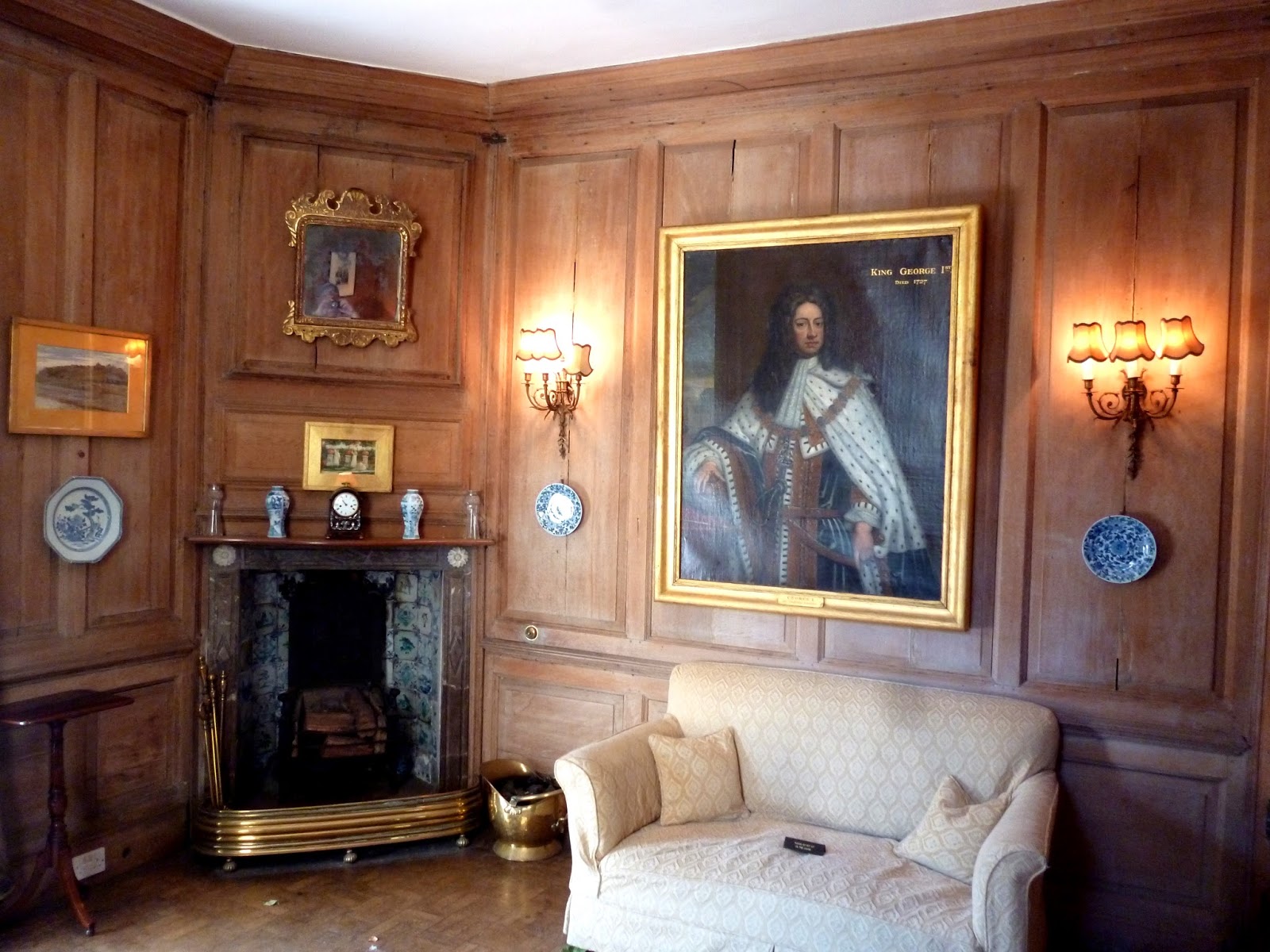
The oak parlour, dominated by the painting of George I, who was shipwrecked off the coast of Rye and stayed with James Lamb's family here for four days.

The small pictur above the mantelpiece is The Garden of the Hesperides which was given to James by his friend Constance Fenimore Woolston (1840
–94).

The marble bust of James made in 1913 by F. Derwent Wood.

The bronze bust of James by Hendrik Andersen, in 1904.

The dog cemetery in a corner of the garden.

James left his house to Henry James junior, his nephew, and apart from the Bensons, other people who lived here include H. Montgomery Hyde, Rumer Godden, and the dust jacket designer Brian Batsford.

28 May 2012

Edward Burra in Nottingham

The art critic Andrew Graham-Dixon says that he sees Edward Burra (1905–76) as an overlooked genius of British art. I was fortunate enough to catch the exhibition of Burra's work at the Djanogly Art Gallery, Lakeside, Nottingham University, last weekend before it closed yesterday.

Burra suffered from chronic arthritis but never had to worry about money as he was the son of a rich lawyer and was born at a house named Springfield in Rye, Sussex, where he spent his life when not travelling. Although critics have associated him with surrealism, he refused to identify with any particular movement or school, and his influences are drawn from popular culture as much as high: he was educated at Chelsea College of Art and loved 'B' movies perhaps as much as art galleries. Essentially he was an asexual voyeur and once claimed that he only had one erection in his life – while watching a Mae West movie.

France delighted Burra, where he particularly enjoyed the night life of Paris and painted dancers and prostitutes; he also loved New York City, particularly the bright, lively, working-class atmosphere of Harlem, and also stayed in Boston with his friend the poet Conrad Aiken, who saw him as a major painter of American life.

Another thing he loved was the seediness of Spain, although his work became much darker after the massacres and the general destruction of the Spanish Civil War. As World War II shortly followed, the darkness increased, with soldiers depicted as predatory birdmen with long beaks.

Burra was an elusive character, an outsider who loved painting outsiders, and he didn't like talking about his work. He only gave one interview, in which he comes over as very bored and verbally constipated, even (playfully?) nihilistic. When asked 'What matters?', he replies 'Nothing'.

Below is a link to a fascinating and very informative one-hour documentary about Burra's art and life, told by Graham-Dixon.

–––––––––––––––––––––––––––––––––––
'I Never Tell Anybody Anything': The Life and Art of Edward Burra