
Showing posts with label Cher (18). Show all posts
Showing posts with label Cher (18). Show all posts
8 February 2020
Juliette Rigondet: Un village pour aliénés tranquilles (2019)
Libellés :
Cher (18),
Dun-sur-Auron (18),
Rigondet (Juliette)


19 August 2019
Marguerite Audoux, Sancoins, Cher (18)
Libellés :
Audoux (Marguerite),
Cher (18),
Sancoins (18)

Suzanne Brucy, Sancoins, Cher (18)
Libellés :
Brucy (Suzanne),
Cher (18),
Sancoins (18)
Suzanne Brucy (1872-1903) was the daughter of a friend of Jean Baffier's. With Baffier's own grave and Hugues Lapaire's, these three form the most interesting graves in Sancoins cemetery.


Hugues Lapaire, Sancoins, Cher (18)
Libellés :
Cher (18),
Lapaire (Hugues),
Sancoins (18)
Poet, novelist and literary critic Hugues Lapaire (1869-1967) was born in Sancoins, where he died at the age of 97. Berry was his main inspiration, and he produced many works in both French and patois berrichon, although he also defended Nivernais and Bourbonnais traditions and values. He lost he father at the age of two, was brought up by his grandparents, and much lamented the dying of peasant society. It was in the lycée in Moulins that he met Alfred Crépin, director of Le Courrier de l'Allier, which led him to a taste in literature. Meeting Jean Baffier was even more decisive to his future, and later he met Achille Millien and contributed on several occasions to the Revue du Nivernais. Moving to Paris, he made his presence known as a patois poet. His early novels Le Courandier (1904), and L’Epervier (1906) were regional, along with a number of other works. He also published many books on the history of the region. A square in Sancoins is dedicated to him, with a bust, and he is buried in Sancoins cemetery. Jean Baffier sculpted La Prieuse in an arched niche above his grave, although a copy of it was stolen in 2011.


Jean Baffier, Sancoins, Cher (18)
Libellés :
Baffier (Jean),
Cher (18),
Sancoins (18)
Jean Baffier was a sculptor and writer born in Berry (Neuvy-le-Barrois, Cher) in 1851 and died in Paris in 1920. He had a kind of epiphany on working on the restoration a Nevers cathedral and took lessons in sculpture in Paris, making a name in bronze figures and pewter vases, etc. He was also a staunch regionalist interested in the traditional music and popular tales of Berry. On the negative side, he had reactionary, anti-Semitic opinions which he expressed in local papers such as Journal du Cher and Dépêche du Berry. A square with a bust representing him is in Sancoins, where he is buried.


10 August 2019
Gaspard Thaumas de La Thaumassière in Bourges, Cher (18)
Libellés :
Bourges (18),
Cher (18),
Thaumassière (Gaspard Thaumas de La)

The Writing on the Wall in Bourges, Cher (18)
Libellés :
Bourges (18),
Cher (18)

'Les Fesses de la cathédrale' in Bourges, Cher (18)
Libellés :
Bourges (18),
Cher (18)
It's like something you'd see in a book called, say, 'Cher insolite', in fact it probably makes some people think there's been some Photoshopping going on, but no, there it is on the south face of Bourges cathedral: an arse with prominently dangling scrotum. No one knows anything about it, if is was discovered soon after the event, or not. But why is it there? Was the worker bored? Or more likely, is this how he showed his hatred for receiving very little pay? Needless to say, for those who know it's there, it's a huge attraction!


Marcel Bascoulard in Bourges, Cher (18)
Libellés :
Bascoulard (Marcel),
Bourges (18),
Cher (18)
I've written about Marcel Bascoulard (1913-78) before, after I read the huge beau livre about him, telling of how his mother shot his tyrannical father dead from the back, of how Bascoulard (in his late teens at the time) went on to lead the existence of a down-and-out. He was, though, a much loved figure in Bourges, noted for riding an elongated tricycle, wearing women's clothing, having a number of cats, but most of all of course for his artwork. He did few abstract paintings, but most of his art was meticulously sketched works of Bourges cathedral, or of the town's old streets. It was a great shock to the town to learn that he was strangled by an unstable man in his twenties in a wreck of a van someone had given Bascoulard, and in which he lived on wasteland. But he received the posthumous honour of having a square named after him, with in the centre a bust of him by the sculptor André Bézard (1921-98): a tall stone with a representation of the man in a bronze bust.
He also received a decent grave, although I suspect that not many people have seen where Marcel Bascoulard is buried: online it's possible to find the exact location of it, although none of the cemetery divisions is marked, and if you visit (as we did) when the gardien is having his lunchtime break, the chances of finding him are remote. However, I spoke to a man watering the graves and he knew exactly where Bascoulard's is: there are now two pot cats on it.


He also received a decent grave, although I suspect that not many people have seen where Marcel Bascoulard is buried: online it's possible to find the exact location of it, although none of the cemetery divisions is marked, and if you visit (as we did) when the gardien is having his lunchtime break, the chances of finding him are remote. However, I spoke to a man watering the graves and he knew exactly where Bascoulard's is: there are now two pot cats on it.


7 August 2018
Alain-Fournier in La Chapelle-d'Aiguillon, Cher (18)
Libellés :
Alain-Fournier,
Chapelle d'Aiguillon (18),
Cher (18),
Rivière (Jacques)


Alain-Fournier in Épineuil-le-Fleuriel, Cher (18)
Libellés :
Alain-Fournier,
Cher (18),
Épineuil-le-Fleuriel (18)


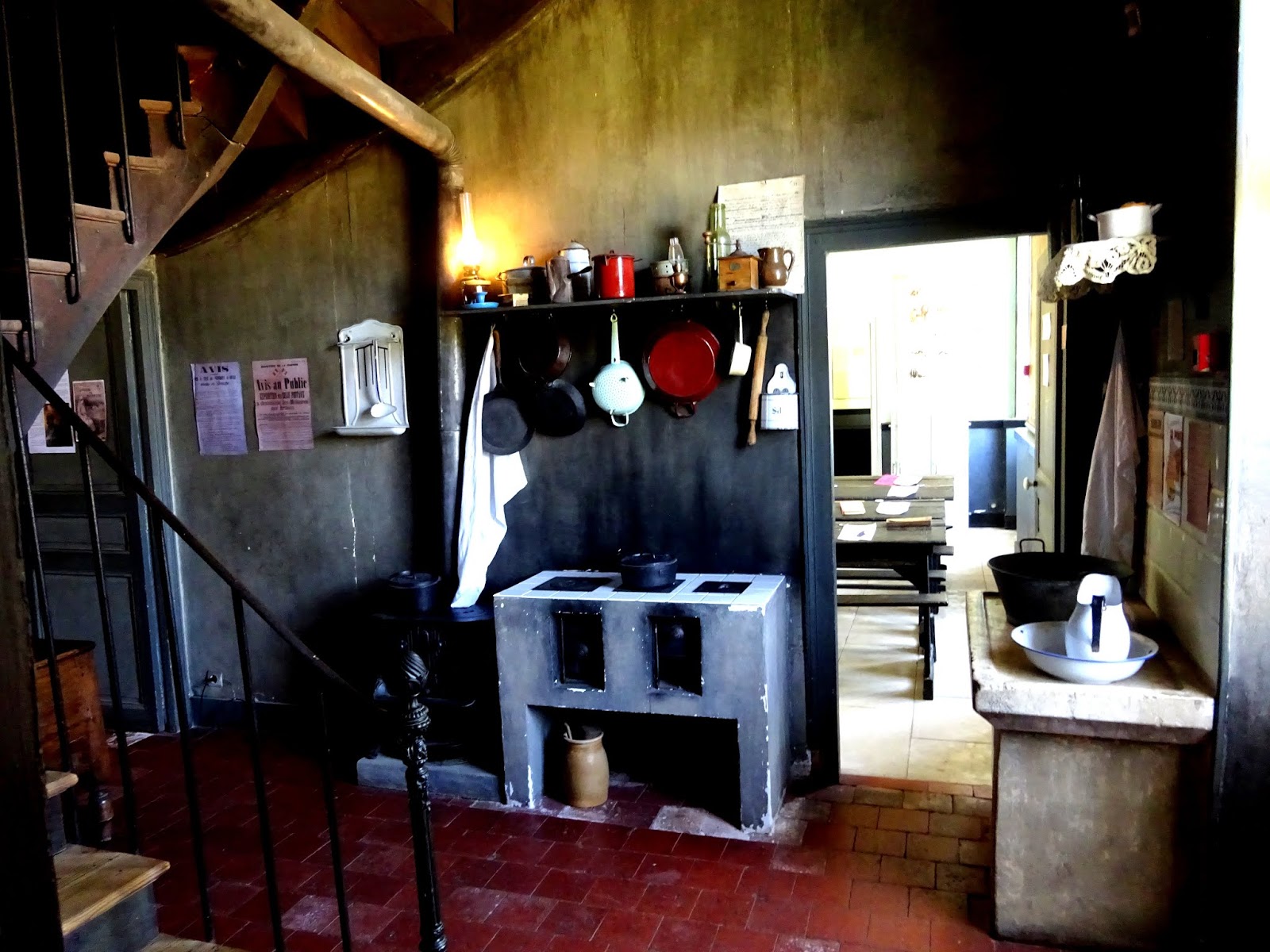


The attic, in effect the place where Le Grand Meaunes was created.

The rear elevation, which looks out onto a large lawn.

Er, I'll just use the polite expression 'toilettes à la turque'.
Claude Seignolle in Sainte-Montaine, Cher (18)
Libellés :
Cher (18),
Sainte-Montaine (18),
Seignolle (Claude),
Sologne

26 July 2018
Marguerite Audoux, Sainte-Montaine, Cher (18)
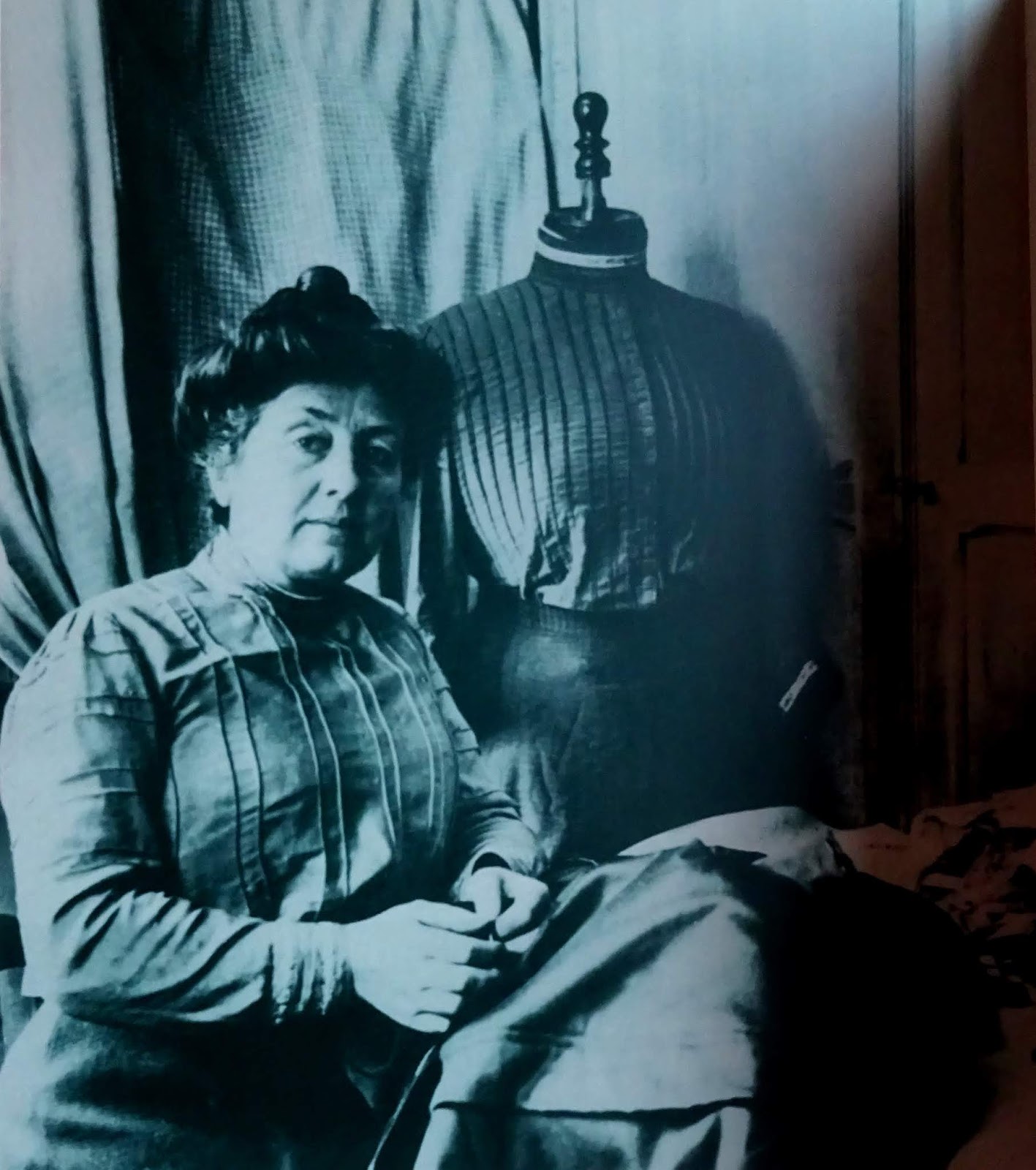
Marguerite Audoux (née Donquichote) was a working-class novelist who was born in 1863 in Sancoins (Cher) and died in Saint-Raphaël (Var) in 1937. She and her sister Madeleine were in effect orphaned when Marquerite was three, and they were both sent to the Hôpital général de Bourges orphanage, where they spent several years. She was later sent to a farm where she worked as a shepherd in Sainte-Montaine, near Aubigny-sur-Nère. She later moved to Paris, where she became a seamstress. She went on to become the friend of various novelists, and her own autobiogaphical novel Marie-Claire (1910) was a huge success, winning the Prix Femina. A number of the furnishings, including her bed, in the Musée Marguerite Audoux (at the back of the Mairie, the former school) in Sainte-Montaine were her own.



19 July 2018
Boîte à Lire, Épineuil-le-Fleuriel, Cher (18)
Libellés :
Boîte à lire,
Cher (18),
Épineuil-le-Fleuriel (18),
Renard (Jules)

Boîtes à lire:
––––––––––––––––––––––––––––––––––––
Boîte à Lire, Dicy, Nièvre
Boîte à lire, Maisons-Laffitte, Yvelines
Boîte à lire, Sorigny, Indre-et-Loire
Boîte à Lire, Jonzac, Charente-Maritime
Boîte à lire, La Roque-d'Anthéron, Bouches-du-Rhône
Boîte à Lire, Épineuil-le-Fleuriel, Cher
Boîte à lire, Marseille, Bouches-du-Rhône
Boîte à lire, East Markham, UK
Boîte à lire, La Folie Couvrechef, Caen, Calvados
Boîte à lire, Bergues, Nord
Boîte à lire, Le Havre, Seine-Maritime
Boîte à lire, Villerville, Calvados
Boîte à lire, Saint-Servan, Saint-Malo, Ille-et-Vilaine
Boîte à lire in Caen, Calvados
Boîte à Lire, Noyant d'Allier, Allier
Boîte à lire, Dampierre-en-Burly, Loiret
Boîte à lire, Illiers-Combray, Eure-et-Loir
Boîte à lire, Chartres, Eure-et-Loir
Boîte à lire, Saint-Romain-au-Mont-d'Or, Rhône
16 October 2017
Marcel Bascoulard (artwork); Patrick Martinat (text): Bascoulard: Dessinateur Virtuose, clochard magnifique, femme inventée (2014)

Certainly the text in this book (by Patrick Martinat) is very soon read, and there are a great number of photos in it of the artist Marcel Bascoulard (1913–78) and his work, but from there it parts company from the regular coffee book, in fact it subverts the coffee table book: outside central France (the Bourges (and Sologne) areas to be specific), how many people are aware of Marcel Bascoulard, who has his own square with his bust in Bourges, as well as a street named after him in Saint-Florent-sur-Cher, where he spent his youth?
Shortly after his mother Marguerite, when her elder son Marcel was nineteen, shot her violent husband dead in the back and was institutionalised, he moved to Bourges and began painting. He didn't fit in with society, and I won't even bother involving psychological analysis, which he would (quite rightly, I'm sure) have detested. Marcel grew away from conventional society, being unconcerned with the trapping of success, unconcerned with money or fame to such an extent that he wasn't interested in a roof over his head with running water and electricity, and traded his paintings for food and suchlike to feed his cats and dogs as well as himself. His mother had been the main love of his life, and no one else.
And yet Bascoulard was a gifted painter, first a realist depicting in minute detail the city of Bourges (particularly the cathedral), including the few other places he visited, although they were very few and probably the furthest he ever ventured was Paris. He later introduced odd colours to his townscapes, even painted abstract pictures, but they weren't welcomed, although he didn't care, he wasn't interested in painting to order, in being commissioned, he preferred his outsider, tramp status, although he didn't see himself as a tramp: after all, how many tramps dress in female clothing, for example, or ride tricycles that they've designed themselves? OK, many may live on wasteland, but what of it?
Marcel Bascoulard saw his death coming in the form of the twenty-three-year-old social reject Jean-Claude Simion, but no one else in Bourges did, otherwise they'd have protected him. Such a waste.
Bascoulard is a magnificent book, one of the few which you must have in your possession even if you don't speak French, as it so evidently speaks for the outsiders, the outcasts who have so much to tell us. Only Bascoulard wasn't an outcast, he was loved in spite of the dirt he lived in, in spite of (even because of) his anarchism, and his death was a great blow to Bourges: after all, how many other people have played such a role in putting the town on the French map?
My criticism is that Patrick Martinat glibly dismisses Marcel Bascoulard's writing, quotes from it very briefly, and gives it virtually no space. Fascinating as photos of Bascoulard are, as his painting and sketches are, as his precise maps are, many photos here would have lost nothing by their exclusion, although so much could have been gained by the inclusion of Bascoulard's writings, no matter what Martinat think of them: he is no expert in literature, and should not pretend to be one. It would have been very interesting, for instance, to give just one example, to have read 'Maternelle réhabilitation' in full.
Subscribe to:
Posts (Atom)


 Posts
All Comments
Posts
All Comments