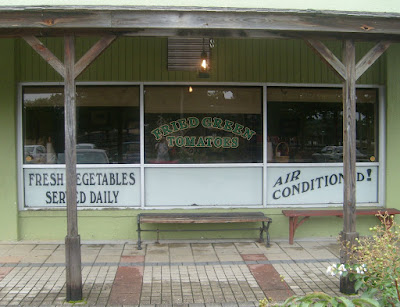
Showing posts with label Alabama. Show all posts

5 January 2012

Prejudice, and Harper Lee's and Robert Mulligan's To Kill a Mockingbird

Over the holidays I chanced upon the DVD of To Kill a Mockingbird, and although I'd seen the movie before and read the book two or three times, as it's always been a favorite of mine I decided to buy it. At the time I didn't realize that the main theme of the narrative – the obscenity of prejudice – would prove to be so topical this week, when two Englishmen were finally found guilty of a horrific racially motivated murder commited almost two decades previously.

We have fictional, smalltown Maycomb (loosely modeled on Monroeville), Alabama in the Jim Crow era of the early 1930s, and real Eltham, suburb of bigtown London, UK, in the early 1990s. Ostensibly, there are huge differences in time, general culture, etc, and yet I don't see much difference between the poison of Bob Ewell and the poison of Gary Dobson and David Norris.

Disturbingly, Norris, who lived in a £300,000 mansion and whose family had never been short of money in his sixteen years, had rarely left south-east London, and had never been north of the River Thames. Insularity breeds contempt.

To return to Mockingbird, there is of course a parallel narrative that feeds into that of Tom Robinson's toward the end, and just as Robinson is the outsider in the powerful white world of the South, Boo Radley with, to quote Sheriff Heck Tate, 'his shy ways' is very much the white outsider in a more extroverted world he can't fit into.

To Kill a Mockingbird is one of the great novels of 20th century American literature, and the movie – strongly endorsed by Lee – also has a power which, as director Robert Mulligan suggests, it would not have been possible to display in a world fed on MTV, in which many people would be easily bored by the long scenes.

Mulligan made that remark during the Director's Commentary, a special feature on the DVD where he and producer Alan J. Pakula discuss the actors and the events in the film. What I hadn't considered before is that the movie (which in spite of a number of small differences is largely very faithful to the book) is a real oddity as the book is essentially uncinematic, and apart from the courtroom scene the major events take place offstage and we learn of them (the killing of the black Tom Robinson, the killing of of the crazed racist Ewell) secondhand.

Pakula would go on to direct his own films, and a preoccupation with technology is apparent in virtually all of them. This is particularly so with his characters' use of the phone, which is frequently employed as a dramatic device to increase tension, often being the harbinger of important news. But perhaps the Pakula movie that springs to mind most is All the President's Men, with the Watergate tapes which proved so damning to Nixon. Significantly, of course, it was technology in the form of the police bugging of Dobson's flat that helped in bringing (as yet just two of) the murderers of Stephen Lawrence to justice. Technology was a little too primitive in the days when Mockingbird is set, although the insane primitiveness of racial prejudice is still with us.

18 February 2010

Dennis Covington, Salvation on Sand Mountain: Snake Handling and Redemption in Southern Appalachia (1995)

My comment on this will have to wait until I've actually read it, but in the meantime how about this quote from Fannie Flagg, who, the flap informs anyone who wasn't already aware, is the author of Fried Green Tomatoes at the Whistle Stop Café:

'Salvation on Sand Mountain will jar you to the bone. It will make you wonder about things you never thought to wonder about and meet people you never dreamed existed. Dennis Covington is either the bravest or the craziest journalist I know.'

The back flap is even more exuberant:

'With grace and humor and exquisite writing, Dennis Covington explores a physical and spiritual geography few readers will be prepared for. Reminiscent of the best of Flannery O'Connor, Carson McCullers and James Agee, Salvation on Sand Mountain is southern literature at its best.'

OK, my own comments to come later, as with Madison Jones below (although they will come sooner).

18 October 2009

Monroeville, Alabama: Harper Lee and Truman Capote: Literary Landmarks of the Southern United States, #6

I drive up to the center of this tiny town, right next to the old courthouse – at about 12:00 – although the clocks here say it's 11:00, and I realize that we've crossed from eastern time to central time. Mosquitoes scramble around my legs, and as a result of the havoc they play, later I shall be doomed to wearing long pants and socks from now on, no matter how hot it is.

A young local girl stops her car and says:

'You guys need any help?'

'No thanks, I think we can figure things out'.

'You doin' the town tour?'

'Yeah, if we can work it all out.'

'Awesome! have a great time, y'all!'

I love Americans, I love America, and for a brief time I feel as though I'm on the same planet as others.


The above marker reads:

'The Old Monroe County Courthouse, designed by prominent Southern architect Andrew Bryan, was built between 1903 and 1904 during the tenure of Probate Judge Nicholas Stallworth. One of two buildings of the type designed by Bryan (a sister courthouse in LaGrange, Georgia was destroyed by fire), the architectural style is Romaneque with a Georgian influence [sic.] It was constructed by Louisville, Kentucky contractor M. T. Lewman. The courthouse was the seat of most county offices and the site of court cases until the construction of the new courthouse in 1963. The lasting fame of this building is derived from the Pulitzer Prize-winning novel To Kill a Mockingbird, as well as the motion picture of the same name which features the now-famous courtroom scene. Today this site is on the National Historic register and is a national literary Mecca.'


At the side of the old courthouse is a stone with a marker placed by the Alabama State Bar in 1997. It reads:

'ATTICUS FINCH: LAWYER – HERO

"Lawyers, I suppose, were children once." These words of Charles Lamb are the epigraph to Harper Lee's To Kill a Mockingbird, a novel about childhood and about a great and noble lawyer, Atticus Finch. The legal profession has in Atticus Finch, a lawyer-hero who knows how see and how to tell the truth, knowing the price the community, which Atticus loves, will pay for the truth. The legal profession has in Atticus Finch, a lawyer-hero who knows how to use power and advantage for moral purposes, and who is willing to stand alone as the conscience of the community. The legal community has in Atticus Finch, a lawyer-hero who possesses the knowledge and experience of a man, strengthened by the untainted insight of a child.

'Children are the original and universal people of the world; it is only when they are educated into hatreds and depravites that children become the bigots, the cynics, the greedy, and the intolerant, and it is then that "there hath passed away a glory from the earth." Atticus Finch challenges the legal profession to shift the paradigm and make the child the father of the man in dealing with the basic conflicts and struggles that permeate modern existence.

'Symbolically, it is now the legal profession that sits in the jury box as Atticus Finch concludes his argument to the jury: "In the name of God, do your duty."


I have no idea what relation – if any – Lee Motor Co. has to Harper Lee, but the mockingbird symbol, in one way or another, obviously dominates the town.

The marker below, at the side of the demolished childhood home of Truman Capote, reads:

'TRUMAN CAPOTE (1924–1984)

'On this site stood the home of the Faulk family of Monroeville, relatives of the writer Truman Capote. Capote himself lived in this home between 1927 and c. 1933, and for several years spent his summer vacations here. Two of the Faulk sisters operated a highly successful millinery shop located on the town square. The third sister, affectionately known as "Sook", was the inspriation for characters in The Glass Harp, The Thanksgiving Visitor, and A Christmas Memory. The original structure on this site burned to the ground in 1940, and the second home was demolished in 1988. Monroeville remained important to Capote throughout his life, and he returned to the area many times in the year before his death to visit surviving relatives.'

'I won't be here forever, Buddy. Nor will you........the Lord willing, you'll be here after I've gone. And as long as you remember me, then we'll always be together.'

Truman Capote, The Thanksgiving Visitor

Below: the site of Harper Lee's home, next door to Capote's.

Now Monroe County Library, this was LaSalle Hotel previously, where Gregory Peck stayed during the filming of the film To Kill a Mockingbird.

17 October 2009

Irondale, Birmingham, Alabama: Fannie Flagg: Literary Landmarks of the Southern United States, #5

This is the original, and elsewhere I've given as a sign of insanity that someone – namely me – should make a round trip of about 200 miles (from Montgomery) just to visit the café for a green salad and a coffee, which I did and am still very pleased to have done. We even thought nothing of waiting in the car for thirty minutes until a goods train driver decided to move on, allowing us to reach the café on the other side of the road. How can a person explain this behavior? How is it possible to be sane and travel 200 miles for this, for the photos of the film Green Tomatoes at the Whistle Stop around the walls, the photos of Jessica Tandy, Kathy Bates, Fannie Flagg, etc., around the walls? For me, it's not only the film (which I love), but the book, with the Weems Weekly, the less subdued lesbian content, but most of all the love that went into the book and that was left out in the (admittedly brilliant) movie. So how good does that make the book?

The movie was made in the café in Juliette, Georgia, and although we passed very near there on our return to Atlanta, we didn't bother to pay a visit.


Ours is the Toyota Yaris, which got us through the 4000 miles.

The train station.

16 October 2009

Montgomery, Alabama: Scott and Zelda Fitzgerald: Literary Landmarks of the Southern United States, #4

Scott and Zelda Fitzgerald Museum, 919 Felder Avenue.
 
The plaque reads: 'Fitzgerald Home (ca. 1910). F. Scott Fitzgerald and his wife Zelda and daughter Scottie lived in this house from October 1931 to april 1932.

'During that period Fitzgerald worked on his novel Tender Is the Night and Zelda began her only novel, Save Me the Waltz.


'Every place has its hours.... So in Jefferson (Montgomery) there existed then, and I suppose now, a time and quality that appertains to nowhere else. It began about half pst six on an early summer night, with the flicker and sputter of the corner street lights going on, and it lasted until the great incandescent globes were black. Inside wtih moths and beetles and the children were called in to bed from the dusty streets.'

'Zelda Sayre Fitzgerald, "Southern Girls", October 1929.'

The front of the house.


A small note revealing that the bricks for this memorial came from Zelda's home at 6 Pleasant Avenue, Montgomery, Alabama.

Literary Landmarks of the Southern United States, #3 Tuskegee, Alabama

Booker T. Washington, the founder of Tuskegee Institute, later university, lifts the veil from a slave's head.

In Ralph Ellison's Invisible Man (1952), the narrator states:

'[I]n my mind's eye I see the bronze statue of the college Founder, the cold father symbol, his hands outstretched in the breathtaking gesture of lifting a veil that flutters in hard, metallic folds above the face of a kneeling slave; and I am standing puzzled, unable to decide whether the veil is really being lifted, or lowered more firmly in place; whether I am witnessing a revelation or a more efficient blinding.'


The plaque below is not in Tuskeegee but in Piedmont Park, Atlanta, Georgia, and reads:

'Booker T. Washington 1856–1915. Former slave, Principal of Tuskeegee Institute, and author of Up from Slavery, Washington delivered the Atlanta Exposition Address on Sept. 18, 1895, at this site, the former auditorium of the Cotton States and International Exposition. Washington delivered this address at the Exposition's Inauguration before a segregated audience, and in an unprecedented departure from regional custom, he shared the platform with John Collier, President of the Exposition. In 1894 Washington had joined Collier and other supporters of the Exposition in an appearance before the house Committee on Appropriations. Together they secured a $200,000 appropriation from Congress. In addition to serving as a lobbyist for the Exposition, Washington was also an Exposition commissioner and supervised the construction of the Negro Building, the Expositon's site for African American exhibitions formerly located near the 10th Street entrance to Piedmont Park. An alumnus of Hampton Institute and President of the National Negro Business League, Washington became a national leader because of the interracial compromise he proposed in the Atlanta Exposition address.'


Washington later lived at The Oaks, a house on the campus built in 1899 from bricks made at the Institute and designed by Robert R. Taylor. He lived there with his third wife, Margaret Murray Washington, until his death in 1915. Margaret continued to live there until her death in 1925.

Ralph Ellison, the author of Invisible Man (1952), began his studies here and to make ends meet worked in the bakery at Tomkins Hall.

Ellison met the writer Albert Murray while working at the Hollis Burke Frissell Library.