
Showing posts with label Yvelines (78). Show all posts
Showing posts with label Yvelines (78). Show all posts
12 September 2018
José Bruyr in Saint-Germain-en-Laye, Yvelines (78)
Libellés :
Bruyr (José),
Saint-Germain-en-Laye (78),
Yvelines (78)


Jacques Fesch in Saint-Germain-en-Laye, Yvelines (78)
Libellés :
Fesch (Jacques),
Saint-Germain-en-Laye (78),
Yvelines (78)


Jacques Tati in Saint-Germain-en-Laye, Yvelines (78)
Libellés :
Saint-Germain-en-Laye (78),
Tati (Jacques),
Yvelines (78)


2 September 2018
Boîte à lire in Maisons-Laffitte, Yvelines (78)
Libellés :
Boîte à lire,
Maisons-Laffitte (Yvelines),
Yvelines (78)

Boîtes à lire:
––––––––––––––––––––––––––––––––––––
Boîte à Lire, Dicy, Nièvre
Boîte à lire, Maisons-Laffitte, Yvelines
Boîte à lire, Sorigny, Indre-et-Loire
Boîte à Lire, Jonzac, Charente-Maritime
Boîte à lire, La Roque-d'Anthéron, Bouches-du-Rhône
Boîte à Lire, Épineuil-le-Fleuriel, Cher
Boîte à lire, Marseille, Bouches-du-Rhône
Boîte à lire, East Markham, UK
Boîte à lire, La Folie Couvrechef, Caen, Calvados
Boîte à lire, Bergues, Nord
Boîte à lire, Le Havre, Seine-Maritime
Boîte à lire, Villerville, Calvados
Boîte à lire, Saint-Servan, Saint-Malo, Ille-et-Vilaine
Boîte à lire in Caen, Calvados
Boîte à Lire, Noyant d'Allier, Allier
Boîte à lire, Dampierre-en-Burly, Loiret
Boîte à lire, Illiers-Combray, Eure-et-Loir
Boîte à lire, Chartres, Eure-et-Loir
Boîte à lire, Saint-Romain-au-Mont-d'Or, Rhône
26 September 2017
Cimetière du Mesnil-le-Roi, Yvelines (78) #5: Jeanne and André Bourin
Libellés :
Bourin (André),
Bourin (Jeanne),
Le Mesnil-le-Roi (78),
Paris,
Yvelines (78)


Cimetière du Mesnil-le-Roi, Yvelines (78) #4: Louis Pauwels
Libellés :
Le Mesnil-le-Roi (78),
Paris,
Pauwels (Louis),
Yvelines (78)


Que votre Volonté soit faite etnon la mienne.
Mais je vourdrais semer des oiseaux dans ceux que j'aime
Et qu'ils ne souffrent pas quand je m'endormirai.'
Louis Pauwels (1920–1997) was, as the stone above states, a poet, writer and journalist. He was the editor-in-chief of Combat in 1949, directed the monthly Marie-France, and with Jacques Bergier founded the magazine Planète, dedicated to science, philosophy and esotericism. He later founded Figaro Magazine, which he was in charge of for more than twenty years. The novel L'Amour monstre (1954) is one of his principal fictional works.
Cimetière du Mesnil-le-Roi, Yvelines (78) #3: Józef Czapski
Libellés :
Czapski (Józef),
Le Mesnil-le-Roi (78),
Paris,
Yvelines (78)


Cimetière du Mesnil-le-Roi, Yvelines (78) #2: Zofia and Zygmunt Hertz
Libellés :
Hertz (Zofia),
Hertz (Zygmunt),
Le Mesnil-le-Roi (78),
Paris,
Yvelines (78)


Cimetière du Mesnil-le-Roi, Yvelines (78) #1: Jerzy Giedroyc
Libellés :
Giedroyc (Jerzy),
Le Mesnil-le-Roi (78),
Polish Literature,
Yvelines (78)


22 September 2017
Jerzy Giedroyc in Maisons-Laffitte, Yvelines (78)
Libellés :
Giedroyc (Jerzy),
Maisons-Laffitte (Yvelines),
Yvelines (78)

'Jerzy GIEDROYC
1906–2000
Fondateur de « Kultura »
revue politique polonaise –
et de l'Institut Littéraire
a vécu et travaillé
dans cette maison'
Kultura was a Polish and world cultural magazine designed as an instrument against communist totalitarianism. Many important writers of the twentieth century contributed to it, such as Albert Camus, Simone Weil, George Orwell, Witold Gombrowicz, T. S. Eliot, Emil Cioran and Czesław Miłosz.
13 November 2015
Paris 2015: Cimetière de Bougival #2: Georges Avenel
Libellés :
Avenel (Georges),
Bougival (Yvelines),
French Literature,
Yvelines (78)

Paris 2015: Cimetière de Bougival #1: Émile Richebourg
Libellés :
Bougival (Yvelines),
French Literature,
Richebourg (Émile),
Yvelines (78)


'À
ÉMILE RICHEBOURG
HOMME DE LETTRES
1833 – 1898'

Émile Richebourg is now virtually forgotten, although he was once a very popular writer. His novels were serialised in Le Petit Journal and Gambetta's La Petite République and both publications benefited greatly from his contributions. Richebourg – who was born into a modest family – earned a considerable amount of money from his novels, which seem to have been particularly welcomed by women. He told Émile Zola that he was the great literary novelist, whereas Richebourg was the great popular novelist. He lived with his wife in Bougival on the Route de La Celle St Cloud, in a house which he named 'La Charmeuse' after his novel Andréa la charmeuse.
29 September 2015
Paris 2015: Victorien Sardou, Cimetière de Marly-le-roi (78)
Libellés :
French Literature,
Marly-le-roi (78),
Sardou (Victorien),
Yvelines (78)

'SÉPULTURE
VICTORIEN SARDOU'


'À SON PRÉSIDENT D'HONNEUR
VICTORIEN SARDOU
SOCIÉTÉ DES AUTEURS
ET
COMPOSITEURS
DRAMATIQUES'
VICTORIEN SARDOU
SOCIÉTÉ DES AUTEURS
ET
COMPOSITEURS
DRAMATIQUES'
Aside from André Baillon, the other author of note in Marly-le-roi cemetery is Victorien Sardou (1831–1908). Sardou's most famous play was Madame sans gêne (1893), one of a great number of his works. He was also noted for spiritualism.
Paris 2015: André Baillon, Cimetière de Marly-le-roi (78) #1
Libellés :
Baillon (André),
Belgian Literature,
Marly-le-roi (78),
Yvelines (78)


'1875 – 1932
AU ROMANCIER
ANDRÉ BAILLON
SES AMIS.'


An impressive tribute to the brilliant Belgian-born novelist André Baillon, who after a number of aborted attempts killed himself in 1932. Adolphe Wansart (1873–1954) also made a bust of Baillon.
My other post on André Baillon, which includes my impressions on his novel Le Perce-oreille du Luxembourg, gives much more information on the man:
–––––––––––––––––––––––––––––––––––
André Baillon: Le Perce-oreille du Luxembourg
My other post on André Baillon, which includes my impressions on his novel Le Perce-oreille du Luxembourg, gives much more information on the man:
–––––––––––––––––––––––––––––––––––
André Baillon: Le Perce-oreille du Luxembourg
Paris 2015: Léon Frapié, Cimetière du Montoir, Houilles (78)
Libellés :
Frapié (Léon),
French Literature,
Houilles,
Yvelines (78)


'LÉON
FRAPIÉ
1863–1949'

For nearly forty years Léon Frapié wrote a number of realist novels, of which La Maternelle (1904) was the second to win the Goncourt, begun the year before. This is narrated by a woman and is said to be a largely biographical story of his first wife, the declassée teacher Léonie Mouillefert whom he married in 1888 and who inspired several of his working-class novels.

'MADAME LÉON FRAPIÉ
NÉE ALICE VERLAY
1881 – 1975'
There is a Square Léon Frapié in the 20th arrondissement.
20 September 2014
Lise Lamarre in Versailles, Yvelines (78): Cimetière des Gonards #5
Libellés :
France,
Île-de-France,
Lamarre (Lise),
Versailles (Yvelines),
Yvelines (78)
Lise (or Louise) Lamarre was a poet and a journalist.

'LISE LAMARRE
DONT LA VIE FUT VOUÉE
À L'ART ET À L'AMITIÉ...
15 JUIN 1951'


'Esprit pur, je connais enfin la Vérité.
La Lumière, l'Amour, et ma force sereine
retrouve le but où tend l'humanité
Lise Lamarre'
Louise Bryant in Versailles, Yvelines (78): Cimetière des Gonards #4
Libellés :
Bryant (Louise),
France,
Île-de-France,
Versailles (Yvelines),
Yvelines (78)


Louise Bryant (1885–1936) was an American writer who espoused socialist and anarchist causes. Her first marriage was to John Reed – who died in 1920 – and she moved to Paris with her second husband, William Bullitt, in 1923. A few years later she was diagnosed with Dercum's disease. Bulitt divorced her due to her heavy drinking and her lesbian relationship with Gwen Le Gallienne, and Bryant died in in Sèvres of a brain hemorrhage.
The film Reds (1980) is a representation of the Bryant and Reed story.
Robert de Montesquiou-Fezensac in Versailles, Yvelines (78): Cimetière des Gonards #3

A superb image of a dandy: the gay poet Robert de Montesquiou-Fezensac (1855–1921) was the model for Esseintes in Huysmans's À Rebours (1884) and one of the models for the Baron de Charlus in Marcel Proust's À la recherche du temps perdu.


The statue on this anonymous grave is the angel of silence is from Vitry-sur-Seine château. Montesquiou is buried next to his secretary and lover Gabriel Yturri (1860–1905).
Armand Renaud in Versailles, Yvelines (78): Cimetière des Gonards #2
Libellés :
France,
Île-de-France,
Renaud (Armand),
Versailles (Yvelines),
Yvelines (78)
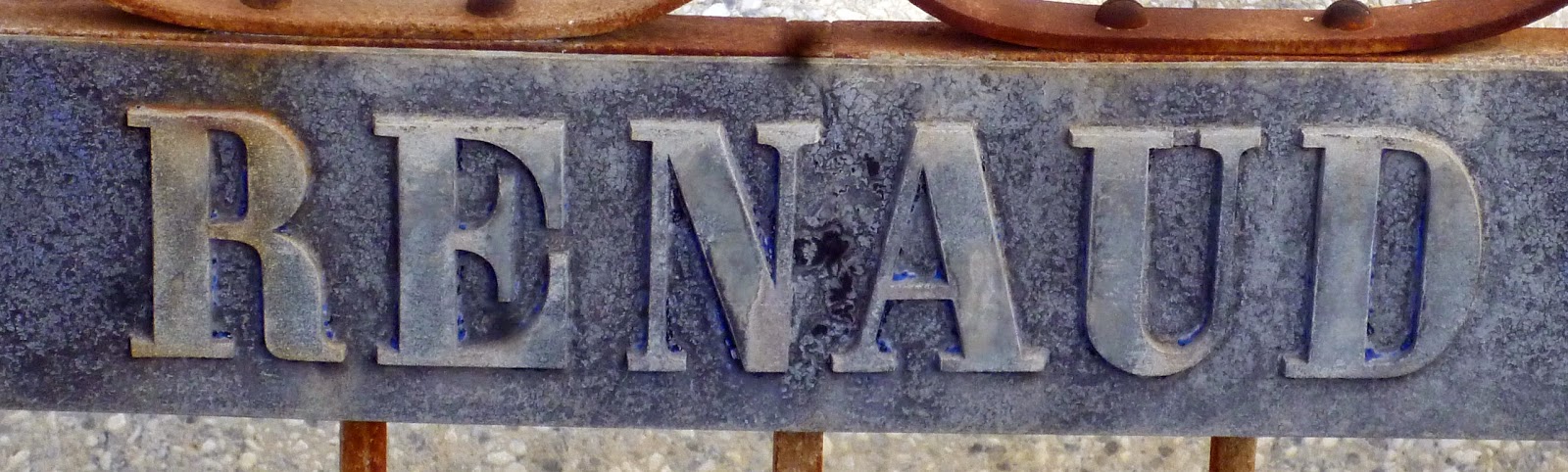
The Renaud plot in the Cimetière des Gonards includes a rather impressive bust of the poet Armand Renaud (1836–95).


Armand Renaud was born in Versailles and was a civil servant, progressing to inspector of fine arts. He wrote a great deal of poetry, some influenced by Persian and Japanese literature, and some of which was put to music by Camille Saint-Saëns (1835–1921).
19 September 2014
Edith Wharton in Versailles, Yvelines (78): Cimetière des Gonards #1
Libellés :
France,
Île-de-France,
Lenox (MA),
Versailles (Yvelines),
Wharton (Edith),
Yvelines (78)

'EDITH WHARTON
NÉE EDITH NEWBOLD JONES
24 JANVIER 1862 – 11 AOÛT 1937'

Edith Wharton's grave in the Cimetière des Gonards, Versailles. Below is a link to a long earlier post I made on Wharton in the Mount, Lenox, Massachusetts, with many images of her home there:
–––––––––––––––––––––––––––––––––––
Edith Wharton in Lenox, Massachusetts
Subscribe to:
Posts (Atom)


 Posts
All Comments
Posts
All Comments