Showing posts with label Oldham. Show all posts

13 April 2014

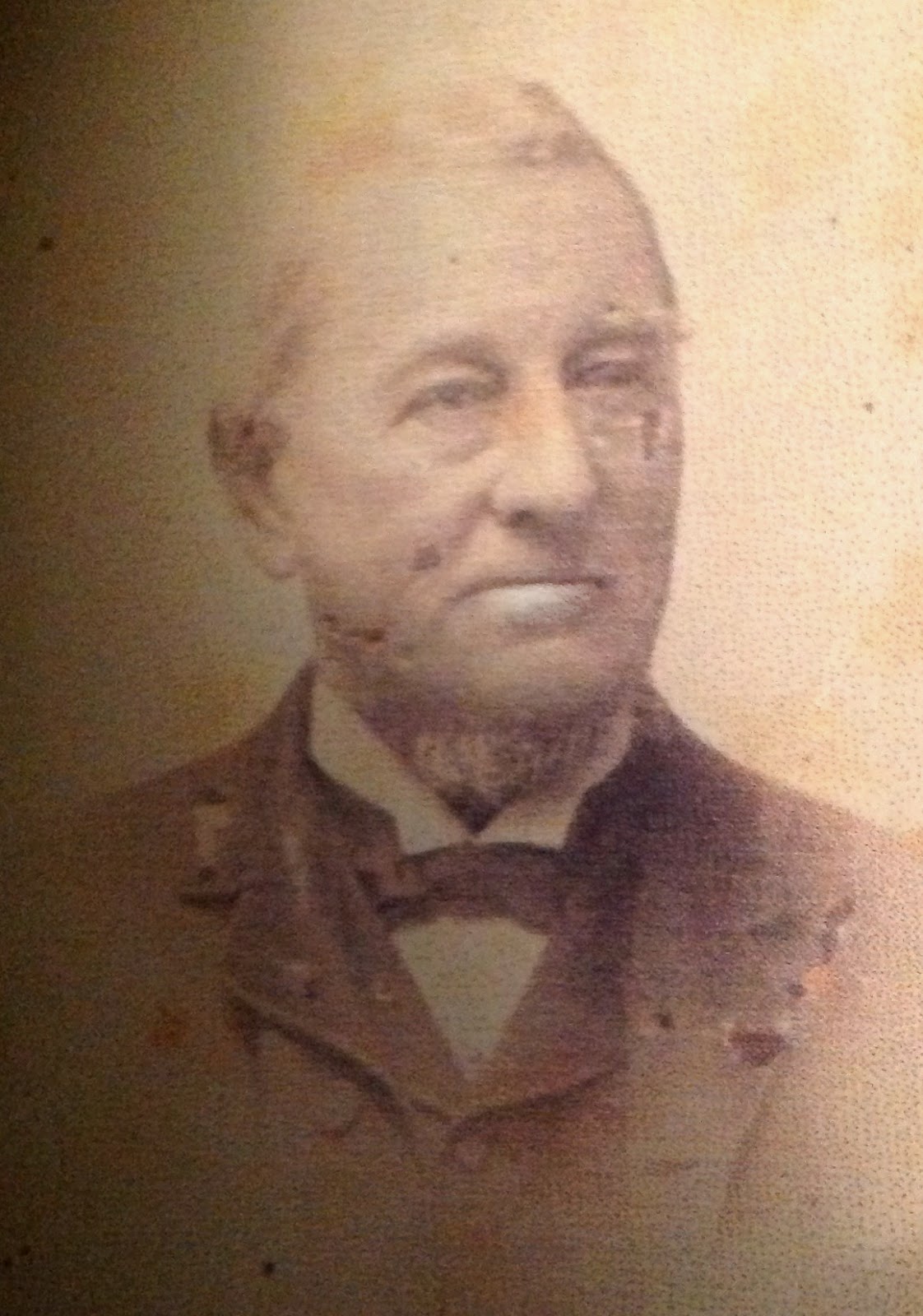
James Taylor in Royton, Oldham

 
'IN MEMORY OF
JAMES TAYLOR
"THE ROYTON POET"
WHO DIED 18TH SEPTEMBER 1863,
IN THE 70THYEAR OF HIS AGE.
AND OF MARY HIS WIFE,
WHO DIED 12TH MAY 1873,
IN THE 73RD YEAR OF HER AGE.'
 
According to a webpage written by a member of Royton Local History Society, James Taylor was born on the currently named Middleton Road near its junction with High Street. Beginning work as a handloom weaver, he moved on to a steam-driven cotton mill where he continued until he was sixty, when he began making shoe blacking and selling it from a shop near MIddleton Road.

He had no formal early education, his mother apparently fearing that he would turn into an irreligious radical, which he in fact did for a time before returning to the Christian fold.

Before the end of the 1820s he was writing poetry for magazines using the pseudonym 'poor poet'. He is most remembered for the poem 'On My Native Village' and shortly after his death a book – Miscellaneous Poems – was published by private suscription.
 
Taylor's grave was one of those moved from St John's graveyard in 1969, and is now in Royton Cemetery.

Annie Kenney in Lees, Oldham

'The workplace of
ANNIE KENNEY
1879–1953
Leading suffragette, first to be
imprisoned for direct action,
with Christabel Pankhurst, 1905
 
Women gained the full vote
in 1928'

'LEES BROOK SPINNING CO
LIMITED
1886'

Lees Brook Mill
 
Annie Kenny's autobiography Memories of a Militant was published in 1924.

16 July 2013

Samuel Oldham Lees: St Paul's, Kersal Moor #2

'IN LOVING MEMORY OF
SAMUEL OLDHAM LEES
OF CALDER BANK, DAVYHULME
DIED AT SALT LAKE CITY, UTAH, DECR 8TH 1879,
AGED 47 YEARS, WAS INTERRED HERE JANY 3RD 1880.'

Although Samuel Oldham Lees's grave is here, it's his daughter who is of interest. Edith Ellis (1861–1916), or Edith Lees, hated her cruel father and distrusted men in general. She became a lesbian. However, in 1883 she joined the Fellowship of the New Life, where she met Havelock Ellis, whom she later married. The marriage was unusual though: they probably never had sex, lived separately some of the time, and Edith continued with lesbian affairs.
 
In 1898 Edith published the novel Seaweed: A Cornish Idyll, which Jo-Ann Wallace suggests may have inspired D. H. Lawrence's Lady Chatterley's Lover,* and which (published by 'Dr. Roland de Villiers') was accidentally suppressed at the same time as Havelock Ellis's Sexual Inversion (1897). There is a link below to Seaweed, along with links to other posts in the series.
 
* 'The Very First Lady Chatterley? Mrs. Havelock Ellis’s Seaweed', by Jo-Ann Wallace, English Literature in Transition, 18801920 Volume 51, Number 2, 2008.
 
–––––––––––––––––––––––––––––––––––
Edwin Waugh: St Paul's, Kersal Moor #1
Robert Angus Smith: St Paul's, Kersal Moor #3
William Edward Armytage Axon: St Paul's, Kersal Moor #4
James Crossley and Eleanora Atherton: St Luke's, Kersal Moor #5
Edith Ellis's Seaweed: A Cornish Idyll (1898)

26 June 2013

Lydia Becker in Chadderton

The existing structure of Foxdenton Hall dates back to the end of the 17th century, and Ernest Hannibal Becker (1771–1852) was a German immigrant who rented the hall at the beginning of the 19th century. His son Hannibal Leigh Becker (1803–1877) was Lydia's father, and she was the eldest of fifteen children.

'The family home of
LYDIA ERNESTINE BECKER
 1827–1890
 Suffragist, campaigner and political lobbyist,
founder of the National Society
for Women's Suffrage
 
Women gained the full vote
in 1928'

This wooden sculpture is at the side of the hall.
 
'AESOP'S FABLES

The Fox and the Heron.

A Fox invited a Heron to dinner and served thin soup on a flat plate. The Heron with it's long beak could not eat and went hungry while the Fox ate all the food.

The Heron then invited the Fox to dinner. The Heron served the food in a tall thin jar into which it could fit it's long beak, but the Fox could not reach. Thus was the Fox served right for it's meaness.'
 
Er... I've noticed many other signs that we're probably losing the distinction between possession and omission with 'it(')s', and can't help thinking that GBS was perhaps right in advocating the complete abolition of the apostrophe.

Foxdenton Hall is in a rather idyllic setting, and apparently this is the first sighting of a Canada gosling here for many years.

Below is a link to an article on Lydia Becker on Manchester's Radical History website:
–––––––––––––––––––––––––––––––––––
Manchester's Radical History: Lydia Becker

24 June 2013

James Dronsfield in Hollinwood

(Photo courtesy of Sophia Burgess.)

In the graveyard of St Margaret's Church, Chapel Road, Hollinwood:

'In Loving Memory
Of
JAMES DRONSFIELD
BORN AT HOLLINWOOD JAN 21ST 1826
DIED AT OLDHAM JUNE 24TH
1896.
HE EARNED THE ESTEEM OF HIS FRIENDS
BY HIS MANLY VIRTUES AND AS AN
AUTHOR UNDER THE NAME OF
JERRY LICHENMOSS
WAS WELL KNOWN FOR HIS SKETCHES
OF HUMBLE AND BY-GONE LANCASHIRE
LIFE.'
James Dronsfield was a friend of Samuel Bamford and Benjamin Brierley. His wife Ann (1823–95) is also buried here, as is his son Bamford William (1859–61), his first name being after his friend.
Dronfield's works were published posthumously as Ouselwood: or, A gathering of old chums, and other stories (Oldham: John Albinson, [1921]).
He attended Ben Brierley's funeral but died shortly before finishing editing Brierley's works. Below are links to these editions, and a link to a likeness of Dronsfield by George Henry Wimpenny:

–––––––––––––––––––––––––––––––––––
Ab-o'th'-Yate Sketches and other short stories: Volume I
Ab-o'th'-Yate Sketches and other short stories: Volume II
Ab-o'th'-Yate Sketches and other short stories: Volume III
James Dronsfield (Jerry Lichenmoss)

12 May 2013

Ammon Wrigley in Uppermill, Saddleworth

This is the impressive setting for Ammon Wrigley's statue in High Street, Uppermill, Saddleworth.*
 
James Collins's bronze statue on a concrete pedestal was erected in Uppermill High Street in 1991. It shows the poet Ammon Wrigley in his noted flat cap and open coat on the moors he loved to walk. There were objections raised that the concrete base wasn't in keeping with local stone, and that the statue was a little removed from the remote country he loved; on the first issue, concrete was used as a secure base, and on the second, it is doubtful that many people would know of the existence of Ammon Wrigley today if his statue had been, say, in as obscure a spot as the Ammon Wrigley Memorial, which is near the Dinner Stone overlooking Castleshaw: Wrigley's ashes, according to his wishes, were scattered there.

I didn't attempt to find the memorial as yesterday (when we went to Uppermill) the weather was awful, although I found the book I was looking for in the tourist information office next to the car park at the side of the statue: With Ammon Wrigley in Saddleworth, by Sam Seville ([Saddleworth]: Saddleworth Historical Society, c. 1984). Seville was Wrigley's son-in-law, married to his daughter Amy. More posts on Ammon Wrigley will follow in due course.
 
'AMMON WRIGLEY
1861–1946
POET AND HISTORIAN'
 
*Saddleworth is the name of a collection of villages and hamlets in the metropolitan borough of Oldham, of which Uppermill is the biggest.