Showing posts with label Dabit (Eugène). Show all posts

11 October 2015

Paris 2015: Eugène Dabit, Cimetière du Père-Lachaise #4

'EUGÈNE
DABIT
1898 – 1936'
 
Working-class writer Eugène Dabit, thanks to loans from his uncles, was able to move with his parents into Hôtel du Nord at 102 quai de Jemmapes in Paris (10ème) at the edge of the canal Saint-Martin. In 1931 he received a prize of 5000 francs for the 'roman populiste' L'Hôtel du Nord. In 1936, at the invitation of André Gide, Dabit went on a literary journey to the USSR with, apart from Gide, Jef Last, Louis Guilloux, Jacques Schiffrin and Pierre Herbart. He died of scarlet fever in Sebastapol. Gide wrote Retour de l'U.R.S.S., published the same year, and dedicated it to Dabit.

My other posts on Eugène Dabit:

––––––––––––––––––––––––––––––––––––
Eugène Dabit: L'Hôtel du Nord (1929)
L'Hôtel du Nord, 10th arrondissement

20 September 2015

Paris 2015: L'Hôtel du Nord, 10th arrondissement

'Histoire de Paris

Hôtel du Nord
––––––––––––––
L'Hôtel du Nord doit sa célébrité au roman homonyme
d'Eugène Dabit (1898–1936) : il connut dès sa
publication en 1929 un grand succès, et valut à son
auteur, dont c'était le premier œuvre, le Prix du
roman populiste. C'est plutôt un receuil de nouvelles :
un couple, les Lecouvreur parvint à acheter, grâce à
un petit héritage un hôtel dont les locataires sont
les héros d'une suite d'histoires vraisemblablement
vécues. Eugène Dabit a dépeint le Paris popu-
aire côtoyé durant son enfance dans cette
pension de mariniers tenue par ses parents.
Les héros sont des personnages déracinés,
menant une existance difficile. Le seul lien
entre eux est cet hôtel qui sert de
havre ; exproprié à la fin du livre il tombe
sous la pioche des démolisseurs. Malgré
l'absence de l'intrigue consistante, Marcel
Carné à [sic] réussi à tirer de ce roman un
film tumultueux et singulier. Sorti
en 1938, il est aujourd'hui plus
célèbre que le roman, grâce au
travail du metteur en scène,
aux dialogues d'Henri
Jeanson, aux décors de
Trauner, et à l'interpré-
tation des acteurs,
Jean Jouvet et
Arletty en tête.'

My translation: 'L'Hôtel du Nord owes its fame to the novel of the same name by Eugène Dabit (1898–1936): from its publication in 1929 it was a great success, and earned the author – of whom this was the first work – the 'Prix du roman populiste'. Rather than a novel, it is more of a collection of short stories: a couple, the Lecouvreurs – due to a small inheritance – manage to buy a hotel whose lodgers are the heroes of a series of realistic stories. Eugène Dabit depicts the working-class Paris he knew in his childhood, mixing with bargee lodgers in the hotel managed by his parents. The heroes are deracinated people leading a difficult existence. The only link between them is this hotel which serves as a haven; they are expropriated at the end of the book as the hotel falls under the demolisher's pickaxe. In spite of the absence of a consistent plot, Marcel Carné succeeded in producing a magnificent and strange film. Released in 1938, it is today more famous than the novel, thanks to the direction, Henri Jeanson's dialogues, Trauner's set, and the leading roles by Jean Jouvet and Arletty.'
 
 
The contemporary exterior looks much the same as in the 1938 film.
 
Passerelle de la Grange-aux-Belles, the same bridge over Canal Saint-Martin that the suicidal lovers used at the beginning of the film, and that the Jean Jouvel character walked towards his death over very near the end.
 
The footpath over the bridge.
 
And the Canal Saint-Martin itself.

My other posts on Eugène Dabit:

––––––––––––––––––––––––––––––––––––
Eugène Dabit, Cimetière du Père-Lachaise
L'Hôtel du Nord, 10th arrondissement

18 July 2015

Eugène Dabit: L'Hôtel du Nord (1929)

Marcel Carné's film Hôtel du Nord (1938) is a story of a bungled suicide pact by two lovers in financial difficulty set against the backcloth of the characters living in or using the rather seedy hotel. It is bungled because the man – Pierre – shoots his lover Renée but fails to go through with killing himself. But Renée recovers and is offered a job as a maid at the hotel, which she accepts and enjoys, although Pierre – now in prison for wounding her – is ashamed of his cowardly actions and refuses to acknowledge Renée, who still loves him.

In her emotional confusion, Renée wants to leave the country for a new life with Monsieur Edmond, who has been living at the hotel with Mme Raymonde, a prostitute he abandons after falling for Renée's charms. Finally, Renée changes her mind and goes back to the now released Pierre, and the defeated Monsieur Edmond accepts death at the hands of one of two men seeking revenge for an action performed by Edmond some time before the start of the film.

Eugène Dabit's parents owned the hotel represented in his book Hôtel du Nord (1929) when he was a child, although the film and the book are very different. Dabit's novel is more of a series of episodes that occur at the hotel, the suicidal pair are absent, and 'Monsieur Edmond' here is called Pierre Trimault and his lover Renée: she becomes a prostitute after Pierre leaves her on learning that she is pregnant by him.

People come and go at the hotel, and proprietor Louise Lecouvreur in particular has a much stronger role in the book, looking after the women from predatory men, and ever wary that the hotel doesn't get a reputation for being a brothel. One of the few characters who is occasionally present throughout most of the book is Mimar, who doesn't exist in the film but whose main interests are playing the card game manille and bedding women, both activities at which he is highly skilled. Until he realises that it is time to settle down and marry, which he does, only his wife Lucie dies not long after the marriage.

Of particular interest is an early representation of homosexuality: Adrien is a very fastidious guest and Louise is pleased that he cares so much about the cleanliness of his room, and shows no concern when he has men friends up with him, even when they stay the night. But then she has no idea what is going on, and is merely bemused when Adrien dresses up in drag in preparation for the bal de Magic-City.

In the book then there is nothing of the high drama of the film, which begins with the suicidal lovers crossing the Saint-Martin canal towards the hotel, and ends with them crossing the canal in the opposite direction towards a new future. But the book ends with the demolition of the hotel.


My other posts on Eugène Dabit:
––––––––––––––––––––––––––––––––––––
Eugène Dabit, Cimetière du Père-Lachaise
Eugène Dabit: L'Hôtel du Nord

14 July 2015

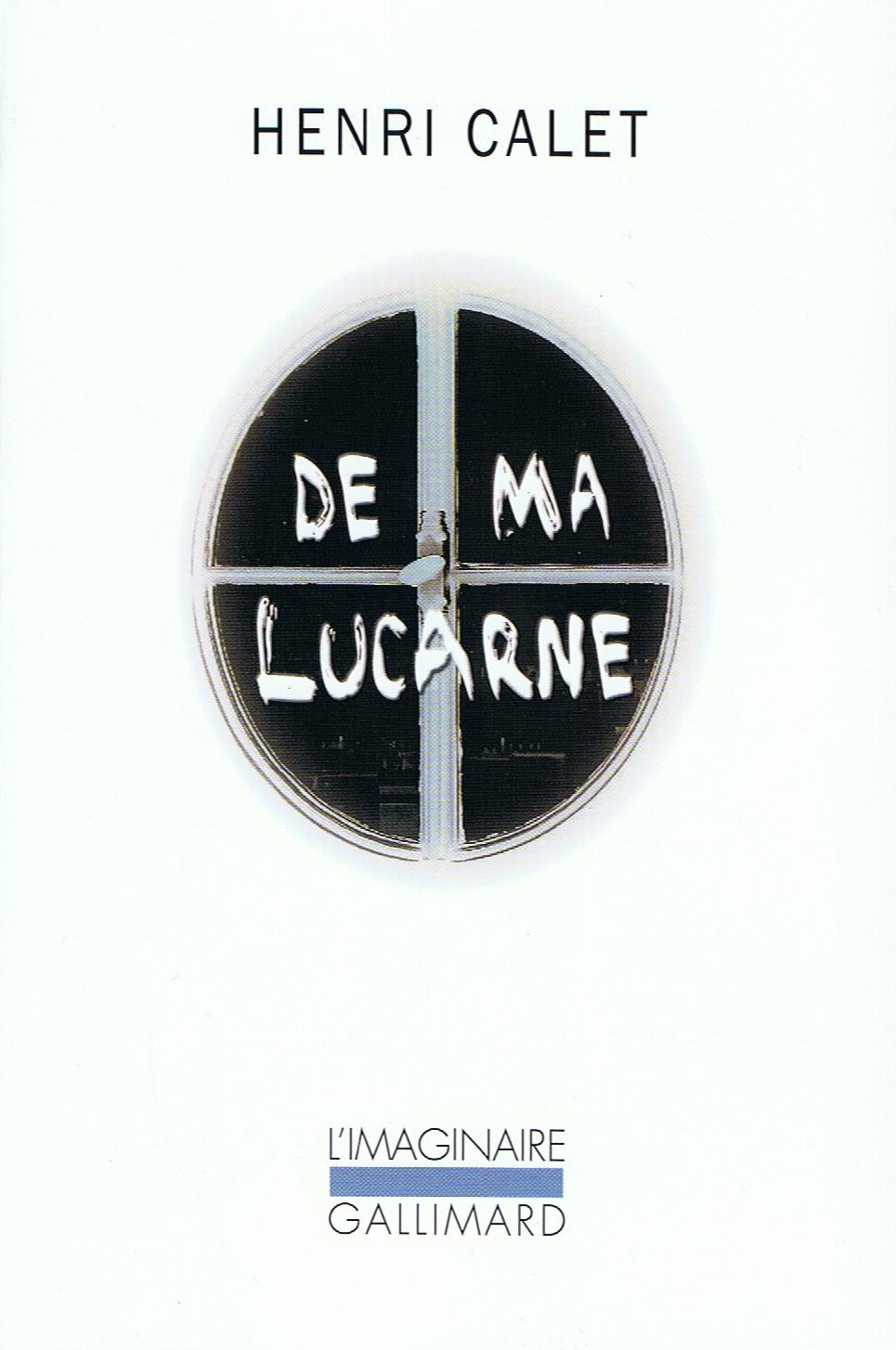
Henri Calet: De ma lucarne: chroniques: (1945-55 (various articles); repr. PBP 2000)

Henri Calet (1904—1956) is perhaps most noted for his autobiographical novel La Belle Lurette (1935), although this collection of a large number of his articles – under the heading De ma lucarne after the first published article here – also contains autobiographical information, although often indirectly.

The articles in De ma lucarne (lit. 'From My Skylight') were published between 1945 and 1955 in a number of papers such as Combat, Le Figaro littéraire, Carrefour, and a few have never been previously published. They are not in chronological order and cover a wide variety of subjects but with the focus on Paris, where Calet lived in the 14e: 26 rue de la Sablière.

As Calet wanders or rides through Paris what strikes the reader is the writer's lack of imposition of authority, his humbleness, his concern for the marginals, the poor, those who have little say in the running of the country. In fact he sometimes writes as if he's an outsider not just to others but to himself, and Jean-Pierre Martinet's interest in Calet makes sense because he can be so unassuming as to be almost invisible: in a parenthesis in 'Un rendez-vous manqué' ('A Missed Meeting') he says 'to tell you the truth I don't feel completely at home anywhere'.

Because the articles aren't in any evident date order, we have the hardships of the immediate post-war experience, the queues, the increases in prices, the rationing, etc, come after many chronologically later events. It's particularly the series of articles that Calet writes about his fascination for tiny, obscure museums that I find of great interest: the musée de la Préfecture de police, the musée postal de la France, the musée de l'Assistance Publique, the musée de la Légion d'honneur, the musée des Travaux publiques (Public Works), the musée de l'Asperge (Asparagus Museum) in Argenteuil, the musée du Montparnasse, and so on. In these museums, it's certainly the exhibits that fascinate Calet, but just as much it's the behaviour of the attendants and the (often scarce) fellow clientele. Perhaps the best illustration of this is not so much a museum visit but a guide to 'Historical Paris' that he tags on to like a lost sheep: he's far less interested in a story about a late eighteenth century killing than he is in counting the number of beauty spots a woman at the side of him has.

In 'Tout se rouillait peu à peu' ('Everything Was Turning to Rust Bit by Bit') Calet remembers going with his father to the canal Saint-Martin and his father in turn remembers being beaten and imprisoned for several days for trying to dodge paying for a restaurant meal with a friend in his youth, and despises the injustice of it. But as they look for a métro station and his father is still thinking of his beating forty years before, Calet is thinking of the working-class writer Eugène Dabit*, who used to live in his parents' Hôtel du Nord next to a bar where he and his father have just had a drink. Dabit wrote a book called Hôtel du Nord (1923) that Marcel Carné turned into a film in 1938, which the avid cinema-goer Calet must have seen. He must also have been aware that the end of the film contains an off-screen murder that's concealed by the noise of the 14 July celebrations taking place outside the hotel, and particularly concealed by the fact that kids are letting off bangers. Calet was oddly preoccupied by 14 July, and even odder is that he died (of natural causes) on that very day.

*Dabit (1898–1936) had also written a very favourable review of La Belle Lurette in the La Nouvelle Revue Française.