The Musée Ivan Tourguéniev (Ivan Turgenev in English) is hidden away in a large park in Bougival, Yvelines.
Turgenev lived at 'Les Frênes' ('The Ash Trees'), popularly known as 'La Datcha', between 1875 and his death in 1883.
The museum entrance is at the back, and unfortunately (it's not an uncommon story) photography stops there.
Turgenev's French writer friends included Maupassant and George Sand, but there was a special group that he jokingly called the 'groupe des auteurs sifflés' (literally the 'group of whistled authors'), who used to gather here once a month for a big meal from 1874. He called them this after the whistles of disapproval they had received because they hadn't produced a successful play. The group consisted of Turgenev of course, Gustave Flaubert, Edmond de Goncourt, Alphonse Daudet and Émile Zola.
The house is essentially two large rooms on the ground and the upper floor. Downstairs one room is dedicated to the rights of man and called 'Salle des Droits de l'Homme' (or 'Salle Françoise Sabatier'): Turgenev was a tireless fighter of injustice, and his Les Mémoires d'un chasseur (1852) paved the way for the abolition of serfdom in Russia. He also hated slavery in the USA, anti-Semitism in Russia, the death penalty in France, etc.
The second room is concerned with his life in Europe, and upstairs is his workroom and his bedroom.
Outside, La Feuille de frêne is a sculpture by Grigori Pototsky.
On one side of the leaf is Turgenev.
On the other side is Pauline Viardot (1821–1910).
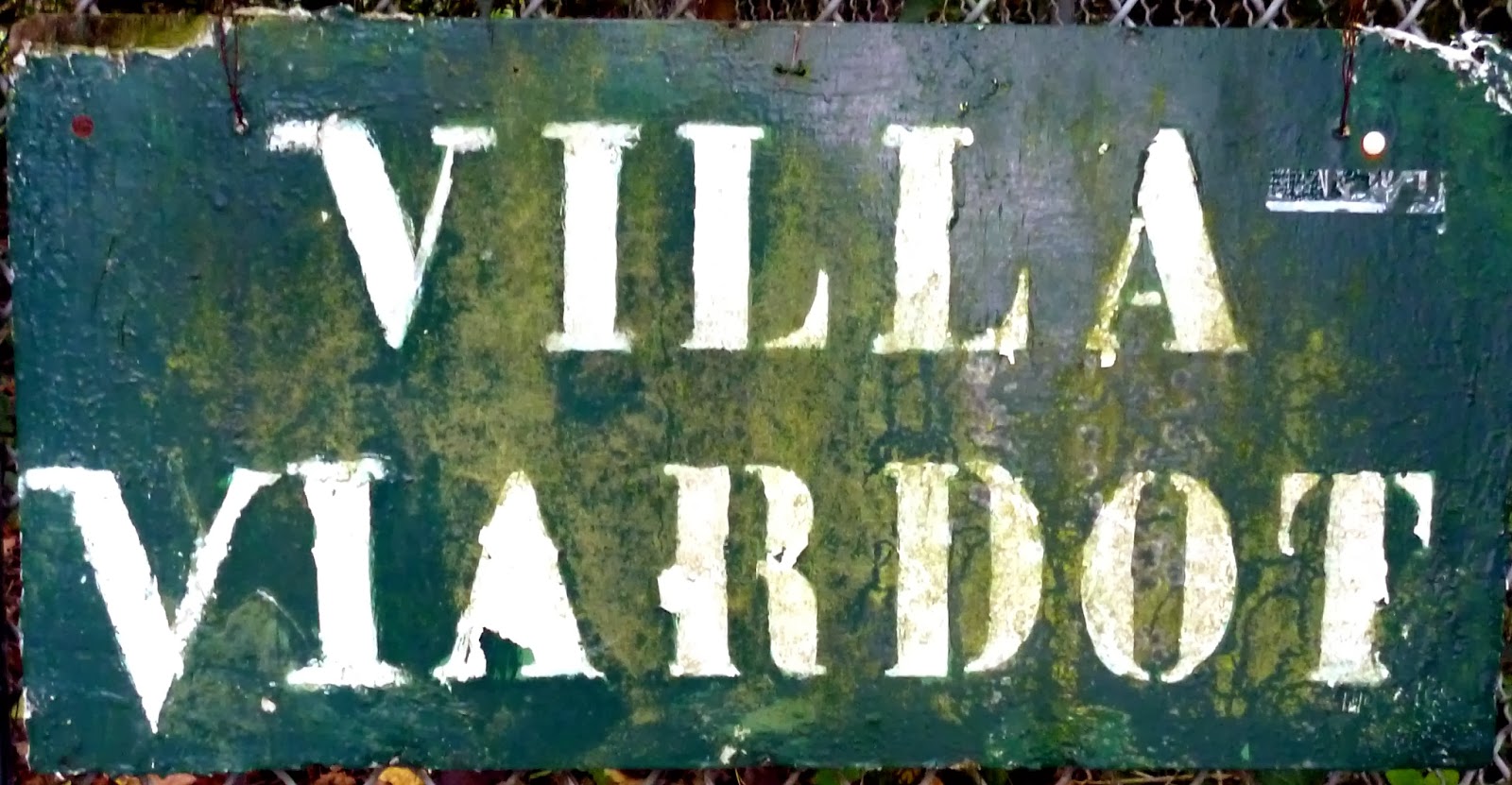
Villa Viardot is just a few yards away from Les Frênes.
Pauline Viardot (née García) was the woman with whom Turgenev fell hopelessly in love. She was a singer and a composer who had married Louis (1880–83) – a writer, art critic and translator – in 1840. He translated Cervantes, and – with the help of Turgenev – Gogol and Pushkin. He died four months before Turgenev.




 Posts
Posts


