
Flo Morse's book is only short – about one hundred pages – but there's a great deal of information in it.
What I didn't say in my post below is that the Shakers were so named due to the frenzy they worked themselves up into in their worship of God. Such behavior led to some being imprisoned in Manchester, England, for disturbance of the peace or profanation of the Sabbath. Ann Lee (1736–84) was one of the imprisoned people, and it was there that this illiterate factory worker – the daughter of a blacksmith – had her vision and felt the spirit of Christ entering her. Originally from a Quaker sect, she went on to be the leader of the United Society of Believers in Christ's Second Appearing, more commonly known as Shakers.
They are good farmers, and all their produce is eagerly purchased and highly esteemed. ‘Shaker seeds,’ ‘Shaker herbs,’ and ‘Shaker distilled waters,’ are commonly announced forsale in the shops of towns and cities. They are good breeders of cattle, and are kind and merciful to the brute creation. Consequently, Shaker beasts seldom fail to find a ready market.
They eat and drink together, after the Spartan model, at a great public table. There is no union of the sexes, and every Shaker, male and female, is devoted to a life of celibacy. Rumour has been busy upon this theme, but here again I must refer to the lady of the store, and say, that if many of the sister Shakers resemble her, I treat all such slander as bearing on its face the strongest marks of wild improbability. But that they take as proselytes, persons so young that they cannot know their own minds, and cannot possess much strength of resolution in this or any other respect, I can assert from my own observation of the extreme juvenility of certain youthful Shakers whom I saw at work among the party on the road.
The Story of the Shakers adds that Dickens wrote from hearsay all the unpleasant things he'd heard about the Shakers, and this would appear to be true: in his very brief visit, he couldn't possibly have seen all that he describes. There was much malicious gossip about the Shakers in the outside community. Certainly some Shakers were lured away from the communes, and 'winter Shakers' put up with the ceremonies they secretly thought ridiculous for a warm home until the better weather came. But why is there no mention of pregnancies within the Shaker community, as I can't believe that they didn't occur: perhaps the women left before it became obvious?
One thing that — for a time at least — ensured the survival of the Shakers was the fact that they took in orphans and unwanted children. But only between 10% and 20% of the children remained permanently in the Shaker community.
A major problem that presented itself was the Civil War: the Shakers were pacifists. But the New Lebanon group had a good leader in Frederick William Evans (who with his brother edited radical newspapers concerning land reform, women's rights and wage slavery): he visited President Lincoln in Washington in 1863 and procured a draft exemption for the Shakers.
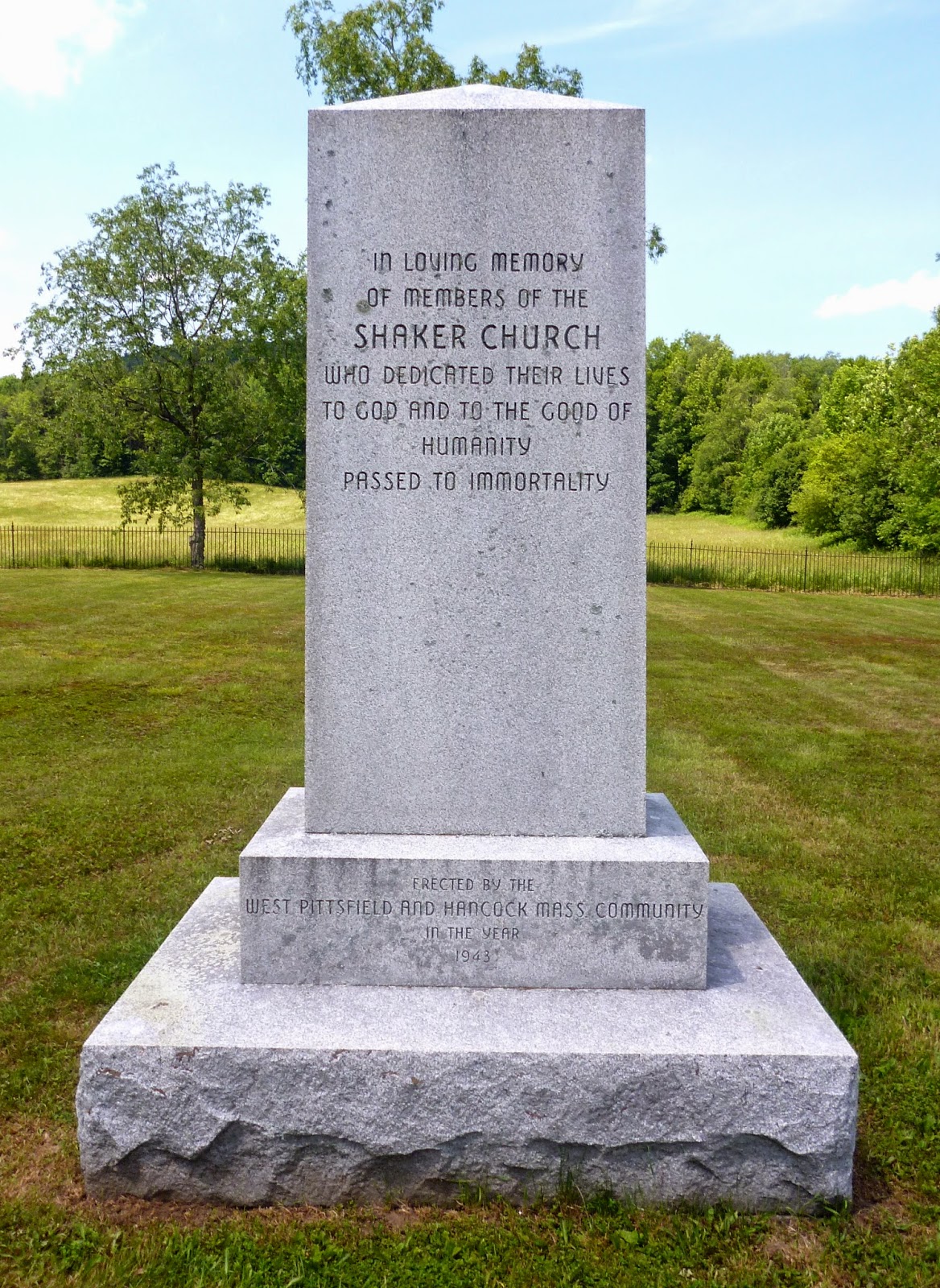
Sabbathday Lake Shaker village in Maine is the last remaining active community, with only a few existing members.
This is a fascinating little book about a minor religion that had a surprising influence on society at large.






 Posts
Posts

