The Richard Jefferies Museum is the only literary museum in Wiltshire, and is on the Marlborough Road a few yards from Coate Water Country Park and next to the Sun Inn.
Coate is only about two miles from central Swindon, although this photo deceptively looks deep in the countryside.
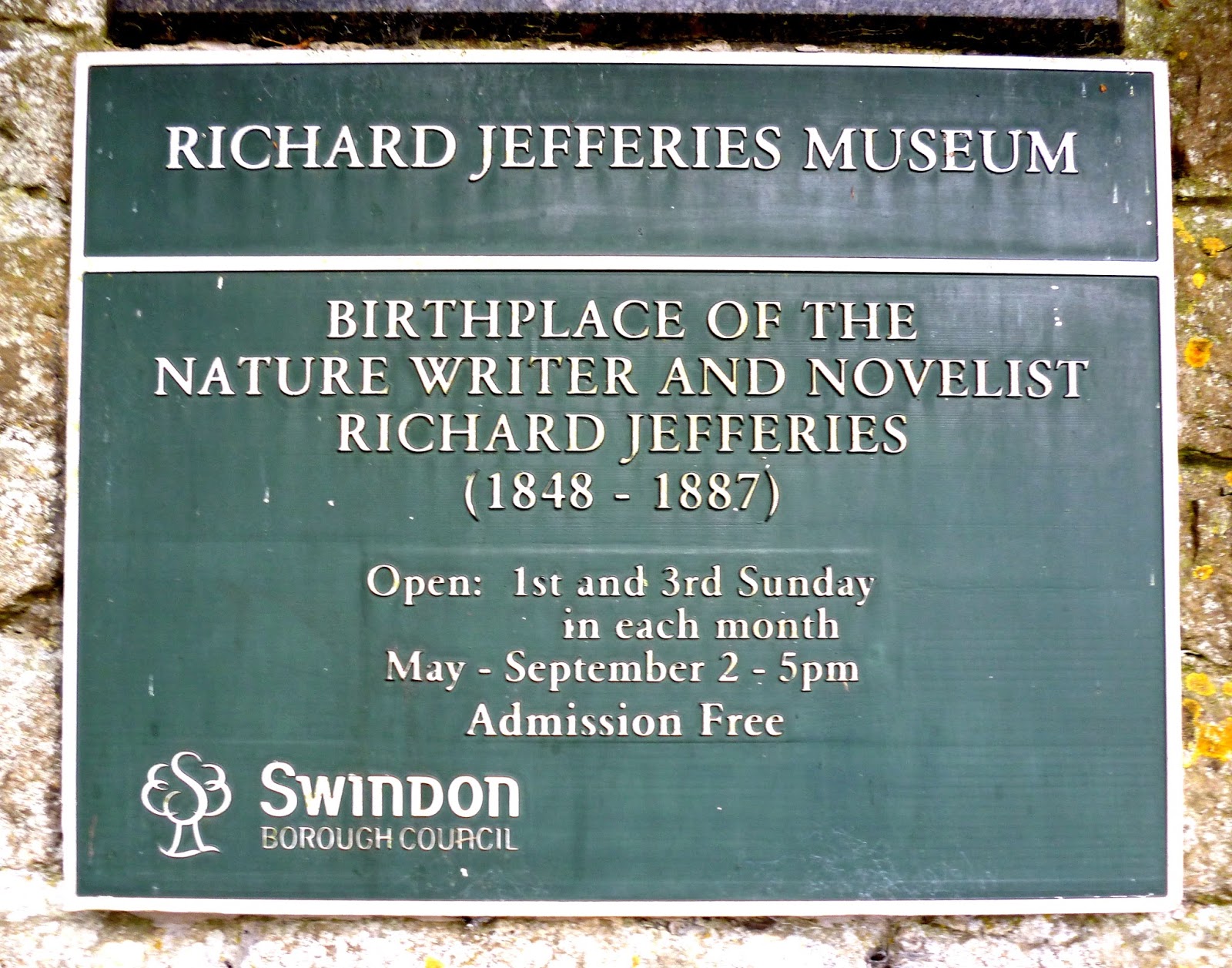
'RICHARD JEFFERIES MUSEUM
––––––––––––––––––––––––––––––––
BIRTHPLACE OF THE
NATURE WRITER AND NOVELIST
RICHARD JEFFERIES
(1848–1887)
Open 1st and 3rd Sunday
in each month
May–September 2–5pm
Admission Free'
'BIRTHPLACE
OF
RICHARD JEFFERIES
BORN
NOVEMBER 6TH 1848
Coate Farm, originally known as Jefferies Farm, was bought by Richard's great-grandfather, a baker and miller, in 1800. Richard's grandfather John was also (reluctantly) the principal miller and baker in Old Town, Swindon, and his father James Luckett Jefferies was a farmer here.
Richard had no interest in farming. He went to school in Swindon, began working for the North Wiltshire Herald at seventeen, and remained in journalism the whole of his short life. In 1874 he married Jessie Baden who lived nearby, and the couple went to live in Swindon. Jefferies wrote a large number of books largely filled with his observations of nature culled from his childhood in and around Coate, and he is perhaps best known for the autobiographical novel Bevis (1882).
He died in Goring at the age of 38 and was buried in Broadwater and Worthing Cemetery, West Sussex.
And this is the entrance door to the museum.
In the sitting room is a replica of a bust sculpted by Margaret Thomas. The original was unveiled in Salisbury Cathedral in 1892.
In the parlour and on the stairs are paintings of 'Jefferies's Land' by Kate Tryon (1864–1952), an artist from Massachusetts who was a very keen enthusiast of Jefferies's work, who visited Wiltshire six times and produced 230 Jefferies-themed works. The above painting is of Upham House (1910).
The interior of Upham House.
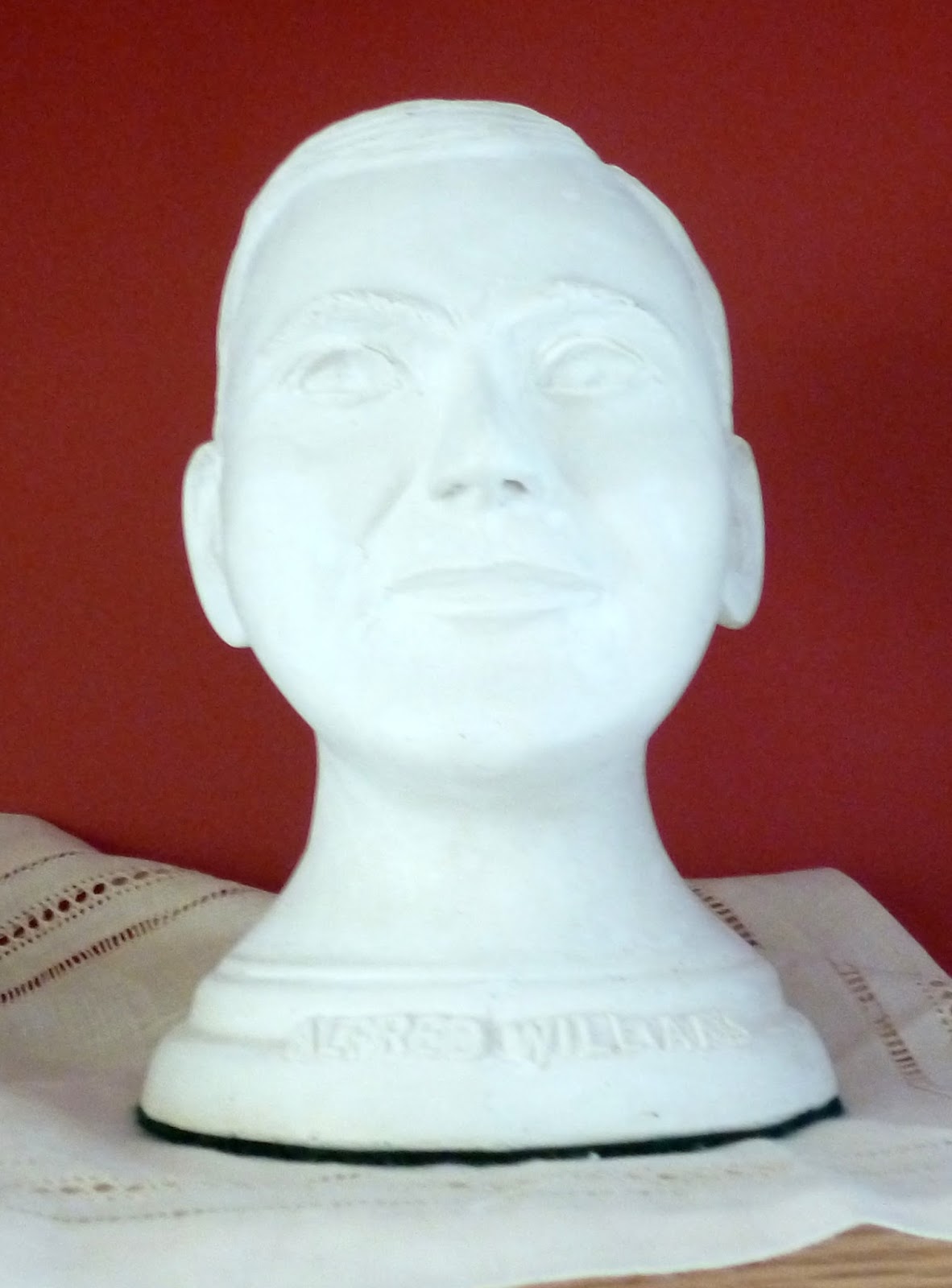
At the top of the stairs is another bust, this time by K. M. Harwood, dating from 1948.
The room on this floor was a bedroom but now contains exhibits. This plaque, a memorial to Jefferies and the Wiltshire poet Alfred Williams, was salvaged from Liddington Hill after it had been used for target practice by troops during World War II. Shame about the reflection.
A manuscript page of Jefferies's children's novel Wood Magic (1881) with a few emendations.
Jefferies's study is in the attic.
A closer view of that representation of Jefferies as a child.
Jefferies's original writing desk.
A first edition of the triple-decker Bevis: The Story of a Boy.
And a first of the two-volume Wood Magic.
The rear of the property.
'THIS TREE WAS PLANTED BY THE
CHILDREN OF THE SWINDON BRANCH
OF THE WORKERS EDUCATIONAL ASSOCIATION
AND DEDICATED BY THE
RT REV THE LORD BISHOP OF MADRAS
TO
RICHARD JEFFERIES
NATURES GREAT PROSE WRITER
SEPTEMBER 21ST 1921.'
Penny and I really enjoyed our visit to Richard Jefferies Museum, and it's evident that a great deal of excellent volunteer work is being done here. My thanks to all involved, particularly to the chair of the Richard Jefferies Society, John Price, with whom I had a brief conversation about Jefferies.
As far as obscurity goes this museum is nothing like as little known as some authors' house we've visited – such as Lillian Smith's place halfway up Old Screamer mountain in Clayton, Georgia; or Frank Sargeson's rebuilt bach in Takapuna, New Zealand – but perhaps it could do with a little more publicity.
Linked below is an excellent, well illustrated 28-page guide to the museum by the Richard Jefferies Society, and I'd recommend that anyone going there read it first.
–––––––––––––––––––––––––––––––––––
In the Footsteps of Richard Jefferies: A Guide to Coate Farm






 Posts
Posts


